

Food-Safe Valves: Ensuring Safety in the Food Supply Chain
- 2026-07-29 15:07:11
- admin
- NO COMMENTS
In a busy food processing plant – whether it’s a dairy, brewery, or packaged meal facility – engineers working on site often witness a familiar scene. During a routine inspection, an engineer may notice a valve that drips slightly after a hot-water rinse, or hear an unexpected groan when a control valve opens. These symptoms are not abstract; they are real signs of stress on the system. Repeated CIP (Clean-In-Place) cycles and harsh sanitation chemicals can stress valve seals and materials, so what was once leak-tight under cool water can develop tiny leaks. Over time, those micro-leaks allow product residue to accumulate inside the valve, which compromises hygiene and raises contamination risk. Likewise, pressure surges from pump starts or flow changes can induce valve-internal vibrations. Left unchecked, these vibrations cause wear on moving parts – delaying valve response and sometimes jamming it altogether. In short, if a valve can’t take the heat—or the chemicals—it will degrade, as one industry source notes. In food safety terms, that means a slight fault can quickly escalate to a safety hazard.
In many field operations, engineers observe these telltale signs: fluctuating pressure readings, stiff or jerky valve actuation, higher torque needed to turn a handwheel, or small flow instability at low demand. All hint at underlying issues – aged seals, incipient corrosion, or misalignment – which, in the food industry, can spell trouble. For example, a stainless steel ball valve whose polished internals become pitted from corrosive cleaners can trap bacteria in those pits. The cause → (cleaning chemicals + incompatible material) leads to (pitting) → which causes (microbial growth). Such cause-effect chains show how quickly a “minor” mechanical problem cascades into a food safety concern.
The Importance of Valve Selection in Food Processing
Choosing the right valve type and design is the first line of defense against these issues. From an engineering perspective, one must match the valve to the equipment and process conditions. For instance, high-pressure steam lines in a cereal facility use robust electric actuators on steam traps, while a juice bottling line might use manual pneumatic ball valves. But in each case, the valve must meet the system’s demands. Engineers on site often notice that specifying valves rated for higher temperature and pressure gives an extra margin: even if the process usually runs at moderate conditions, a sudden temperature spike or pressure pulse won’t slam the valve past its limits. A well-chosen valve keeps pressure fluctuations small, preventing vibration and wear.
Understanding Food Processing Equipment Needs
Food processing equipment comes in many forms – pasteurizers, mixers, storage tanks – and each has its own fluid control needs. In a CIP loop, for example, valves must handle caustic soda or nitric acid at 70–80°C. In ingredient mixing, valves may need to meter high-viscosity sauces. The engineer’s task is to understand these requirements. If a valve’s rated pressure or temperature is too low, “thermal cycling” (rapid temp change) can literally warp the valve body or seals, causing leaks. If a valve is not chemical-resistant, cleaning agents can erode its internals. Both situations create cause → effect → impact chains: Temperature swings → material fatigue → unexpected leaks and Corrosive clean fluid → valve material attack → shortened lifespan.
Choosing the Right Valve Type
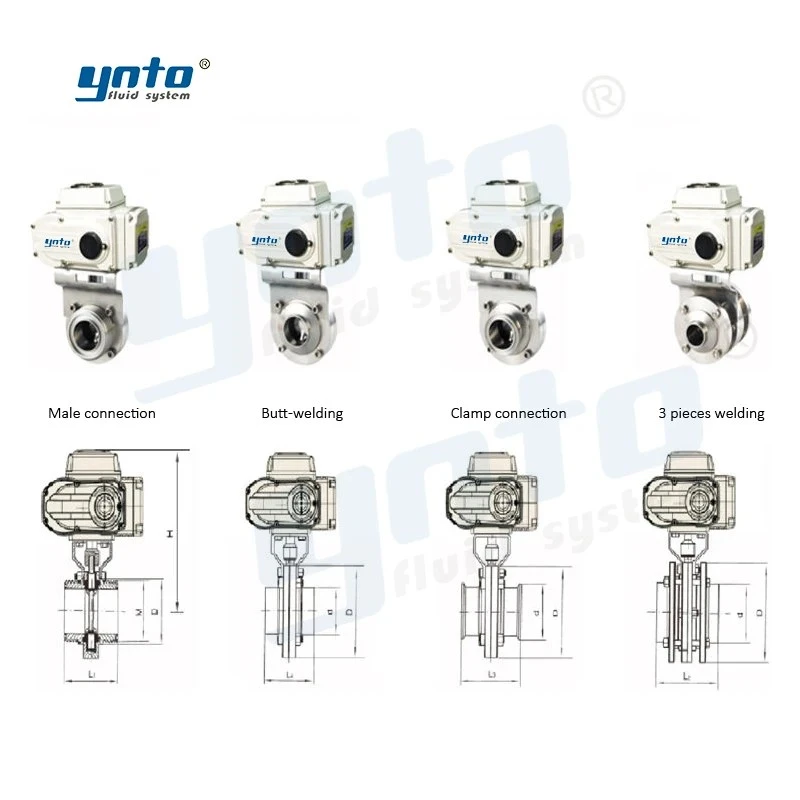
Once requirements are clear, selecting the right technology is crucial. Hygienic industries often favor diaphragm valves and tri-clamp ball valves for their simple, clean construction. A diaphragm valve with an FDA-approved PTFE diaphragm has essentially no stem in the fluid path, eliminating crevices where food can hide. These valves allow full drainage (no pockets) and use FDA-grade elastomers so nothing leaches into the product. Similarly, stainless steel ball valves with full-port design are widely used; their smooth bore and simple two-piece body make them easy to polish and clean. In fact, Bray notes that modern sanitary ball valves have “full stainless steel construction, tube-bore port sizes, FDA-approved PTFE seats and seals, and an electropolished internal surface finish of 15–20 Ra” to meet strict FDA and EU standards.
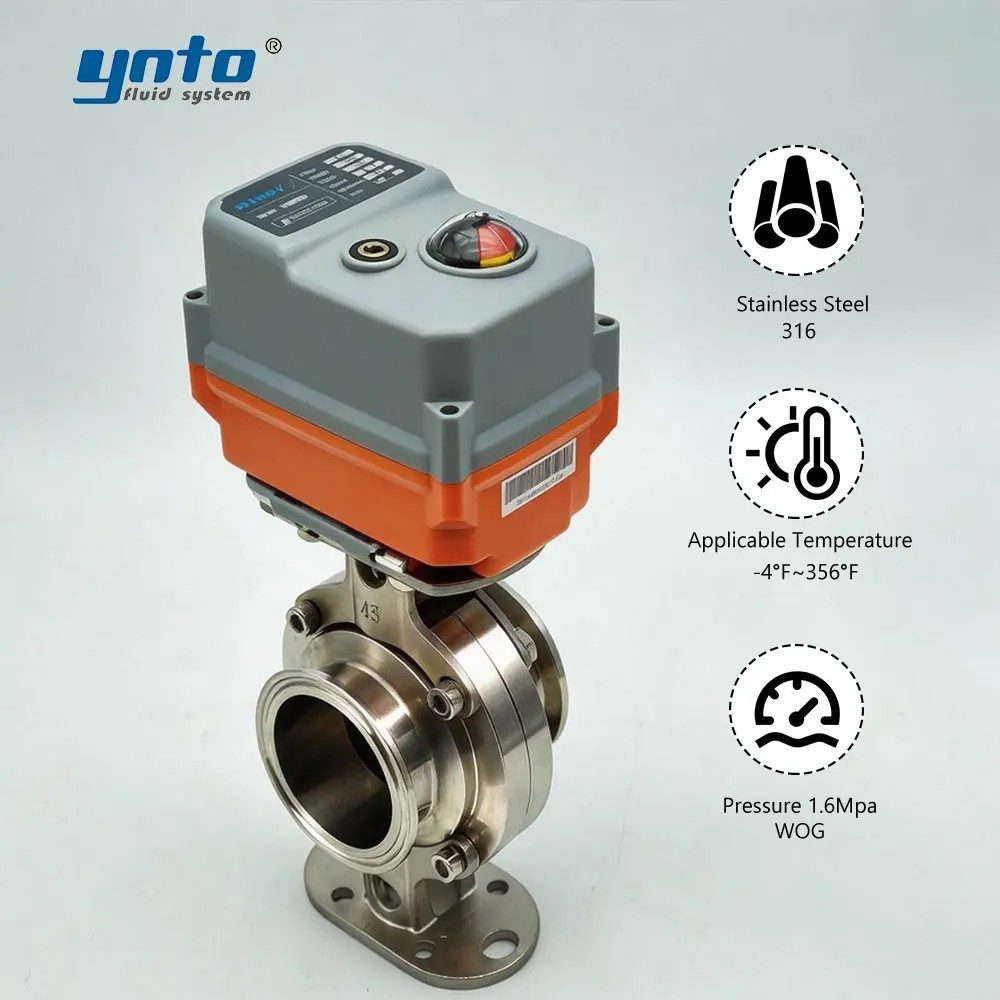
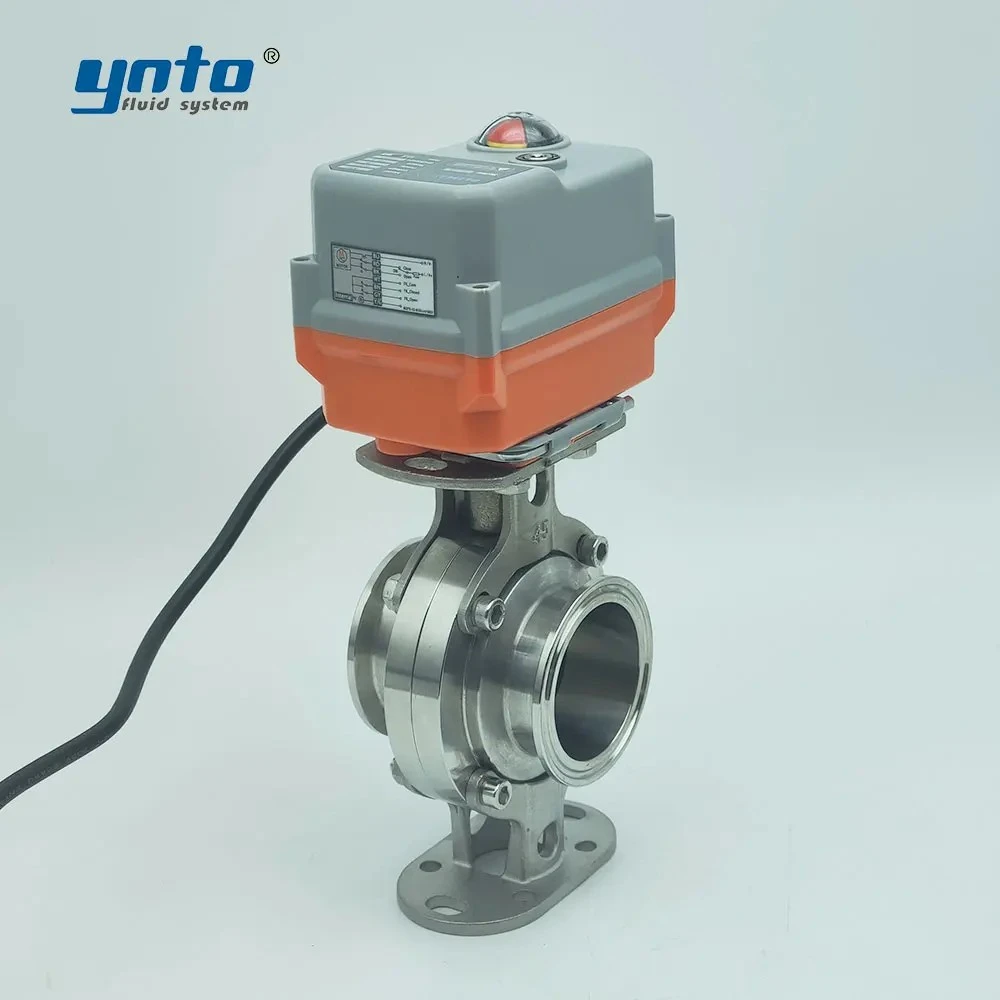
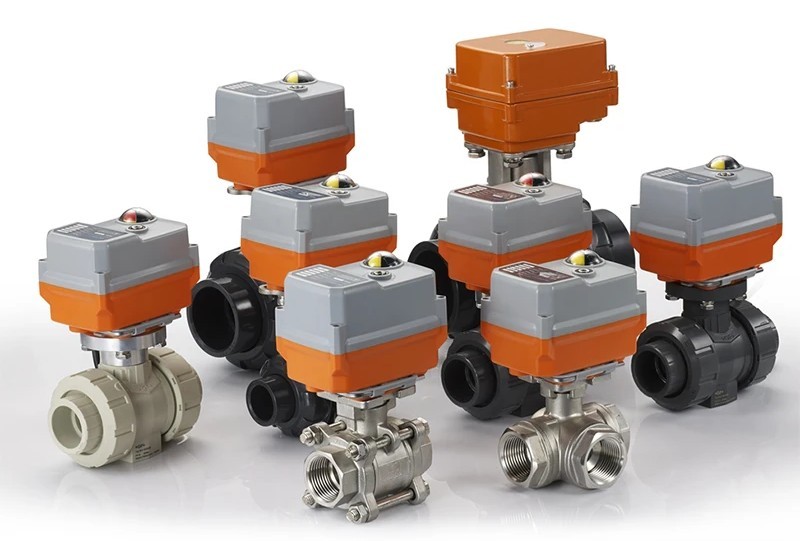
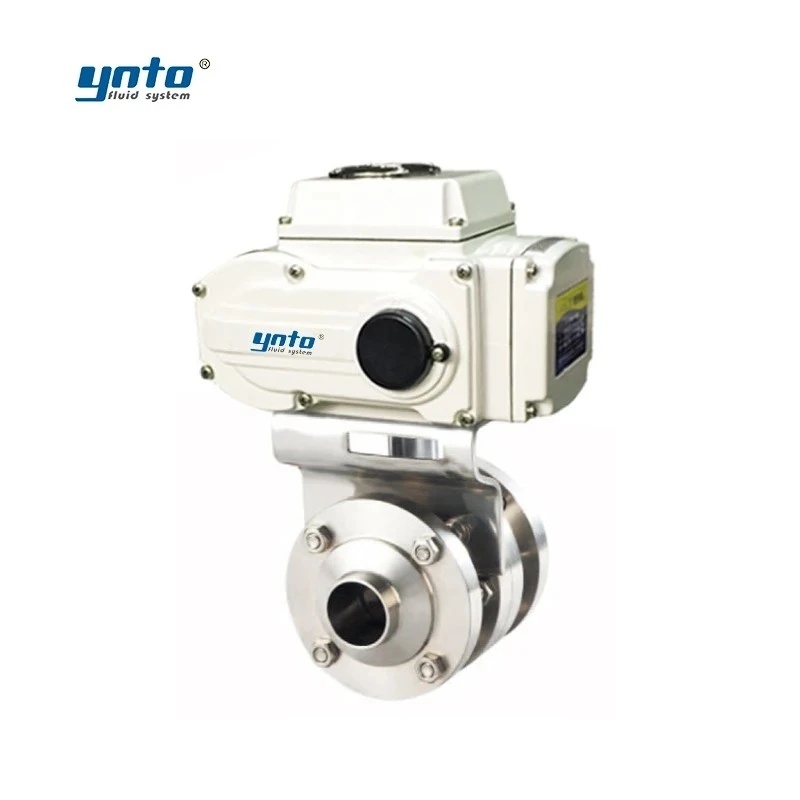
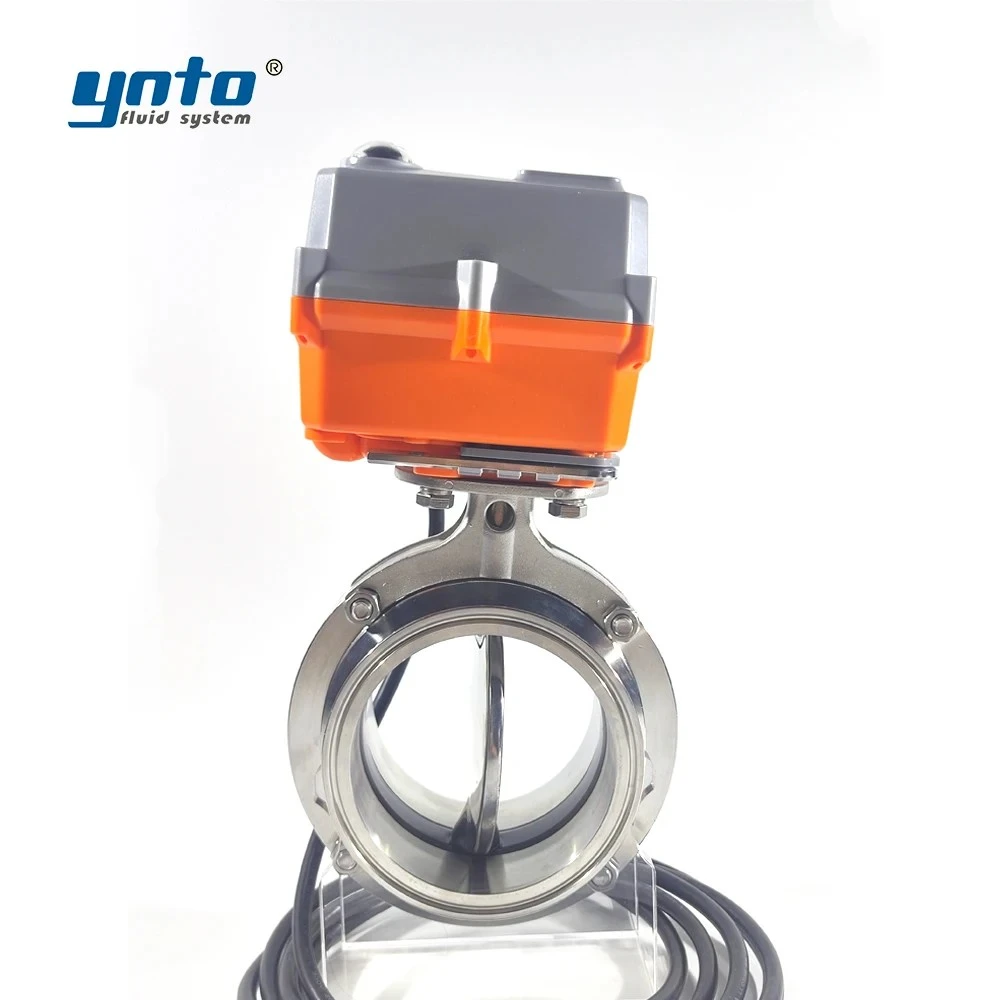
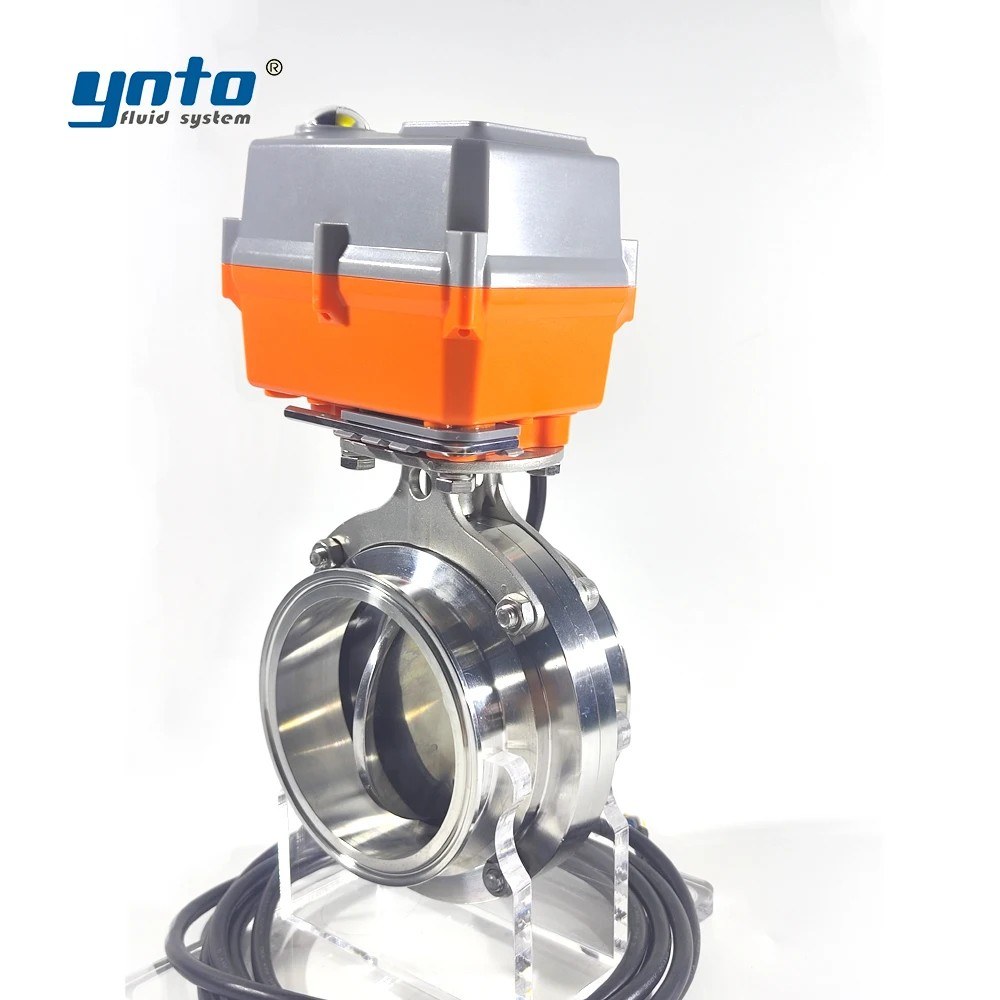
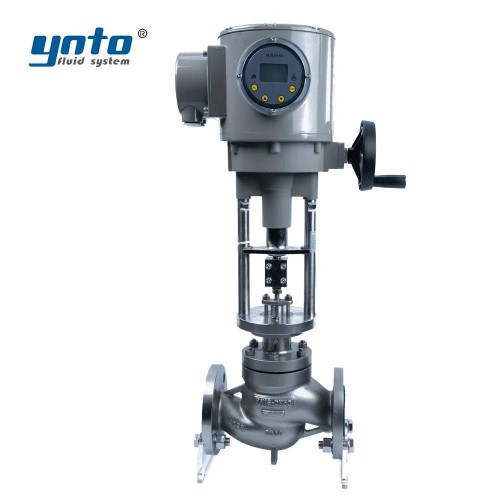
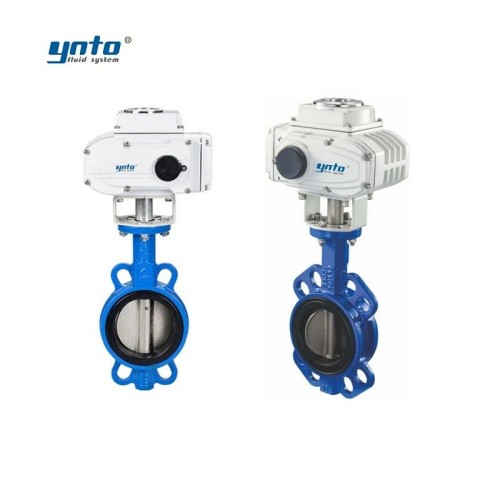
For processes requiring remote or automated control, engineers often install electric actuators on these sanitary valves. An electric actuator can rapidly open or close a valve upon command, ensuring tight shutoff and quick response even under fluctuating conditions. Linking to CNYNTO’s portfolio, for example, electric actuators are offered that precisely position valves without manual intervention. Similarly, using electric ball valves allows integration with a plant’s control system to modulate flow as needed. For larger flow rates, electric butterfly valves with stainless steel discs and actuators are an option. And even for blending or flow splitting, electric control valves provide proportional regulation. In each case, the valve construction (stainless steel, sanitary trim) and actuator control scheme reduce the mechanical stress (effect) and minimize the risk of drift or failure (impact).
Food Grade Materials and Their Role in Safety
Material selection is a key safety issue. All surfaces that touch food or beverage must be inert and non-toxic. Engineers specify food-grade materials – typically 316L stainless steel – because of their corrosion resistance and ability to withstand aggressive sterilization. PTFE (Teflon) is used for seats and gaskets because it resists acids and caustics, and even repeated sterilization. In some cases, FDA-approved elastomers like EPDM or FKM (Viton) might be chosen for seals if high temperatures or special chemicals are involved. The goal is to ensure that (cause) process fluids and cleaners cannot degrade the valve internals, because when that happens → (result) metal flakes or gasket residues enter the product, creating a contamination risk (impact). In short, using the right food-safe material prevents that chain of events.
Materials Approved for Food Contact
International standards require that valve materials in contact with food must be certified. 316L stainless steel is often considered the “gold standard” for food service because it is highly resistant to pitting and easy to polish. Other alloys like Super Duplex may be used for extreme corrosive streams, while elastomers (like PTFE, EPDM, FKM) are chosen for gaskets based on pH and temperature. Alloys and finishes are selected so that, even after hundreds of CIP/SIP cycles, the valve remains corrosion-free. A polished finish (less than 0.8 µm Ra, as one guideline suggests) is specified so microorganisms cannot cling to rough spots. Pressure-relief valves and regulators in the plant also use compatible safe materials (per ASME/ANSI) to handle excess pressure without introducing contaminants.
Benefits of Stainless Steel Valves
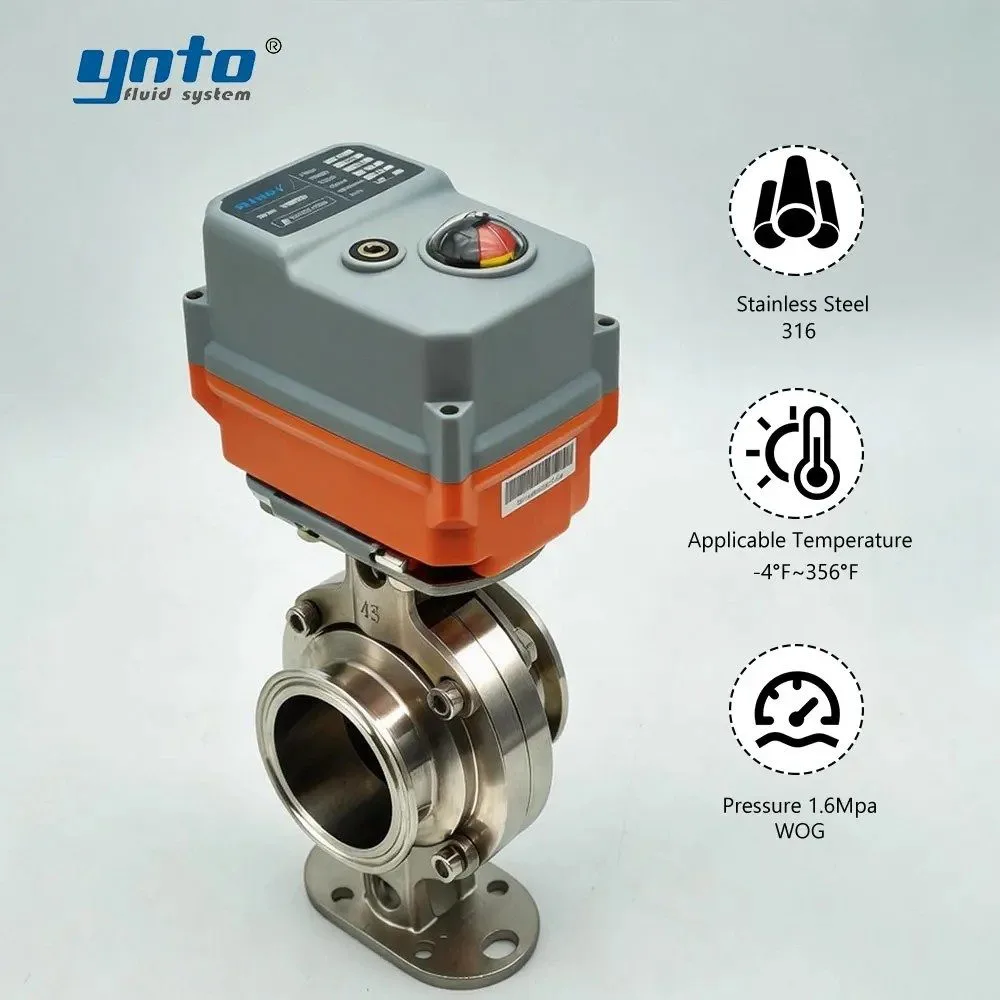
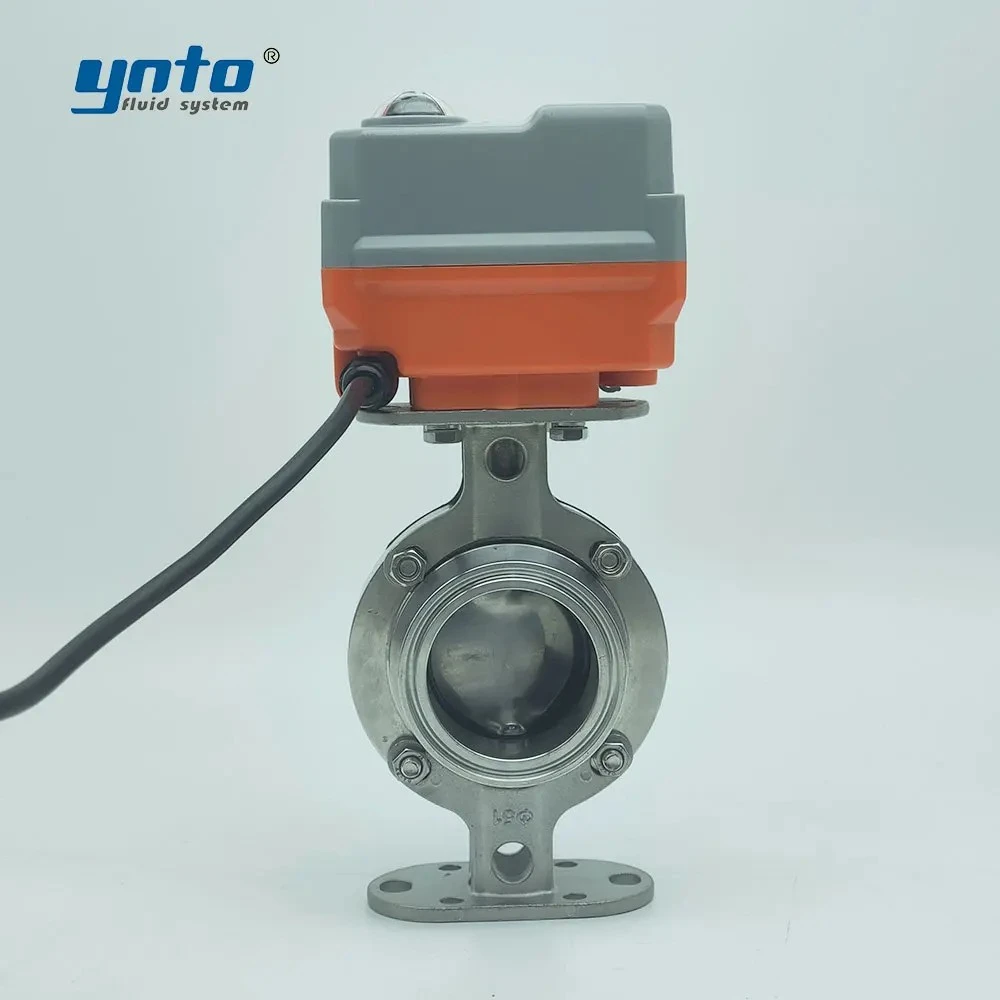
Stainless steel not only stands up to chemicals; it also handles heat. In steam pasteurization, valves see 120°C steam. A stainless steel valve won’t warp or pit under these conditions. It also avoids outgassing or off-tastes. Bray points out that in food and beverage, valves are often electropolished and certified to FDA/EU food contact standards. This means the metal itself (and any inert PTFE liners) have been tested. For example, CF8M (316 cast) or 304 stainless steel bodies are common. These choices eliminate the root causes of many contamination problems – when a 316L valve is properly installed, it will not introduce foreign particles or change the product chemistry (impact).
Regulatory Considerations in the Supply Chain
Beyond technology, strict regulations govern food safety. In the US, the FDA’s Title 21 CFR and the USDA’s regulations apply to equipment in food plants. In Europe, EC1935/2004 – the “Food Contact” regulation – requires every surface touching food to be safe. A well-known industry source notes that under EC1935, “anything in contact with a food product must comply with the Food Safe logo”. In practice, this means valves must be cleaned, documented, and often come with material certificates. If a plant installs non-compliant valves, it risks regulatory fines and even loss of customers.
Overview of Food Safety Compliance Regulations
Regulatory bodies expect traceability. According to Valve & Process Solutions, food-safe valves are built and bagged in clean areas, with “certification and traceability of all components in contact with food”. That includes seals and lubricants, which must be FDA- or EU-approved. Additionally, industry standards like 3-A Sanitary and EHEDG provide guidelines for hygienic design. For example, a 3-A certified valve has no internal deadlegs and can be fully cleaned-in-place. When designing a system, engineers reference ANSI/ASME standards (e.g. BPE, B31.3 for piping) and API specifications to ensure pressure and testing ratings meet code. All these standards influence how a valve is constructed and tested (e.g., hydrostatic tests per ASME to assure pressure safety).
Impact of Non-compliance on the Supply Chain
Non-compliance isn’t just theoretical: it can halt operations. A single microbial contamination event traced to a faulty valve can lead to product recalls, fines, and brand damage. The engineering manager may recall how a client’s plant was shut down when inspectors found a nylon mesh valve insert flaking into tomato paste – clearly a non-approved material that caused “small contaminants” in food. In severe cases, authorities may require replacing entire valve sets. By contrast, a food-grade valve might include an RFID tag or QR code so every part can be tracked. Ultimately, adhering to standards (cause) ensures consistent product quality (result) and keeps the supply chain safe (impact).
Ensuring Contamination Prevention
Even with the best valves, preventive design and maintenance are key. Every valve selected for the food chain must have features to minimize risk. By design, valves like diaphragm valves have crevice-free bodies, so there’s nowhere for bacteria to hide. Ball valves with full-drain ports do not trap product when closed. Extra-large diameter valves reduce fluid velocity and turbulence, limiting aerosol carry-over. Some valves include steam jets or vent ports to blow out product between runs.
Key Features of Valves That Minimize Risk
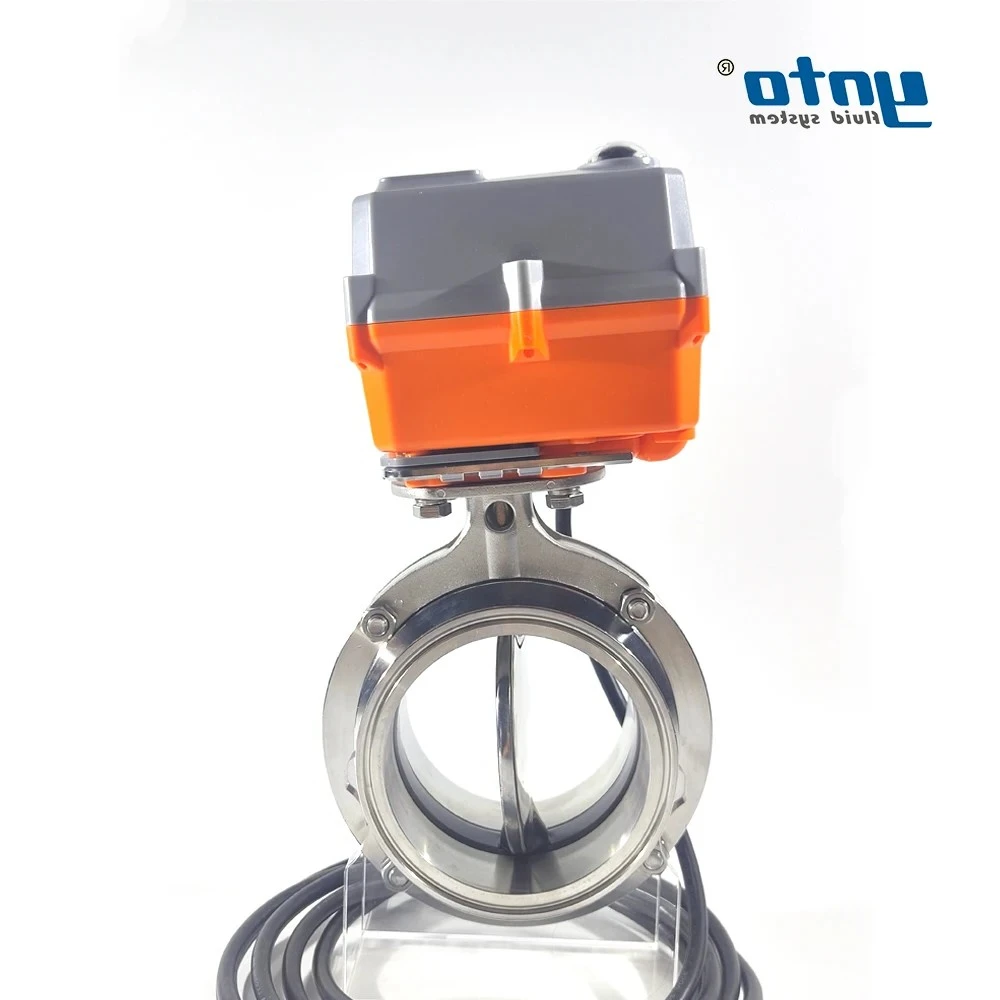
Features like tri-clamp connections allow rapid disassembly for inspection; quick-release couplings mean an operator can remove a valve for manual cleaning without tools. Electropolished or mirror-finished interiors (Ra < 0.4 µm) make it harder for residue to stick. Bray notes that special “body cavity fillers” and extended weld ends help valves avoid dead zones. In short, the right design eliminates causes of contamination (food traps, crevices) so the effects – bacterial growth or flavor carryover – are prevented.
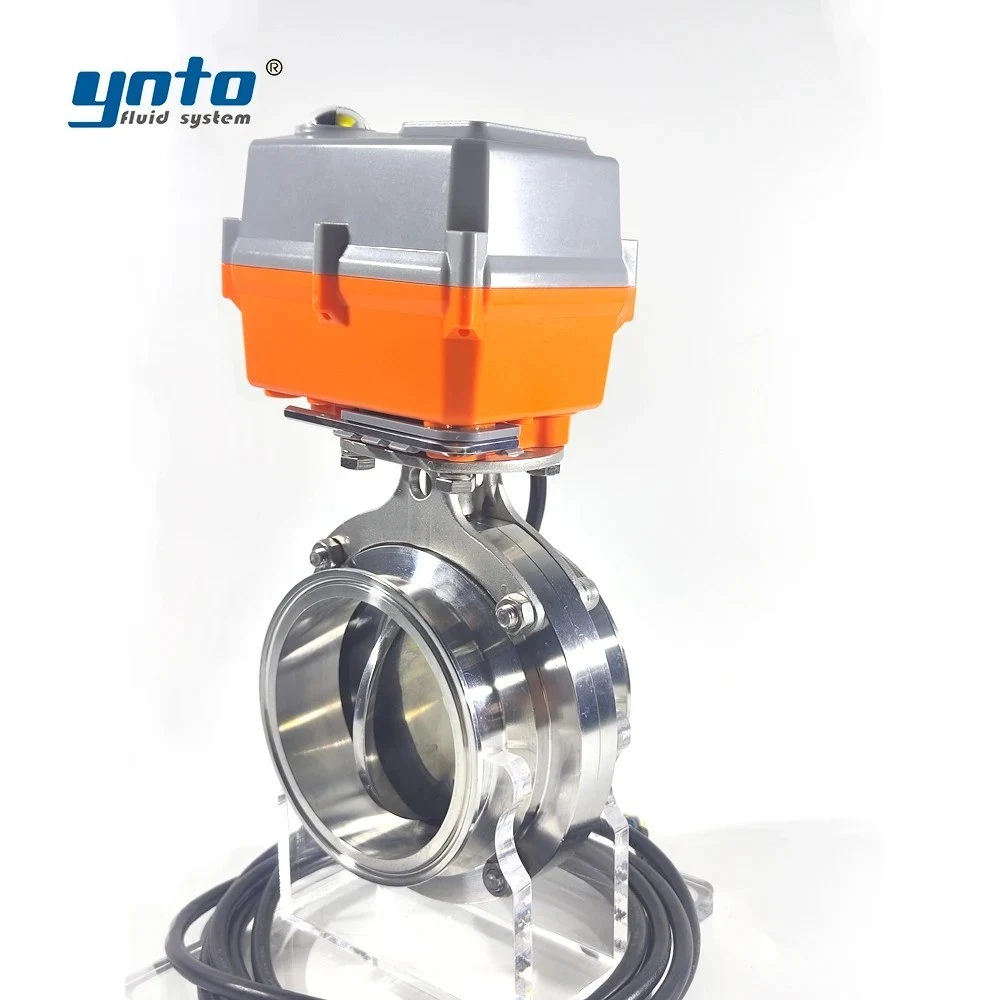
For example, in a dairy plant using stainless steel piping, an engineer might specify diaphragm valves for the milk lines because their flat internals flush clean easily. The choice of valve with crevice-free construction means there is no nook for milk to spoil. Similarly, butterfly valves used in high-flow water loops often use FDA-approved TFM liners, as Bray’s product literature shows, to prevent corrosion and ensure easy cleaning. By selecting valves whose construction inherently blocks common contamination paths (cause), the plant maintains hygiene (result), and the final products meet safety requirements (impact).
Implementing Effective Sanitation Practices
Valve selection must go hand-in-hand with cleaning protocols. In a CIP cycle, all valves should remain in positions that allow complete drainage. For instance, angle-seat or mix-proof valves might be used where fluid diversion is needed; their design isolates used fluid from the supply. After cleaning, valves are usually closed and sometimes purged with sterile air. Modern plants even use automated testing: temperature or microbial sensors check for residue. Still, physical inspection is vital. This is why, as part of standard operating procedures, maintenance teams break down critical valves regularly to inspect seats and seals under magnification – a practice stemming from the cause-effect knowledge that wear and deposits can hide behind the seal.
Strategies for Maintaining Valve Integrity
Beyond design and installation, ongoing vigilance keeps valves safe. Formal inspection schedules and proper maintenance are crucial.
Inspection Schedules and Maintenance Procedures
Valves are typically on a preventive maintenance plan. For example, an electric actuator may be tested monthly to ensure it opens fully under load. Manual ball valves might be lubricated quarterly and bench-tested for seal tightness. Engineers often refer to guidelines (e.g. ANSI/ASME B31.3) for pressure system testing; a valve may be hydro-tested annually at 1.5× its rated pressure. During shutdowns, maintenance crews visually check each valve’s body and seat for any pitting or cracks. Because food-processing valves operate on a different duty cycle than, say, petrochemical valves, the inspection often focuses more on cleanliness and seal condition than just mechanical wear. If a minor leak is detected, the cause (worn seal) is replaced immediately, preventing the chain of seal failure (effect) that could lead to a critical leak (impact).
Training Staff for Proper Handling
Finally, equipment is only as good as its operators. Staff are trained to handle valves carefully. For instance, they learn to open a valve slowly after a CIP cycle to avoid water hammer (cause) because a sudden shock can loosen the valve seat (effect) and eventually cause leaks (impact). They also follow lock-out/tag-out procedures for high-pressure lines to prevent accidental opening. Documentation and training ensure that only food-safe lubricants are used on stems and that disassembled valves are reassembled correctly. This human factor – attentive operation – is a crucial part of preventing contamination. It’s not enough to have a “good” valve; engineers ensure that valve integrity is maintained through smart procedures and compliance with safety requirements.
Conclusion
Food-safe valves truly are a linchpin of a hygienic food supply chain. By choosing valves designed for the task – with food-grade materials, hygienic construction, and proper actuation – engineers eliminate many common causes of contamination and failure. These valves meet rigorous food safety compliance standards, from FDA and 3-A sanitary certifications to EU food-contact laws. In practice, stainless steel valves and PTFE seals mean washdowns and chemicals (causes) no longer degrade the system (results) – keeping contaminants out (impact).
Every link in the chain matters. As one final thought: implementing automated monitoring and investing in “food-safe” certified valves pays off in fewer shutdowns and recalls. We encourage industry professionals to review their valves’ construction and materials (e.g. 316L steel, FDA elastomers, sanitary actuators) and to consult manufacturers or solutions like CNYNTO’s range of hygienic valves. With the right technology and practices, you ensure that your valves – from the smallest diaphragm valve to large electric-actuated butterfly valves—contribute to a safe, efficient, and compliant food production process.

- 2026-09-11 16:48:37
- 2026-09-09 09:50:27
- 2026-09-07 09:14:41