PVDF Ball Valves for PCB Etcher Filters: Chemical Resistance & Selection
- 2026-11-02 08:31:38
- admin
- NO COMMENTS
At the PCB etcher, the filter-loop pump starts and the inlet pressure climbs as expected. The outlet gauge hesitates. By the end of the shift, the differential pressure has crept upward, and a pale crust appears around an old valve union. During an isolation stroke, the actuator pauses near closed. An engineer seeing those signs will ask whether the carbon bed is loading with solids, the valve cavity holds deposits, or the seal has changed after repeated chemical and temperature cycles.
“Carbon-filter loop” may describe a liquid rinse or wastewater branch, a side-stream skid, or exhaust equipment. The etcher's chemistry may differ from what this valve handles. Start with the piping diagram and a sample at its proposed location.
PVDF Ball Valves for PCB Etcher Carbon-Filter Retrofits: Chemistry and Fit
Introduction to PVDF Ball Valves
What Is a PVDF Ball Valve?
A quarter-turn ball valve can isolate a filter housing or route liquid through a bypass. These plastic ball valves serve on-off duty when sized and specified for the actual stream. In a PVDF design, the body and specified wetted parts use polyvinylidene fluoride. Seats, stem seals and connections still need their own material specifications. “PVDF valve” is not a complete bill of materials.
When a technician reports a rising stroke torque, I first compare readings with the filter's differential pressure and the time since the last bed change. Pressure trapped on one side can load the ball and make it hard to turn. Abrasive carbon fines or copper-bearing solids may score a seat. A larger actuator might force the valve through that resistance, but it could also damage the stem or union. Establish the cause before resizing the drive.
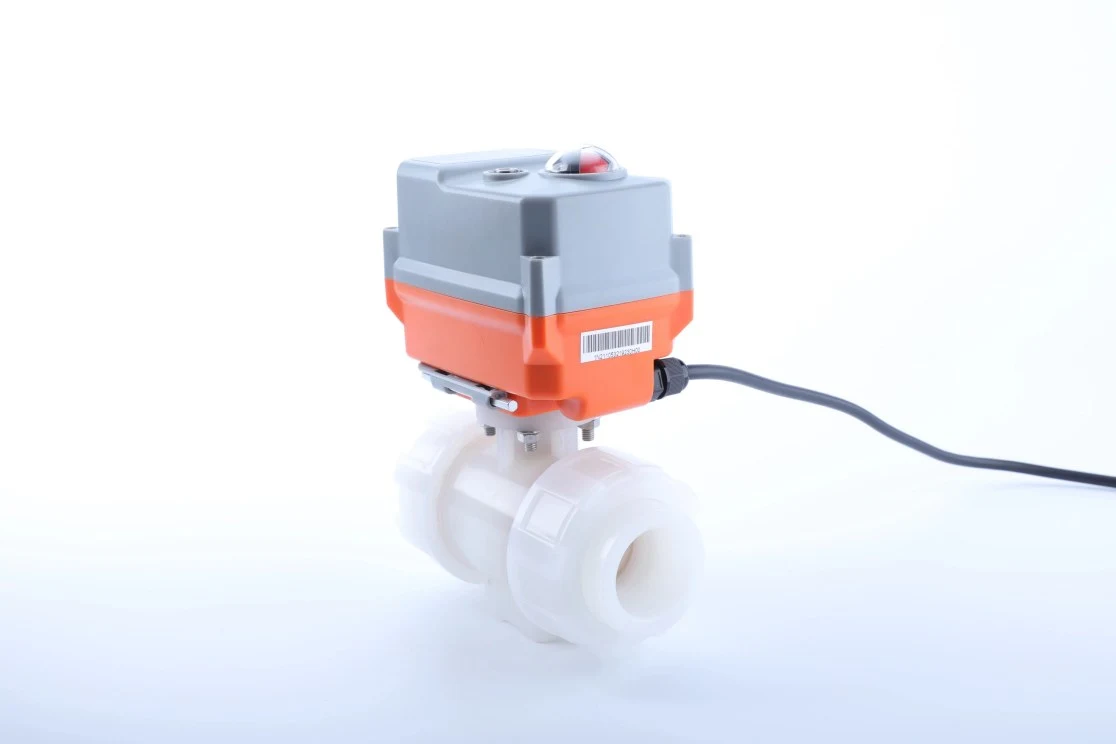
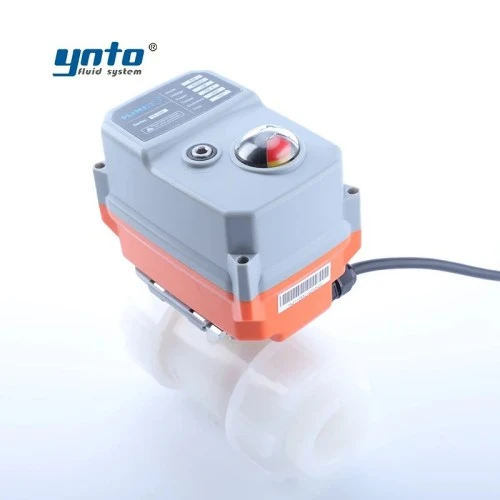
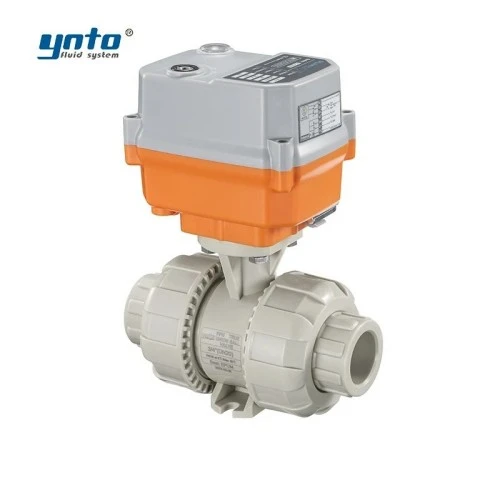
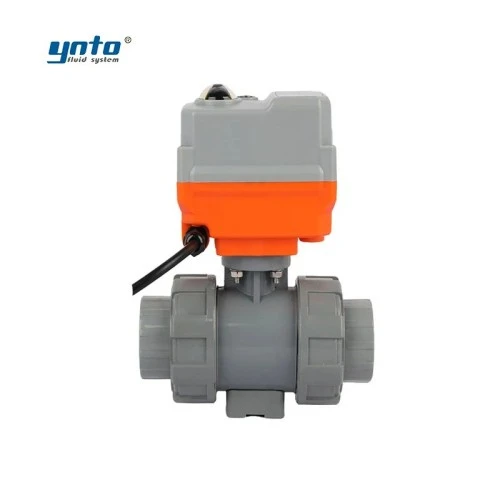
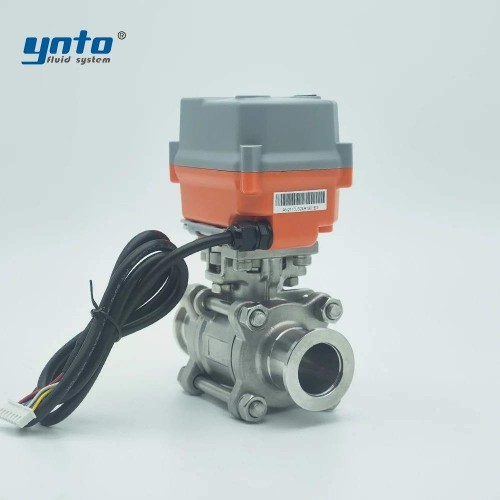
YNTO's electric PVDF true-union ball valve is a practical starting point for an automated liquid-side isolation duty. The published range covers DN15–DN200 and lists PVDF construction with PTFE as a standard seal option. Request the drawing and a configuration-specific pressure and temperature rating; a catalog range does not establish suitability for every PCB chemical mixture.
Properties That Make PVDF Useful for Chemical Service
PVDF can avoid some metal corrosion pathways and offers a relatively smooth wetted surface. That helps when repeated cleaning would otherwise attack a metal component or introduce corrosion products into a process stream. It does not remove the need to evaluate oxidizer concentration, solvent exposure, temperature, mechanical stress and the site's actual cleaning sequence. Material compatibility tables are a screening tool, not a warranty for an assembled valve.
A true-union assembly can be removed without cutting a supported pipe, provided its union ends match the fittings. Around crowded carbon vessels, that lets crews inspect seats without disturbing the main etcher loop.
Corrosion-Resistant Materials in PCB Processes
The Need for Corrosion Resistance
PCB wet processes vary. Acidic cupric chloride regeneration may introduce hydrochloric acid and an oxidizing reagent, while another line may carry alkaline etchant, rinse water, spent treatment liquor or cleaning solution. The carbon-filter branch may see only one of these—or alternating fluids during flushing. Ask for chemical identities, concentrations, pH, normal and maximum temperatures, suspended solids and possible upset mixtures at the actual valve.
Corrosion often appears first as an operating change. A mismatched wetted part pits; roughness catches deposits; torque rises; repeated strokes wear the seal and produce a small external weep. That can expose personnel before a pressure alarm occurs, even on a modest-pressure acid line.
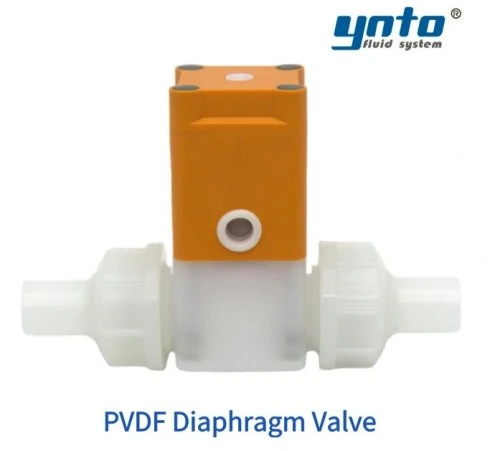
For another branch where a diaphragm's separation of process liquid from upper mechanism is useful, YNTO's PVDF diaphragm valve belongs in the comparison. It is not a like-for-like ball-valve replacement: its flow coefficient, connection, diaphragm material and operating cycle need their own review. On a solids-laden stream, seat geometry and maintenance access may decide the choice more than the body polymer alone.
How PVDF Fits into the Equation
Compare PVDF with the materials already on the skid. 316L may serve compatible clean-water duty, but chloride-rich or strongly oxidizing service can call for a different analysis. Duplex can improve resistance in some chloride environments, though it is not a universal answer for acidic oxidizers. Carbon steel may belong in external supports or a dry utility line, not automatically in the wetted etchant path. External FBE or Halar coatings cannot make an exposed, incompatible internal trim safe.
PTFE is a common seat candidate; EPDM and FKM are alternatives only where the whole chemical and temperature envelope supports them. A seal that swells slightly during a cleaning cycle may first show up as increasing breakaway torque. Repeated heat-up and cooldown can then produce compression set, reduce seat load and cause intermittent seepage at low pressure. Check both steady operation and post-cleaning shutdown, rather than accepting a single ambient-temperature bench result.
PVDF's allowable pressure falls with temperature; size and joint design also matter. Maximum stated temperature and pressure are not simultaneous allowances. Review the assembly's derating curve, vacuum and thermal-cycling duty.
Exploring Chemical-Resistant Valves
The Importance of Chemical Compatibility
Specify what reaches the valve during filtration, bed changes, rinsing, neutralization and drain-down. Confirm whether oxidizer reaches the carbon vessel. Carbon does not generally restore exhausted etchant or remove dissolved copper; a post-treatment branch exposes the valve to different fluid.
Look closely at interfaces. Socket, butt-fusion, threaded, flanged and union connections cannot be swapped merely because the nominal diameter agrees. Record pipe outside diameter, wall series, flange drilling, face-to-face length, available wrench clearance and support spacing. For a retrofitted vessel, measure the current spool and the movement needed to withdraw the cartridge or bed internals. The valve can be chemically suitable yet impossible to service in place.
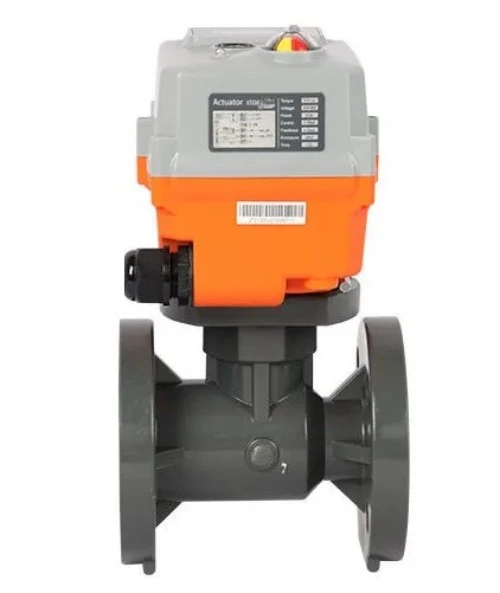
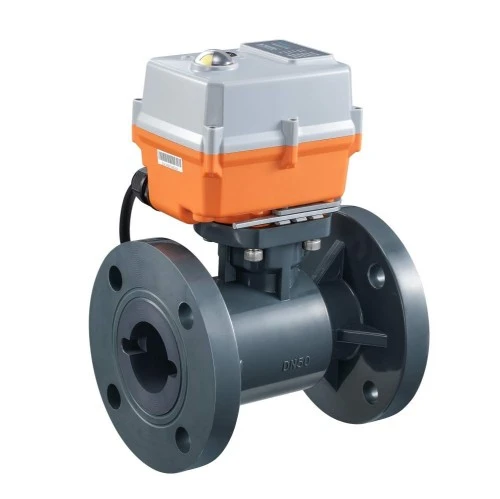
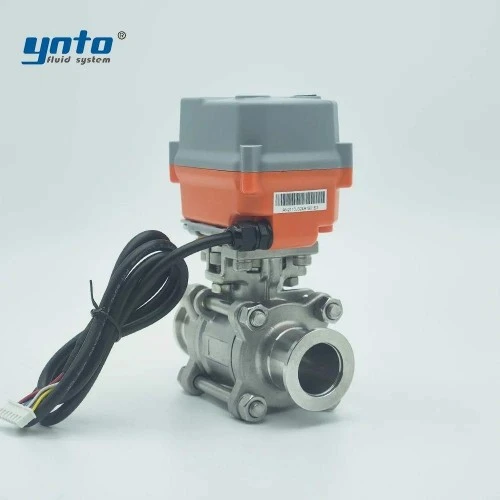
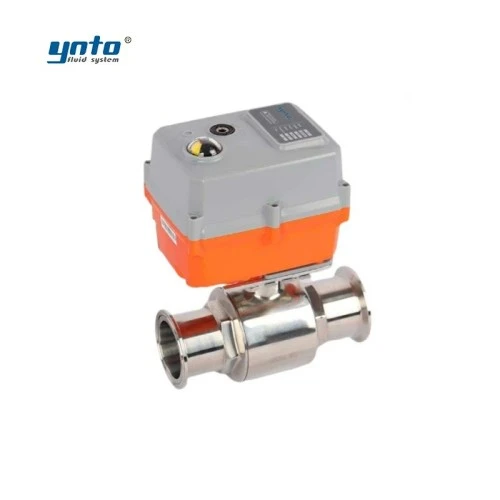
YNTO lists a flange-type electric plastic ball valve with a PVDF body option. Its page also presents several other thermoplastics and connection details, so specify the PVDF configuration explicitly and request a revised outline and wetted-parts list. A title containing “UPVC” should never be treated as proof that every delivered configuration is PVDF.
How PVDF Ball Valves Meet Industry Standards
Assign standards to components. ISO 16135, adopted as DIN EN ISO 16135, addresses thermoplastic ball valves. ISO 9393-2 defines hydrostatic tests for thermoplastic valves including PVDF. ISO 5211 covers part-turn actuator attachments, not chemical compatibility or torque adequacy.
ANSI/ASME flange dimensions may govern the mating metal pipework. API 598 is often referenced for metallic-valve inspection and testing, but citing it alone does not certify a PVDF valve for this service. The purchase specification should state the applicable plastic-valve test method, test medium, pressure, duration, allowable leakage and witnessed documentation. For a flange transition, verify its gasket face, bolt pattern, torque procedure and pressure class as a complete joint.
Safety review has a similar boundary. Isolate and drain both sides, lock out the pump and actuator, verify zero pressure at a safe drain, and capture hazardous liquid before loosening a union. A trapped ball cavity may contain acid even after the line is empty. Near a heated or concentrated chemical stream, use the plant's splash, ventilation and personal-protection procedures; a nameplate pressure rating does not replace them.
Industrial Valve Applications in PCB Etching
Overview of Existing Solutions
A useful retrofit drawing distinguishes the main etcher recirculation circuit from a liquid filter bypass, sampling point, spent-liquor transfer and exhaust-treatment equipment. Industrial valve applications on those branches differ. The main circulation line may prioritize low head loss and predictable switching, while a carbon polishing branch may prioritize service isolation, complete drainage and prevention of untreated bypass. An exhaust duct needs an air-handling design, not a liquid PVDF ball valve selected by association with the machine.
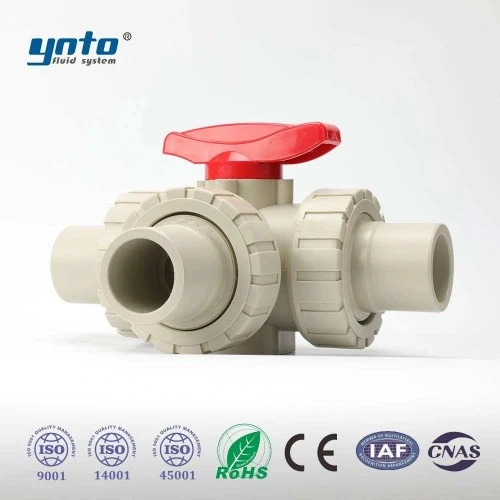
For a compatible liquid skid requiring a three-port choice between filter and bypass, YNTO's three-way plastic ball valve with a listed PVDF body option offers a product family to evaluate. Confirm the selected L- or T-port drilling, allowable flow paths and connection details on a signed drawing: the page title and its specification table describe connections differently. A misread port pattern can send untreated liquid past the carbon bed.
Bypasses need interlocks: a closed filter outlet can deadhead the pump, while an open bypass can defeat treatment. Define permissible states and drains on the P&ID and test them during commissioning.
Case Studies Highlighting PVDF Performance
Consider an illustrative rinse-polishing retrofit in which an old metal-bodied isolation valve leaves rust-colored deposits around its stem. A sample confirms that the valve sees treated rinse water with periodic cleaning chemical, not the active etchant. The engineer checks a PVDF body and PTFE seat against both fluids, selects the matching union ends and verifies the pipe supports. A post-installation trace of filter differential pressure and valve stroke current gives the maintenance team a baseline. This is a design example, not a claimed plant result.
In a second illustrative review, a valve on a carbon-filter bypass begins to bind after each media change. The team finds carbon fines trapped in the ball cavity and a nearby elbow that makes service awkward. The response is not automatically to install a stronger motor. They add an appropriate flush and isolation procedure, assess whether another valve geometry suits the solids, and revise access around the spool. Chemical-resistant valves still depend on good layout and cleanable process boundaries.
The Impact of Valve Actuators on Performance
Different Types of Actuators
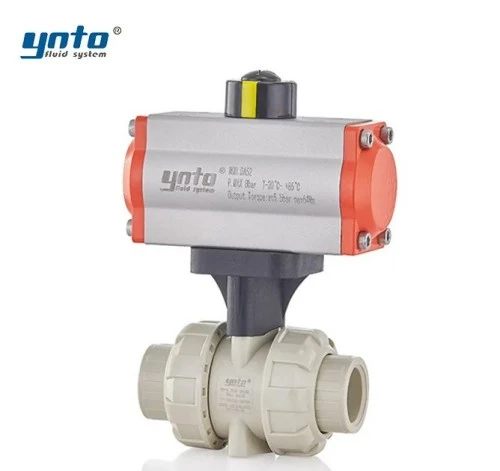
Manual operation may suffice for infrequent, accessible filter isolation. Electric valve actuators make sense where the PLC must confirm position before starting the pump or opening a bypass. Pneumatic drives suit facilities with reliable instrument air and can be configured with spring return where a defined loss-of-air position is required. For each option, specify breakaway torque at maximum differential pressure, operating time, end switches, enclosure rating, power or air supply, and the required failure state. “Automatic” does not itself mean fail-safe.
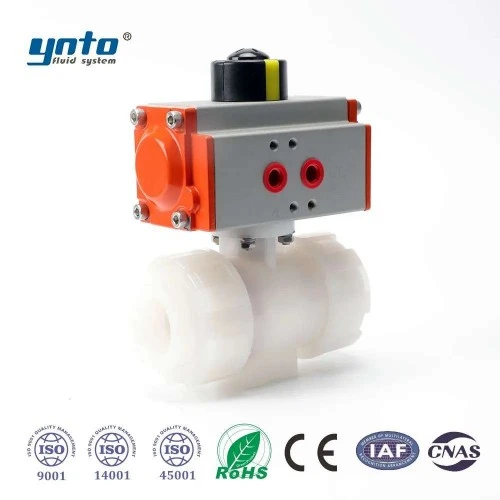
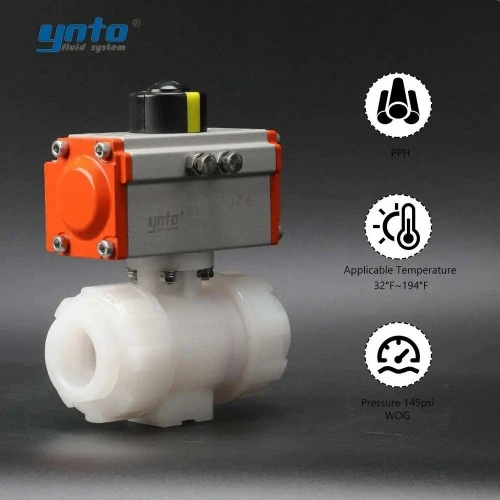
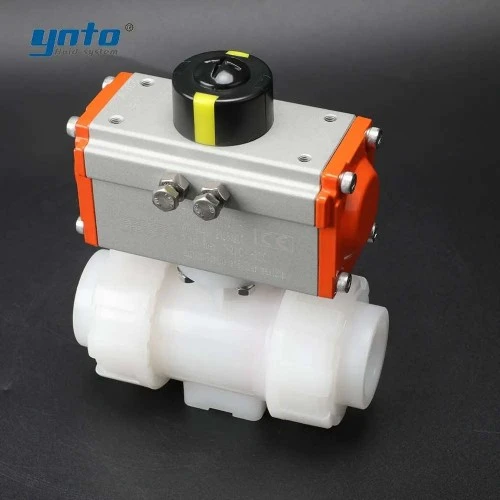
YNTO's pneumatic plastic ball valve with a PVDF body option lists material choices, pneumatic configurations and feedback accessories. The page's broad product title and DN claims should be reconciled with its detailed size table for the chosen assembly. Request the actual actuator torque calculation and connection drawing before putting it on a retrofit bill of materials.
Benefits of Integrating Automated Valve Systems
Automated valve systems can sequence isolation with pump stops, provide proof of position and reduce exposure when operators would otherwise work beside an acid line. They do not regulate flow precisely merely because the actuator accepts a command. An ordinary full-port ball valve operated near closed may create an unstable jet, erode the seat and make small-flow control noisy. Use a purpose-selected control valve or modulating package with validated characteristic when continuous throttling is needed.
During commissioning, test the power-loss and air-loss scenarios separately. A valve left closed may protect an open filter housing but strand liquid in a heated section; a valve left open may sustain flow but compromise the treatment boundary. Record stroke times at working differential pressure, feedback agreement, low-flow pressure stability, leaks at all joints and filter differential pressure before and after media service. A trend that changes immediately after a carbon change may implicate the filter rather than the new valve.
Conclusion
Revisiting Chemistry and Fit
PVDF ball valves can provide maintainable fluid control solutions for isolation or diversion around a PCB etcher's liquid-side carbon-filter retrofit when the complete valve assembly fits the chemistry, pressure, temperature and pipework. Verify where the filter actually sits, what passes through the valve in every operating mode, and whether the connection can be removed safely. Corrosion resistance matters; so do trapped liquid, solids, seal selection and the space to turn a union.
Future Trends in Valve Technology
Position feedback and pressure trends can distinguish a loading carbon bed from a stiffening valve. For a YNTO quotation, send the P&ID, chemical matrix, pressure, temperature, flow, connection dimensions, control logic, failure position and test requirements. Compare a PVDF ball valve with a diaphragm alternative before the shutdown.
- 2026-11-02 08:31:38
- 2026-10-30 09:48:17