

Exploring the Benefits of a Slurry Wear-Resistant Shut-Off Valve in Heavy-Duty Applications
- 2026-05-22 13:51:55
- admin
- NO COMMENTS
Introduction
Challenges in Heavy-Duty Slurry Applications
During inspection of a tailings transfer line, engineers often notice the trouble before the instrument trend confirms it. The shut-off valve closes, but not cleanly. Actuator current climbs a little each week. A faint pressure drop grows across the isolation point, and when the line is restarted after a short stop, settled solids make the first movement feel heavier than it should. In wet scrubber and mineral slurry service, the pattern is similar: solids collect near the seat, the valve no longer finishes its stroke with confidence, and a small sealing problem turns into a production risk. In severe slurry duty, erosion wear is a primary failure mode, and straight-through designs are favored because they reduce abrasion and maintenance burden.
In many field operations, the cause-and-effect chain is painfully familiar: high slurry velocity and pressure fluctuation lead to particle impact and micro-vibration at the throttling edge, which accelerates seat wear, which then slows response and increases leakage. A second chain is just as common. Repeated temperature and chemistry swings fatigue sleeves and soft sealing materials, which creates microleaks, which allows fines to pack into cavities, which pushes operating torque upward until the valve sticks or fails to isolate fully. That is why a clean-water valve that looks acceptable on paper can age very quickly in abrasive slurry service.
The Role of Wear-Resistant Shut-Off Valves
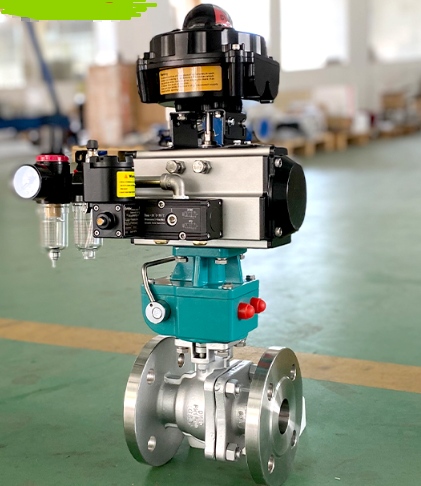
A slurry wear-resistant shut-off valve exists to break those failure chains at the mechanical level. The best designs give solids a clean path, minimize dead zones, keep the valve body out of the direct erosive stream, and concentrate wear on sleeves, liners, or trim that can be replaced without scrapping the entire assembly. Full-bore geometry, bi-directional sealing, and reduced cavity exposure are not luxury features here; they are survival features. For automated isolation on moderate-solids branches or cleaner bypasses, engineers also look at application-matched options such as an . CNYNTO’s range includes a stainless V-type model specifically described for slurry and media containing particulate fibers, which makes it a practical supporting option around the harshest shut-off points rather than a generic substitute for them.
Features of Wear-Resistant Shut-Off Valves
Material Composition and Design
What separates an abrasion-resistant valve from a standard industrial shut-off valve is not a thicker catalog page. It is design discipline. Heavy-duty slurry knife gate valves succeed because they isolate with elastomer sleeves and a one-piece body, so the process medium contacts sacrificial wear parts rather than body joints. Severe-service slurry ball valves reduce torque and clogging by combining robust drive trains with slurry-proof internals and sealing surfaces that keep scraping themselves clean during cycling. For modulating duty, advanced slurry control designs go one step further and centralize the erosive flow, protecting not only the valve body but also downstream wear-resistant piping.
Benefits of Abrasion-Resistant Materials
Material selection is where valve life is either protected or quietly sacrificed. For mildly corrosive slurries, flush water circuits, and side services, 316L stainless steel is often a sensible baseline because it balances strength and corrosion resistance. When chlorides or aggressive liquors enter the picture, Duplex or Super Duplex grades offer higher strength and better resistance to pitting. For the real wear zone, hardfacing becomes decisive: tungsten carbide and chromium carbide coatings applied by PTAW or HVOF are used precisely because they resist severe abrasion and help preserve sealing geometry under high-cycle service. PTFE remains valuable where chemical resistance is the priority, while EPDM performs well in water, steam, and alkali-rich environments; FKM is often chosen when heat, fuels, or broad chemical exposure are more severe. Meanwhile, FBE and Halar coatings are useful when bodies or external surfaces need a stronger corrosion barrier without moving straight to exotic alloys. For corrosive slurry sidestreams, dosing skids, and cleaner process branches, a chemically matched is often the safer recommendation, and CNYNTO offers PTFE-lined, PVDF, PP-H, and 316L diaphragm options for exactly those cases.
Maintenance-Free Characteristics
Procurement teams often search for a maintenance-free valve, but experienced engineers read that phrase carefully. In slurry service, “maintenance-free” should really mean maintenance-light. The most successful designs simplify service by limiting wear to sleeves, gland packing, or replaceable trim instead of exposing the entire valve body to continuous erosion. That approach shortens shutdown windows and improves total cost of ownership because the pressure boundary stays in service while only the wearing components are renewed. Upstream protection matters too. A properly placed helps keep oversize debris out of cleaner loops, and a correctly selected reduces reverse-flow shock after pump trips or line disturbances.
Applications of Slurry Control Valves
Industries Utilizing Slurry Valves
A slurry control valve is never just a valve. It is part of a broader package of slurry handling equipment: isolation logic, automation, piping wear management, maintenance access, and environmental risk control. Buyers who focus only on initial purchase price usually spend the difference later in downtime, torque problems, and premature replacement. The right shut-off technology has to fit the process, not just the line size.
Mining and Minerals Processing
Mining and mineral processing remain the clearest heavy-duty examples. Tailings, concentrate pipelines, dewatering systems, and hydrometallurgy circuits all punish flow control hardware with high solids and long duty cycles. When the valve geometry throws abrasive flow directly into the body or pipe wall, downstream wear-resistant piping becomes a second victim. That is why centralized-flow control designs and heavy-duty pinch or knife gate isolation valves continue to gain attention in mining. Automation is no longer optional in many plants, either. A remote or pneumatic actuator keeps operators away from hazardous line-side interventions and makes emergency isolation faster and more repeatable.
Waste Water Treatment
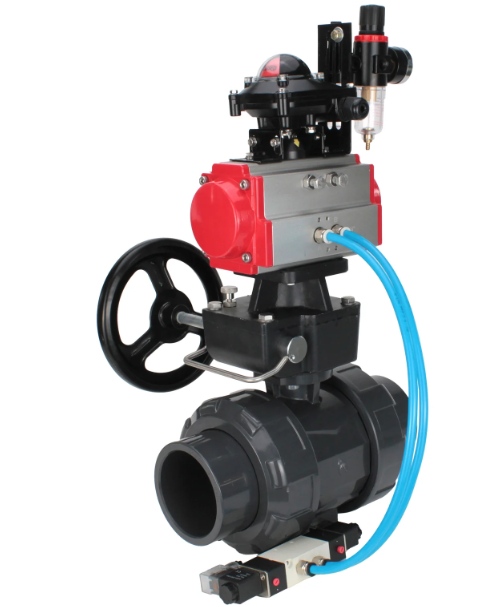
Waste water treatment presents a different kind of brutality. Grit, fibrous sludge, corrosive chemicals, and changing pH create mixed wear rather than one single attack mechanism. Engineers in these plants often observe partial-closing problems first: solids hold the closure element slightly off the seat, then leakage starts, then actuator torque rises because the valve is fighting packed debris rather than clean fluid. Large reclaim lines may justify an for space-efficient isolation, while chemical feed and corrosive sidestreams are better suited to a that isolates operating parts from the media. Backflow protection also matters around pumps and sludge recirculation, where a reduces hammer and reverse contamination risks.
Chemical Processing
Chemical processing makes the selection problem even tighter because abrasion and corrosion often arrive together. Polymer-bearing slurries, catalyst residues, and hot crystal-forming streams can pack cavities, increase friction, and destroy conventional soft seats quickly. In these environments, the old engineering lesson still holds: do not force an on/off isolation valve to behave like a precision regulator. For mild abrasive and corrosive slurries, diaphragm designs remain useful. For high-temperature or high-cycle isolation, metal-seated carbide-coated ball valves and pinch-style valves continue to be preferred. Where the process needs controlled recirculation, density trimming, or stable modulation, buyers should move toward dedicated control hardware such as a or an rather than asking the main shut-off valve to do both jobs poorly.
Choosing the Right Slurry Valve
Factors to Consider
Flow Rates and Pressure Ratings
A valve that is undersized fails one way; an oversized valve can fail another. If the opening is too restrictive, local velocity rises and wear concentrates at the exact area you are trying to protect. If the valve is too large and forced to live in a barely open position, the trim edge becomes a constant target for abrasive particles. Pressure class also has to be checked against real operating temperature, not just the design pressure printed in the process sheet. ANSI/ASME pressure classes still govern many severe-service selections, while DIN/EN PN classes remain critical for European flange systems and dimensional interchangeability. On the verification side, ISO 5208 defines pressure-boundary and closure-tightness testing, and API 598 covers the shell, backseat, and low- and high-pressure closure tests used across many valve types. In other words, standards are not paperwork at the end of the purchase order; they shape the entire valve design, rating, and test philosophy.
Compatibility with Valve Automation Solutions
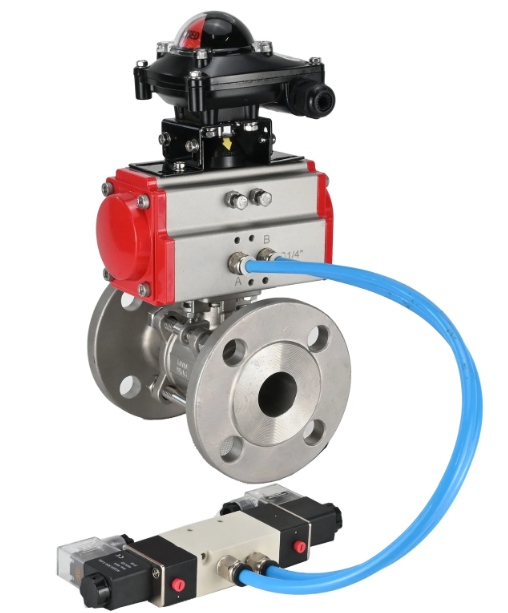
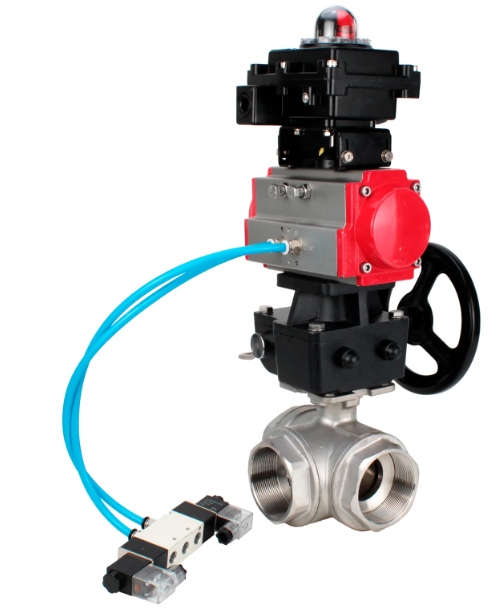
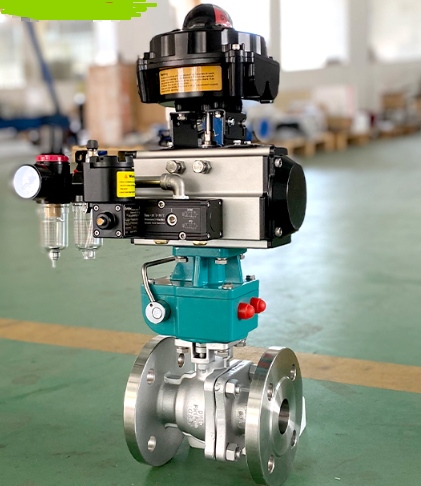
Automation compatibility should be checked early. If the process requires fast emergency shutoff, actuator torque reserve, closure speed, and fail-safe behavior must be specified before the valve is built. If the valve will live inside a PLC or DCS environment, buyers should confirm signal type, enclosure rating, position feedback, and maintenance diagnostics from the beginning. Modern valve automation solutions increasingly include real-time monitoring of flow, pressure, and valve position, remote control capability, and early warning functions for fault detection. Around high-wear slurry systems, this kind of visibility is valuable because it lets teams act on torque drift or delayed response before they face a full line upset.
Comparison with Other Valve Types
Standard ball and butterfly valves remain excellent products in the right service, but heavy abrasive slurry is not forgiving of compromise. Diaphragm valves work well where corrosion is high and abrasion is moderate. Pinch valves are strong where full bore, bubble-tight isolation, and sleeve replacement are priorities. Knife gate designs dominate dense shut-off duties because they keep geometry simple and wear localized. Slurry ball valves make sense where shutoff integrity matters and solids loading is controlled. For the buyer, the practical question is not which valve is “best” in the abstract. It is which valve will survive the actual combination of solids, chemistry, pressure drop, cycling, and maintenance access in the plant.
Conclusion
Recap on the Advantages of Slurry Wear-Resistant Valves
A slurry wear-resistant shut-off valve protects more than a line section. It protects isolation performance, maintenance planning, downstream piping, and plant safety. When selected well, it reduces leakage risk, slows torque growth, shortens maintenance windows, and lowers the chance that a valve body becomes the sacrificial wear point in a high-solids process. That is why experienced buyers increasingly evaluate service life and repair strategy, not just purchase price.
Looking Towards Innovative Solutions in Slurry Control
The next decade of slurry control will not be defined by harder metals alone. It will be defined by smarter combinations: replaceable hardfaced trim, cleaner flow geometries, better elastomer science, and actuators that feed position and health data back into plant systems. Smart valves already support real-time monitoring, remote control, predictive alerts, and easier PLC/SCADA integration. For operations that want durability without sacrificing controllability, that combination of wear-focused design and digital visibility is where the real efficiency gains are coming from.
- 2026-10-09 14:26:55
.png?imageMogr2/format/webp)
- 2026-09-30 08:25:23
- 2026-09-28 10:28:43