

Unlocking Efficiency: How a Solenoid Valve Control System Transforms Automation
- 2026-04-02 08:20:19
- admin
- NO COMMENTS
Introduction
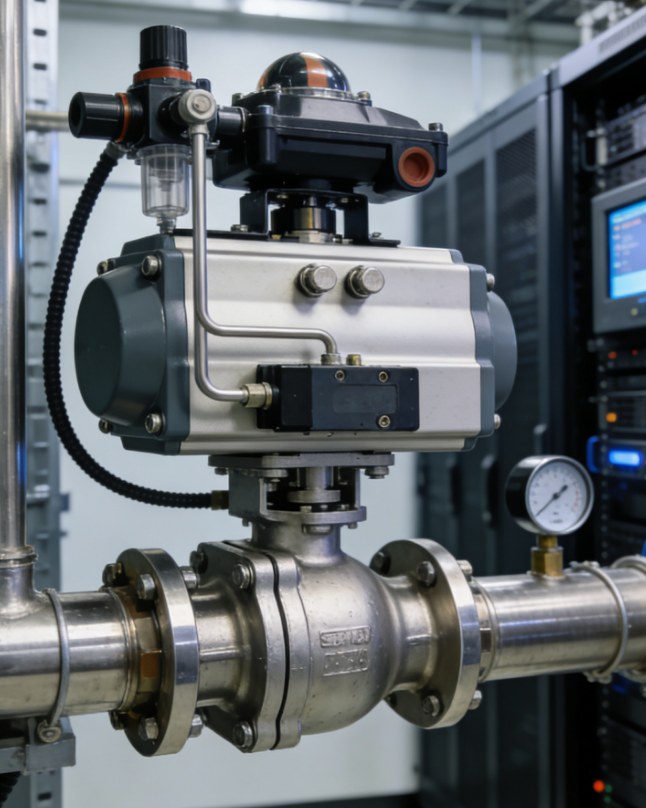
During a routine inspection of a beverage processing pipeline, maintenance engineers noticed subtle pressure fluctuations whenever a solenoid-actuated valve operated at about mid-stroke. The valve hesitated around 40–50% opening before completing its cycle, causing downstream oscillations and minor pressure spikes. These observations in the field illustrate a common phenomenon: a brief pressure surge can trigger small spool oscillations → seat abrasion → slower valve response. In complex automated systems – from chemical dosing to factory air lines – solenoid valves are key components. These electrically operated valves precisely control fluid flow without manual intervention, enabling automated on/off control or proportional flow regulation. For example, directional solenoid valves channel compressed air to pneumatic actuators in assembly machines, enabling precise motion control. In automation, sensors, controllers, and valves interact; a sensor signal triggers a PLC to send power to the coil, causing the solenoid valve to shift (much like an electrical relay).
Chapter One: The Role of Solenoid Valves in Automation
Automation Basics
In modern industrial automation, fluid control is often managed by networks of solenoid valves orchestrated by PLCs or DCS. These valves act like electronic switches for fluids, directing liquids or gases precisely on demand. A typical automation loop might use a pressure transmitter upstream of a tank; when the level drops below a set point, the PLC de-energizes a solenoid valve to admit more fluid until the level is restored. Another example is a pneumatic system where a solenoid directs compressed air to a pneumatic actuator to extend a cylinder and then a second solenoid vents it to retract. The integration of sensors and controllers with solenoid valves enables tight closed-loop process control.
Importance of Solenoid Valves
Solenoid valves are crucial because of their speed, precision, and versatility. They can open or close in milliseconds, which is essential for high-speed processes. For example, in a filling line, a solenoid valve might pulse on and off to meter exact volumes of product into containers – a precise flow-volume function. Multiple valves can be mounted on a single manifold to simplify plumbing and save space – a major advantage when control panels become crowded. This modular approach also reduces wiring complexity. Because they often default to fail-safe positions (thanks to springs set normally closed or open), solenoids enhance process safety. Engineers appreciate that solenoid valves provide fast, reliable switching, minimizing downtime and maximizing production efficiency.
Chapter Two: An In-Depth Look at Solenoid Valve Types
Standard Solenoid Valves
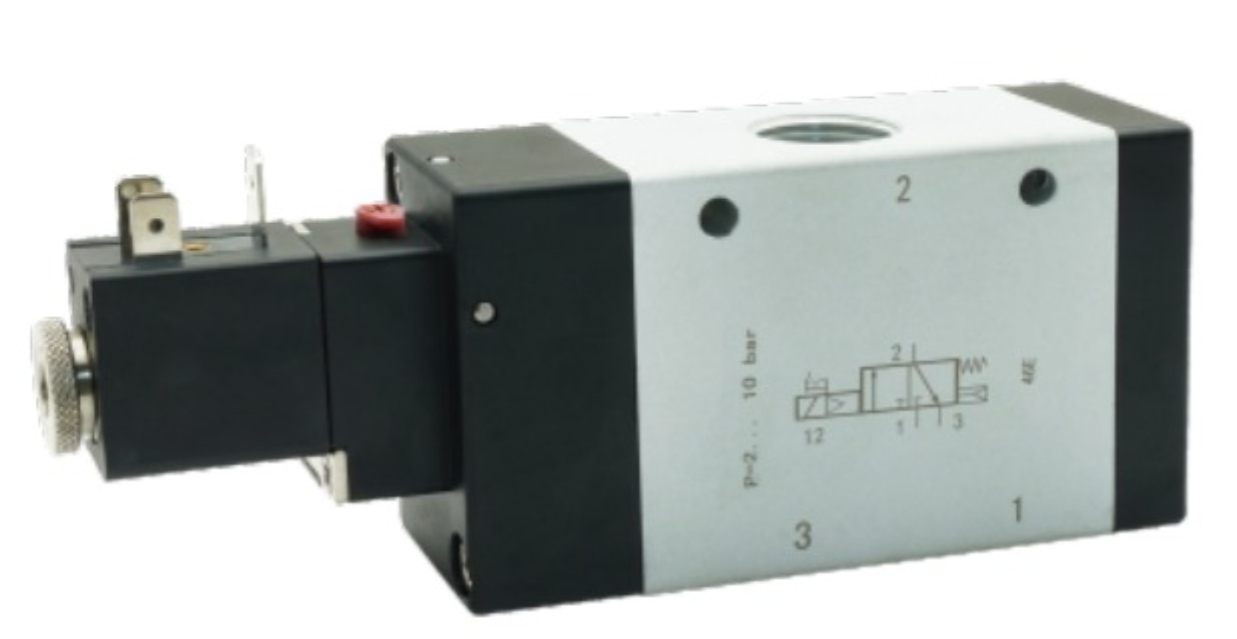
Standard solenoid valves are the workhorses of fluid control systems. Common designs include 2-way (two ports, typically on/off) and 3-way valves (three ports, often used for venting or mixing). These valves are usually direct-acting or internally piloted. A direct-acting 2-way valve opens or closes a single path – for example, letting water into a dishwasher or air into a spray nozzle. A 3-way valve might switch a fluid from one outlet to another or include an exhaust port. Typical bodies are made of brass or plastic (which suits neutral fluids), and seals are often EPDM, NBR or PTFE for general water or air service. These valves often meet ISO or ANSI thread standards, making them interchangeable in many systems. For instance, a dishwasher water solenoid will have a brass body with an EPDM seal and an NBR diaphragm, suitable for potable water. Standard valves are generally less robust than industrial versions but cost-effective for utilities, irrigation, HVAC, and many simple process lines.
Industrial Solenoid Valves
Industrial solenoid valves are built to endure harsh conditions, extreme pressures, and aggressive media. They often feature bodies of 316L stainless steel, Duplex or Super Duplex alloys, or high-nickel steels to resist corrosion. For example, a valve handling seawater or chemicals may have a Duplex stainless steel body with PTFE or FKM (Viton) seals to prevent rapid degradation. High-pressure industrial valves are designed to ASME/ANSI pressure classes (e.g. 150, 300, 600) and tested to API or ISO standards for structural integrity. In addition, many are explosion-proof, certified for hazardous locations (ATEX or NEC). By selecting materials like alloy 20 or implementing anti-corrosion coatings (fusion-bonded epoxy (FBE) or Halar) on exposed parts, these valves maintain integrity in oil & gas, chemical, and marine environments. Engineered pilot passages, bleed orifices, and pressure-compensated actuation ensure reliable operation under high-line pressures and rapid cycling. These rugged designs prevent situations like pressure lock (where line pressure holds the pilot closed) that can defeat a weaker valve.
Niche Applications
Specialized solenoid valves serve many niche applications. Miniature valves can meter nanoliters in medical or lab devices, using PEEK or glass bodies for chemical compatibility and fine flows. Cryogenic solenoid valves use stainless steel bodies and silicone or PTFE seals rated for –200°C service. Conversely, high-flow or hydraulic solenoids employ carbon-steel or bronze bodies and reinforced springs to move large volumes under high pressure. Sanitary solenoid valves for food and pharma have polished 316L bodies and tri-clamp fittings with FDA-grade PTFE diaphragms, enabling clean-in-place operation without crevices. For example, a medical gas supply valve might use a nickel-plated brass body and FKM seals to ensure purity. In each case, materials and coatings are chosen to match the media: e.g. alkaline solutions vs. acidic fluids. If an unsuitable material is used (acid→ NBR), it can swell or crack (acid → NBR swell → seal breach → leak), so engineers carefully select PTFE or Viton when needed.
Evaporative Emission Control System
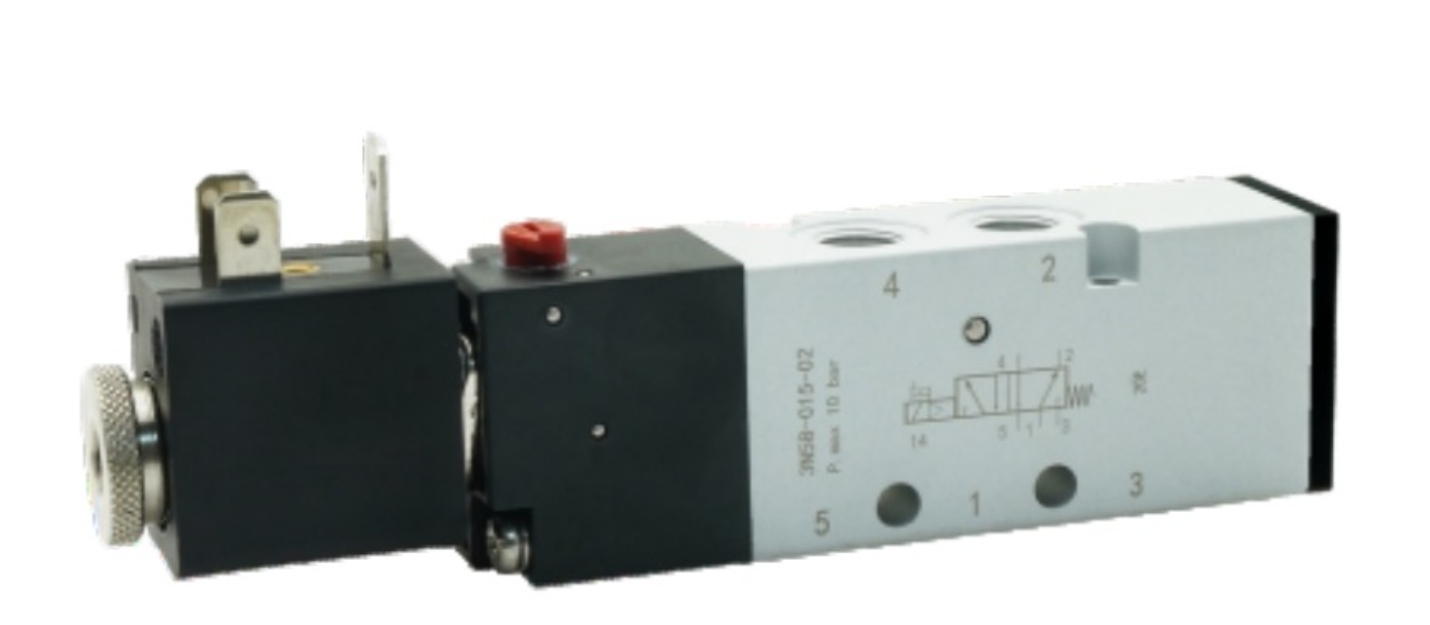
A practical application of solenoid valves is in automotive evaporative emission control (EVAP) systems. The EVAP vent valve is a solenoid-actuated valve that controls air flow into a charcoal canister, which traps fuel vapors from the tank. Normally, the engine control unit (ECU) holds this vent solenoid open to allow pressure equalization. During a self-test for leaks, the ECU closes the valve and applies slight vacuum or pressure to check seal integrity. If the vent valve sticks (often due to corrosion from road salt), the EVAP system registers a fault and the check-engine light comes on. In industrial terms, selecting a corrosion-resistant solenoid with FKM seals for this function can prevent the cause-effect chain of (salt corrosion → stuck valve → vapor leak → system shutdown).
Evap Vent Solenoid Valve Control System
Designing a solenoid control system for an EVAP vent involves both electrical and mechanical considerations. In vehicles, the wiring diagram typically shows one side of the valve coil grounded and the ECU switching the other side to apply 12V (so the valve is normally open with no power, closing when energized). In an industrial automation schematic, this is akin to a PLC output circuit energizing the coil through a fuse, with a flyback diode for DC surge suppression. Proper wiring labeling and diagrams ensure maintenance crews know which wire goes to which valve (each coil on a manifold is usually numbered). Interlocks may be added: for instance, the vent solenoid will only activate during purge mode. This solenoid valve control system is integrated into the engine/plant controller logic, highlighting how even a small valve becomes part of a larger control strategy. Engineers must also consider that the EVAP valve will cycle many times, so fatigue of the spring or coil insulation must be accounted for in design (replacing after e.g. 100,000 cycles) to avoid (spring fatigue → slow response → fault).
Chapter Three: Designing an Effective Solenoid Valve Control System
Key Design Considerations
When designing a solenoid valve control system, engineers must match the valve selection to the process requirements. Pressure and temperature ratings are critical: the chosen valve must exceed the system’s maximums. Standards like ANSI/ASME B16.34 define pressure-temperature classes, guiding choices of class 150, 300, etc. Material compatibility is equally important: components in contact with the fluid – such as valve bodies, seats, and seals – should be chosen for chemical compatibility. For instance, PTFE and FKM are common for chemical resistance, while EPDM is used for water or steam. International projects may require compliance with ISO or DIN standards (e.g. ISO 5211 actuator mountings, DIN face-to-face dimensions) to ensure parts fit global systems. Electrical design is also key: the coil voltage must match the available supply. An AC coil on 120VAC will not function properly on 24VAC, and applying 120VAC to a 24V coil burns it out (overvoltage → coil failure). Similarly, DC coils need diodes or resistors for protection. We often include fuses or surge suppressors on each coil circuit as per the NEC or IEC wiring standards. Safety features – such as selecting a “pressure to open” or “pressure to close” spring configuration – ensure fail-safe behavior: a normally-closed solenoid will shut the valve when power is lost, for example. Designing with these standards and safety factors in mind prevents cause-effect failures like (wrong voltage → coil hum → eventual burnout).
Solenoid Valve Wiring Diagrams
Wiring diagrams are essential for implementing any solenoid control system. A DC wiring diagram typically shows the positive supply, the solenoid coil, and a protective diode across the coil. For example, a 24 VDC circuit goes from +24V through the solenoid coil to ground, with the diode shorting back-EMF when power is removed. An AC coil wiring diagram might include a series resistor or ground connection, depending on whether the coil is single-phase. In a solenoid manifold, each valve’s coil is drawn separately and usually labeled. Documenting these diagrams helps technicians quickly identify coils during commissioning or troubleshooting. For instance, one might label coils 1–4 on a 4-valve manifold; the wiring diagram would then show coil 1’s wires going to PLC output 1, etc. Properly annotated wiring diagrams ensure that miswirings (such as switching coil polarities or missing fuses) are caught early, as the diagram enforces the design logic.
System Integration
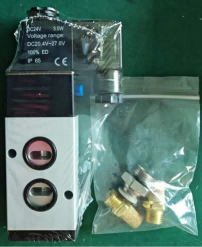
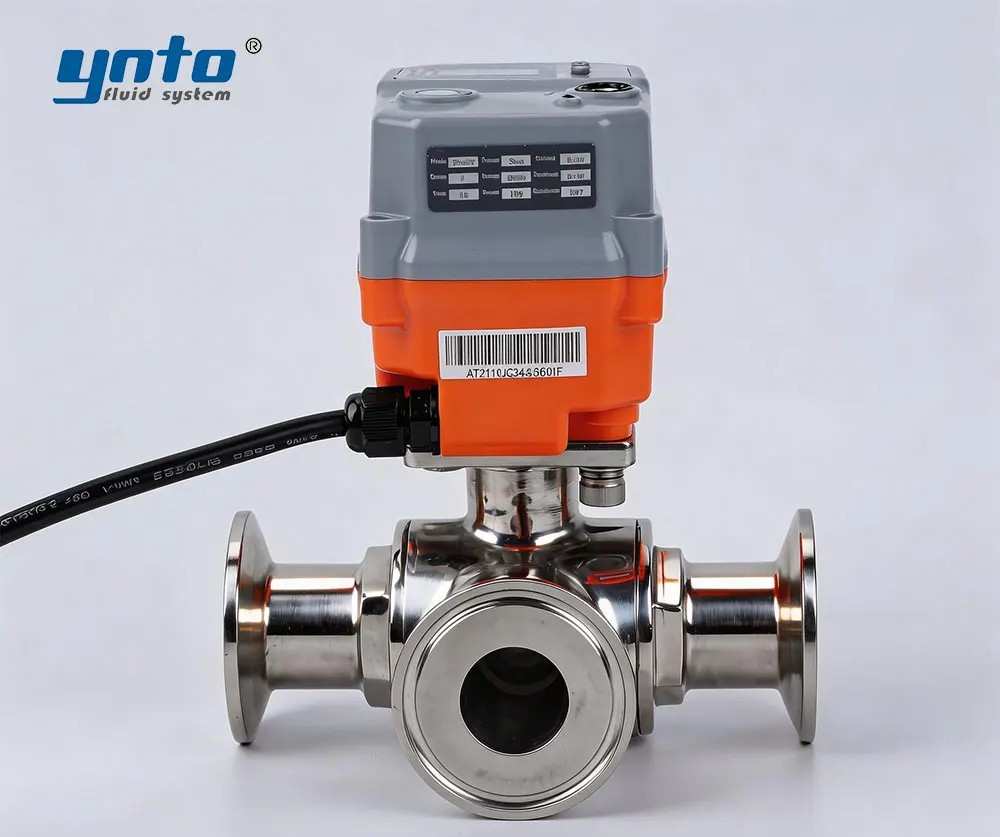
Integrating solenoid valves into the overall automation system means tying them into the PLC logic and safety infrastructure. Each solenoid coil connects to a digital output on the controller or to a relay interface. The PLC program then energizes valves based on sensor inputs or timing requirements. For example, if a flow sensor detects low flow, the PLC may open a solenoid valve to increase flow, then close it when the setpoint is reached. For handling large process flows, designers often include an electric control valve (such as a ball or butterfly valve with actuator) on the main line, while solenoid valves modulate branch flows. Similarly, an electric butterfly valve might isolate a high-pressure steam header, with smaller solenoid valves controlling auxiliary lines. Solenoids can also be linked with safety interlocks: for instance, a pressure switch may disable a solenoid valve if system pressure exceeds a threshold, preventing an unsafe condition. Advanced integration might include feedback: some solenoid valves offer built-in position switches or coil-current monitoring so the PLC can detect a failure (coil open or blocked valve) and react. Overall, good system integration aligns the solenoid control wiring and program logic with industry control standards (such as IEC 61131 for PLCs, or ASME safety integrity levels) to ensure robust operation.
Chapter Four: Troubleshooting Common Solenoid Valve Issues
Identifying and Resolving Faults
Field technicians use a systematic approach to diagnose solenoid valve faults. Electrical tests come first: verify that the coil has the correct supply voltage and continuity. If a coil has burned insulation or is open-circuit, replacing the coil often fixes the problem. If the coil is fine but the valve still malfunctions, remove the coil and manually actuate the plunger. Debris or scale can lodge in the valve and prevent full closure (particle clog → incomplete seal → leak). For example, a grain of sand in a valve seat might cause a continuous micro-leak. We might isolate the valve and apply pressure to see if it holds; if not, the internal seal or diaphragm may be damaged and need replacement. Common cause-effect chains include (contaminant ingress → valve blockage → process upset) or (coil short → no actuation → flow stopped). By logically testing electrical then mechanical parts, most faults can be pinpointed. Vendors often provide troubleshooting guides; for instance, if multiple valves on a manifold fail at once, one might suspect a common power or ground issue (power drop → all coils fail). Engineers use these guides along with on-site observations (such as hearing a humming coil) to quickly resolve the issue.
Regular Maintenance Practices
Preventive maintenance is the best way to avoid unplanned downtime. Key tasks include keeping the fluid clean by regularly changing filters or strainers upstream of the valves, so contaminants cannot reach the valve internals. We also periodically cycle power to each solenoid to verify that the valve opens and closes in the expected time; slow operation may indicate a worn seal or weak spring. Seals and diaphragms, which see the most wear, should be replaced on a schedule (for example, PTFE diaphragms every 1–2 years in a corrosive service, as recommended by OEM). Electric coils should be inspected for signs of overheating (discoloration) and their resistance measured; a coil drifting below spec could indicate winding shorts. Furthermore, we ensure that electrical connections are tight and that cable insulation is intact to prevent short-circuits. Using OEM-recommended spare parts (such as genuine PTFE or FKM seals and the correct coil) is important for reliability. By maintaining a log of valve performance and replacing parts at intervals, the cause-effect chain (aging seal → leak → unplanned shutdown) is interrupted before it can cause failure.
Chapter Five: Case Studies: Success Stories
Automation in Manufacturing
In manufacturing, solenoid valve systems have delivered measurable improvements. For example, an automotive parts plant automated its lubrication lines: instead of manual bleed valves, each lubrication point got a solenoid valve controlled by the PLC. Each valve was equipped with an electric actuator coil and stainless steel internals. When a machine required lubrication, the PLC opened the solenoid for a preset time, then closed it. This ensured consistent lubricant delivery and eliminated human error. They also integrated electric ball valves on main supply lines for rapid bulk shutoff. The result was perfectly uniform application of lubricant, reduced waste from over-lubrication, and a significant increase in uptime. The production line now runs 24/7 with no manual adjustments, showing how solenoid integration and appropriate electric valve selection (ball or butterfly for large flow) streamline complex processes.
Eco-Friendly Applications
Solenoid control systems also enable greener processes. In a solar thermal installation, solenoid valves route the heat-transfer fluid only through panels that are currently sun-heated, preventing thermal losses in dark sections. The controller opens each panel’s solenoid only when its temperature sensor reads above the ambient threshold, optimizing energy capture. In wastewater treatment, automated solenoid dosing of neutralizing agents has cut chemical use by 20% compared to manual methods – the valves, often diaphragm type, provide extremely fine flow control that avoids overshoot. Such eco-applications often employ diaphragm valves with precise actuation for finer control. Another example is the EVAP vent valve itself: a reliable solenoid valve here stops hydrocarbon emissions from vehicle fuel systems during parking, protecting the environment. Each case leverages solenoid precision to reduce waste and emissions, meeting stricter environmental regulations.
Conclusion
A well-designed solenoid valve control system greatly enhances process efficiency, safety, and reliability. By understanding engineering cause–effect chains (for example, how pressure surges cause spool vibration, which causes seat wear, which causes leaks), engineers can specify valves and controls that interrupt failures at the source. Selecting the right valve type – whether a standard 2-way for neutral fluids or an industrial 316L-coated valve for acids – along with appropriate materials (PTFE or FKM seals, alloy steel bodies, corrosion-protective coatings like FBE or Halar) addresses the environmental demands. Adhering to standards (ANSI/ASME, API, ISO/DIN) in design and testing ensures the valve can safely handle the rated pressure and follows quality protocols. Even replacing one key solenoid valve with a correctly chosen model can stabilize an unstable process and avert shutdowns. In summary, smart integration of solenoid valves – with the right engineering analysis and maintenance – transforms automation by unlocking efficiency and protecting safety in industrial systems.
.png?imageMogr2/format/webp)
- 2026-09-30 08:25:23
- 2026-09-28 10:28:43
- 2026-09-21 15:23:44