

The Role of Temperature Control Valves in HVAC Systems Explained
- 2026-05-15 14:23:36
- admin
- NO COMMENTS
During commissioning of a chilled-water air-handling unit in a mixed-use building, engineers often notice the same two symptoms before anyone starts talking about “valve selection.” The discharge air temperature drifts by a degree or two as the cooling load falls, and the coil valve begins making short, nervous corrections instead of one clean movement. A few floors above, another complaint shows up in the domestic hot water riser: a nearby fixture opens, and the shower temperature moves faster than the occupant expects. Those two scenes belong to different subsystems, but they usually point to the same underlying issue—temperature is only as stable as the valve that meters the energy. In HVAC control architecture, the valve is the final control element between the setpoint and the process.
In many field operations, the pattern is easy to recognize. Pressure fluctuation across a coil circuit leads to valve hunting, valve hunting creates micro-vibration at the trim, and over time that vibration wears the seating surfaces enough to slow response and increase energy waste. A second chain appears in hot-water and steam-heated loops: repeated temperature cycling hardens or fatigues the sealing element, small internal leakage starts, and the system begins overshooting or undershooting the setpoint. That is why temperature control valves matter for comfort, energy use, and safety at the same time. Pressure-independent valve manufacturers position their products specifically around these control challenges, while shower temperature standards exist because outlet instability creates real scald and thermal-shock risk.
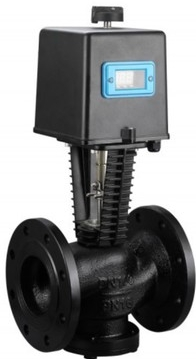
Introduction to HVAC Temperature Control
What are Temperature Control Valves?
From an engineer’s perspective, a temperature control valve is the final control element that meters chilled water, hot water, steam, or refrigerant so the system can hold a target temperature at a coil, heat exchanger, or point of use. In a closed-loop HVAC sequence, the sensor reads the actual condition, the controller compares it with setpoint, and the valve changes flow to alter energy transfer. Some systems do that with a self-acting thermal element. Others use an automated electric control valve tied to the BAS. The technical principle is simple, but the operating reality is not: if the valve loses authority, sticks, or leaks internally, the control loop becomes unstable no matter how good the software looks on paper.
Overview of HVAC Systems
HVAC systems use temperature control valves in more places than many buyers first assume: chilled-water coils, hot-water coils, reheat branches, steam humidifiers, condenser-water bypasses, domestic hot water tempering skids, and refrigerant circuits. For engineers working on site, valve style follows duty. A large bypass or isolation line may be better served by an electric butterfly valve, while tighter shutoff or diverting service may lean toward an electric ball valve. Modulating duties usually stay with dedicated control valves. ASHRAE teaching material treats flow control, temperature control, and pressure control as distinct functions, and CNYNTO’s catalog organization mirrors that practical separation by grouping electric actuators, ball valves, butterfly valves, and control valves into application-ready families.
Types of Temperature Control Valves
Shower Temperature Control Valves
In commercial buildings, a shower temperature control valve is not merely a plumbing comfort part; it is a safety device. ASSE 1016 covers automatic compensating valves for individual showers and tub/shower combinations and distinguishes between pressure-balancing, thermostatic, and combination types. That matters in hospitals, student housing, hotels, and sports facilities, where thermal shock and scald risk are operational concerns, not just user complaints. Procurement teams often separate “HVAC” and “domestic hot water” on paper, but in the plant room the two are linked by the same design logic: stable temperature control, predictable response, and safe failure behavior.
Delta Temperature Control Shower Valves
When buyers search for a delta temperature control shower valve, they are usually comparing pressure-balance behavior with thermostatic behavior. Delta’s official product overview distinguishes Monitor valves from TempAssure valves in exactly that way: Monitor is tied to pressure balancing, while TempAssure is thermostatic. In practice, pressure-balance designs respond to supply-pressure disturbance, and thermostatic designs respond to outlet-temperature drift. If the branch sees frequent pressure drops from neighboring fixtures, pressure balancing is often enough. If the application demands tighter outlet stability under mixed disturbances, thermostatic control is usually the stronger choice. That distinction lines up closely with ASSE 1016’s own separation of Type P, Type T, and Type T/P valves.
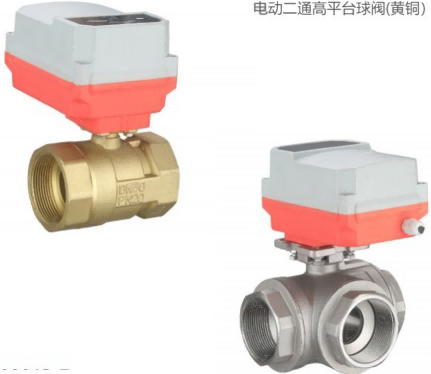
Steam Temperature Control Valves
Steam temperature control valves live a harder life than most chilled-water valves. They see higher pressure drop, faster thermal transients, and more punishing installation errors. During startup, a common sign of poor fit is that the valve spends most of its time nearly closed, then overreacts when condensate load changes. Spirax Sarco notes that self-acting temperature controls are widely used in steam and water systems, that heating duty causes the valve to open wider as cold water enters the process, and that high-limit cutout arrangements can snap an isolating valve shut if the preset temperature is exceeded. For buyers, that translates into a familiar specification logic: robust body construction, predictable modulating range, and a fail-safe arrangement that protects the coil, the process, and the occupants. In these duties, a properly sized control valve with a suitable electric actuator is often the most reliable route when BAS integration is required.
Functionality and Working Principles
Mechanisms of Thermal Expansion Valves
The thermal expansion valve is the temperature specialist in refrigeration and air-conditioning circuits. Danfoss describes the TXV as the device that meters liquid refrigerant into the evaporator according to outlet temperature and pressure so the system can maintain constant superheat under varying load, protect the compressor, and save energy. In the field, the valve’s behavior is easy to read: poor bulb contact, sensing lag, or dirt in the port can starve the evaporator, reduce coil capacity, and push the compressor toward unstable suction conditions. Here the cause-and-effect chain is especially clear: sensing error or restricted metering → incorrect superheat → poor evaporator feeding → lower cooling performance and compressor risk. That is why TXV installation discipline matters as much as the valve itself.
High Flow Temperature Control Valves: Insights
A high flow temperature control valve solves a different problem. In larger domestic hot water loops or hydronic branches, the challenge is not only temperature accuracy but also capacity, headloss, and stability under changing differential pressure. Taco’s 5120 Series high-flow mixing valve is aimed at applications beyond standard mixing-valve flow ranges and is designed to deliver stable mixed water temperature with low headloss, while Belimo positions pressure-independent valves as a way to maximize energy savings and address control challenges in variable-flow systems. For full automation, buyers often pair these higher-capacity bodies with a modulating electric actuator, or they select a larger electric butterfly valve or electric ball valve when tight shutoff or isolation has to be integrated into the same sequence.
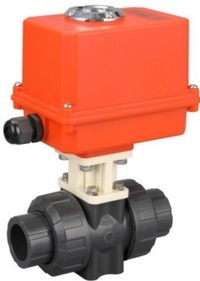
Benefits of Temperature Control in HVAC
Maximizing Energy Efficiency
Good temperature control valves reduce wasted pumping, wasted reheating, and wasted cooling. In a variable-flow system, unstable differential pressure can cause a conventional valve to hunt, and that means the controller keeps correcting for a flow condition that is moving underneath it. Pressure-independent designs interrupt that chain by decoupling much of the valve behavior from pressure swings. Danfoss also notes that self-acting thermostatic valves are insensitive to water pressure and need no auxiliary power, which explains why they remain attractive in simpler temperature-control loops. In practical energy terms, stable valve behavior means better delta-T, fewer simultaneous heating-and-cooling penalties, and less actuator travel for the same comfort result.
Enhancing User Comfort
Comfort is where the valve becomes visible to the occupant. Stable supply-air temperature, calmer room response, and safer domestic hot water all depend on how smoothly the valve meters energy. Johnson Controls emphasizes that valves and actuators are pivotal in efficient building automation, and ASSE 1016 exists precisely because outlet stability matters for protection against scalding and thermal shock. In buyer language, the value is straightforward: fewer hot-and-cold complaints, fewer call-backs, and tighter environmental control without overdriving the plant. A well-matched electric valve package is often the difference between a system that looks right on the control graphics and one that actually feels right in the building.
Challenges and Considerations
Common Issues with Temperature Control Valves
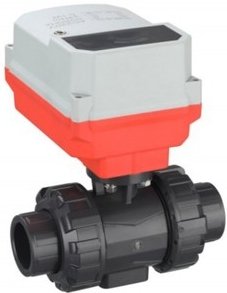
Engineers in routine inspection tend to notice the same warning signs: a valve stem that needs more torque than it did last quarter, a buzzing actuator near low opening, slight leakage through a closed seat, or unstable movement at small flow. In steam service, wrong orientation or poor condensate management can add water hammer and diaphragm damage to the list. ASHRAE training material warns that backward installation can contribute to water hammer, while Spirax Sarco notes that direct-acting steam pressure controls experience proportional offset as flow changes and that hot steam installations require attention to protecting the actuator diaphragm. In other words, the valve problem a technician sees on site is often not a mysterious control issue at all. It is a mechanical chain: pressure fluctuation → trim micro-vibration → seat wear → delayed response; or rapid temperature cycling → seal fatigue → internal leakage → unstable temperature control.
Factors Influencing Performance
Material choice decides whether the valve keeps performing after the first season. For treated water, glycol, and many clean hydronic duties, 316L stainless steel remains a practical body material because its low carbon content improves resistance after welding and its molybdenum content supports use in more corrosive environments. Where chloride levels are higher or stress-corrosion cracking is a concern, Duplex or Super Duplex is the safer buy because duplex grades combine high mechanical strength with strong resistance to chloride-related cracking. PTFE remains the dependable seat and lining material when chemical inertness and low friction matter. EPDM works well in hot water and steam service, but it is not the right answer for hydrocarbons. FKM earns its place where higher temperature and aggressive chemistry are present. For steam bodies, carbon steel and alloy steel are still common where pressure-temperature rating matters more than chloride exposure. And if the plant includes more aggressive water conditions, protective coatings add real value: FBE coatings are used on valves for abrasion and corrosion resistance, while Halar coatings are chosen where stronger chemical and moisture resistance is needed. For side-stream treatment, chemical dosing, or auxiliary loops, a diaphragm valve can also be a smart choice because the diaphragm isolates the actuator from the medium and reduces leak paths around stems and packing.
Standards matter just as much as materials. ANSI/ASME B16.34 affects pressure-temperature ratings, dimensions, materials, nondestructive examination, testing, and marking. ISO 5208 governs pressure-boundary integrity and closure-tightness testing. ISO 5211 shapes actuator attachment requirements, which matters whenever the buyer wants standardized automation packages. DIN EN 558 supports dimensional interchangeability in PN and Class flanged systems. And API 598 remains a common inspection and pressure-testing baseline when buyers want explicit leakage and test requirements. For procurement teams, these standards do not sit on the submittal just for formality; they decide whether the valve fits the piping, survives the rated duty, accepts a standard actuator, and passes the expected testing plan before it ever reaches the job site.
Future Trends in Temperature Control Technology
Innovations in Valve Design
The design trend is clear: smarter valve geometry, lower-friction internals, and more dependable self-acting thermal elements. ThermOmegaTech explains that its temperature control valves use a paraffin-wax thermal actuator that expands and drives a piston as temperature rises, while Danfoss describes thermostatic valves as simple, reliable, self-acting devices that do not need electricity or control air. That combination—simpler mechanics but better proportional response—is exactly what many HVAC buyers want. The most useful innovations are not the flashy ones; they are the ones that keep low-load control calm, shorten commissioning, and make the valve less sensitive to dirt, pressure variation, and poor field conditions.
Smart Temperature Control Solutions
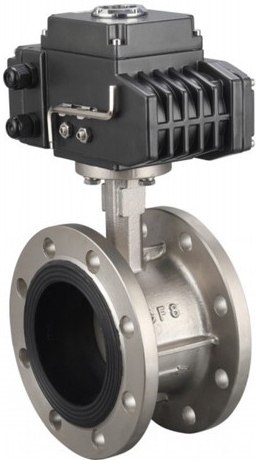
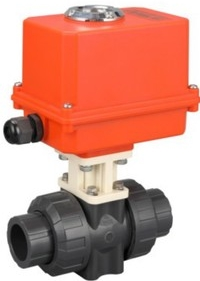
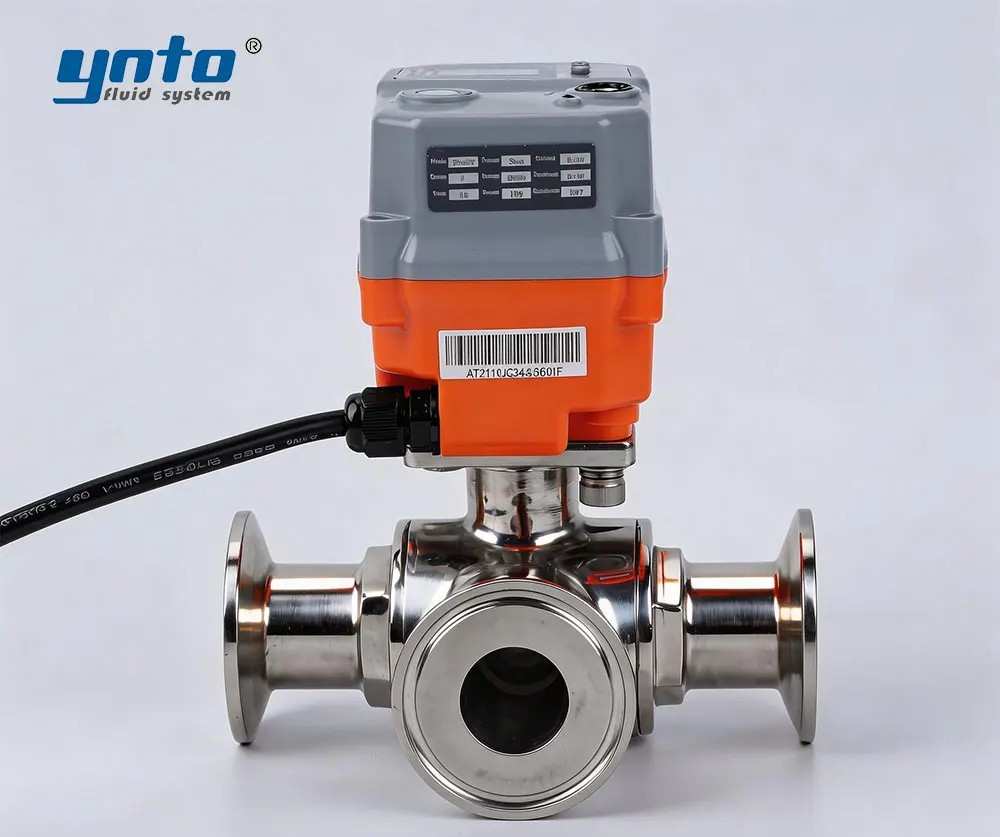
Smart temperature control solutions are moving beyond simple open/close feedback. Today’s market increasingly expects valves that can communicate with the BAS, document coil performance, and reveal when delta-T is collapsing before operators feel the problem. Belimo’s Energy Valve is built around that idea, and Johnson Controls frames valves and actuators as part of the connected building layer. For buyers sourcing automated HVAC packages, CNYNTO’s portfolio already covers the core building blocks: electric valve assemblies, electric actuators, electric ball valves, electric butterfly valves, and control valves, with stated application coverage that includes the energy industry and other demanding process environments. For a buyer with purchase intent, that matters: instead of sourcing isolated parts, you can specify a full valve-and-actuation solution that is easier to standardize, automate, and maintain.
.png?imageMogr2/format/webp)
- 2026-09-30 08:25:23
- 2026-09-28 10:28:43
- 2026-09-21 15:23:44