

5/2 NAMUR Solenoid Valve Replacement: Field Checks
- 2026-11-06 08:48:06
- admin
- NO COMMENTS
The control-room display says the valve has been commanded closed. At the skid, its position indicator is still halfway around. Air hisses through a muffler for a moment, the actuator finally turns, and the closed limit switch arrives two seconds later than it did at commissioning. A technician notices a second clue: the solenoid coil is warm, but the supply gauge dips each time another actuator moves.
That combination tempts a quick coil change. Yet the fault may lie in wet instrument air, a sticking spool, an undersized exhaust, or rising process-valve torque. A replacement works only when it preserves port routing, electrical logic, and required stroke time.
5/2 NAMUR Solenoid Valve Replacement: Porting, Coil Logic, and Stroke Time
Introduction: Identify the Failure Before Ordering
Start at the actuator. Record whether it is double-acting or spring-return. Photograph the solenoid label, connector, mounting face, gasket, adapter, exhaust fittings, and manual override. Capture the lowest air pressure during simultaneous demand. Then trend command, coil voltage, chamber pressure, and position feedback through several cycles.
An intermittent delay after a humid night suggests water in the air circuit; delay near the end of travel suggests rising torque or restricted exhaust. If manual override works but electrical command does not, investigate the coil supply and pilot. A live override on a safety function may move the process unexpectedly.
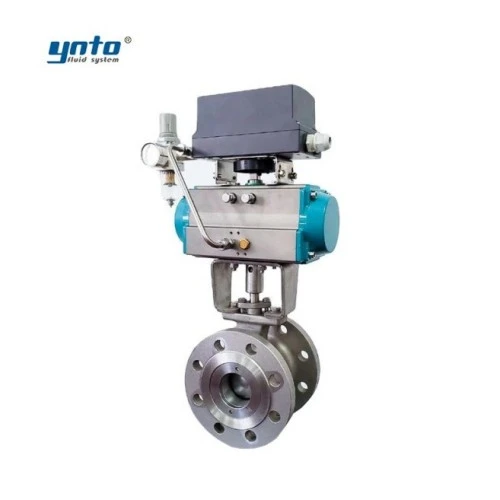
The Role of 5/2 NAMUR Solenoid Valves in Automation
Integration with Actuator Control Systems
The “5/2” label describes five pneumatic ports and two internal switching positions. Supply pressure enters P, commonly marked 1. The working ports A and B, often 2 and 4, connect to the two actuator chambers; exhausts R and S, commonly 3 and 5, release the opposite chamber. Check the manufacturer's symbol and port marks rather than assuming a familiar number sequence always gives the expected rotation.
A NAMUR-mounted directional valve sits on the actuator's interface, eliminating some external tubing. The applicable mounting interface is addressed by VDI/VDE 3845 Part 1. It does not tell the electrician which process position corresponds to an energized coil. That depends on actuator orientation, the spool configuration, and the installed ball or butterfly valve.
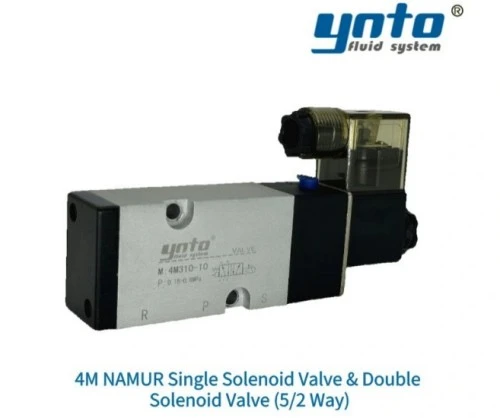
YNTO's 4M NAMUR 5/2 single- and double-solenoid valves are a relevant starting point for a direct-mount replacement enquiry. Specify the exact 4M variant, coil voltage, pilot-air range, mounting face, air capacity, and loss-of-power response. A shared “NAMUR” description is not enough to establish drop-in compatibility.
Benefits of Automated Control Systems
In automated control systems, a PLC command coordinates isolation, permissives, and alarms; end switches confirm travel. These industrial automation valves serve chemical dosing, water treatment, and utilities. The solenoid is a directional pilot, not proof of process-valve position or seat tightness.
An output shown as “close” could feed the opening chamber if ports were transposed. Verify command-to-motion behavior locally, then in the control system under permit.
Porting and Its Implications for Pneumatic Control Valves
Understanding Different Porting Configurations
Before removing the old valve, trace both actuator chambers. Mark which one opens the process valve and which one closes it. Confirm the gasket's pressure and exhaust openings against the actuator face; an adapter may alter which passage feeds which chamber. A mounting pattern that accepts the bolts can still conceal an incompatible passage arrangement or a gasket that blocks an exhaust.
For a double-acting actuator, one 5/2 position connects P to A while B vents; the other reverses the paths. Confirm which corresponds to coil-on. Spring-return actuators often use a 3/2 valve; a 5/2 needs the manufacturer's approved routing. Blocking the wrong exhaust can prevent the spring from reaching its intended position.
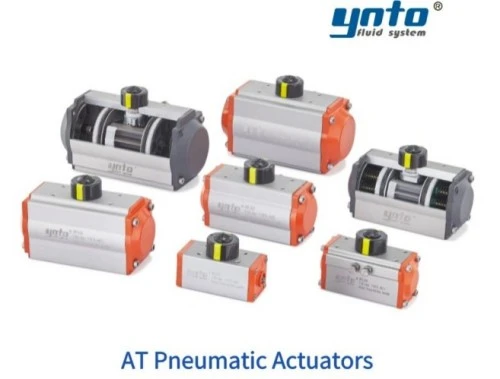
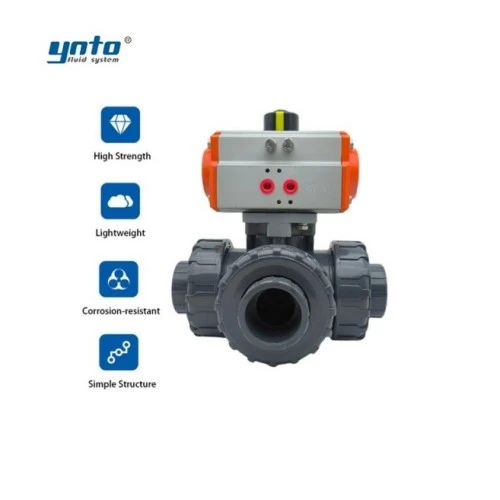
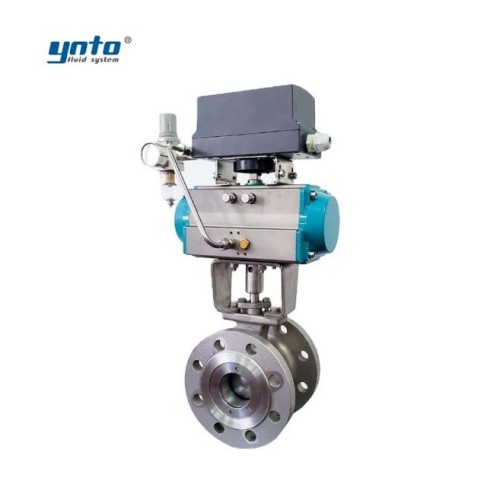
The matching actuator matters as much as the pilot. YNTO's AT pneumatic actuator range includes double-acting and spring-return arrangements. Ask for the actuator's chamber volumes, spring direction, minimum air pressure, torque curve, and interface drawing when selecting the replacement solenoid. A double-acting package cannot be called “fail closed” simply because its solenoid spring returns: without usable air and an exhaust path, the actuator's final position is not guaranteed.
Impact on Flow and Performance
Flow capacity, fitting bore, tubing length, and muffler backpressure affect chamber filling and venting. A small gasket opening or oil-soaked silencer can dominate pressure loss.
During commissioning, pressure oscillation may keep the actuator near its breakaway point. The piston then makes small movements, wearing the process seat and delaying subsequent travel. If a technician increases supply pressure to force a faster response, the extra torque may overload the valve stem. Correct the restriction and check torque before changing the regulator setpoint.
Coil Logic in a Pneumatic Solenoid Valve
Functional Overview
A single-solenoid, spring-return 5/2 spool generally shifts when energized and returns when deenergized. A double-solenoid version uses separate commands and may retain its last spool state after power is removed. Neither statement alone proves the process valve's safe position. An actuator spring, available air pressure, circuit leakage, and the actual port map determine what happens during loss of electricity, loss of air, or loss of both.
Record coil A energized, coil B energized if present, both off, air lost, and power restored. Note actual valve direction and end-switch state. A safety-related response belongs in the approved design and proof-test procedure.
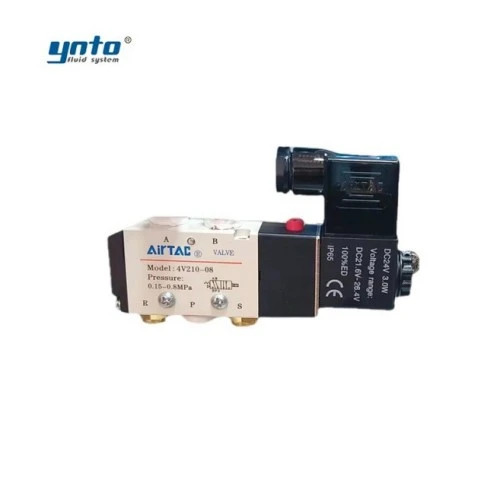
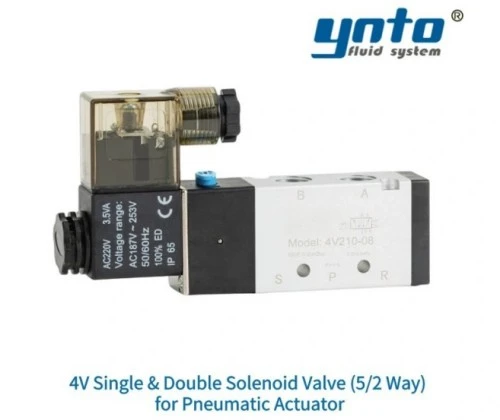
YNTO also offers a 4V 5/2 pneumatic solenoid valve for actuator control. Treat it as a possible remotely plumbed or manifold solution after checking its connections and circuit design; a generic 5/2 valve is not automatically a direct-mount NAMUR replacement. Compare the 4M and 4V arrangements by actual installed air path and wiring, rather than price alone.
Common Coil Types Used
Match AC or DC supply, rated voltage and frequency, steady and inrush power, permissible voltage range, duty rating, connector style, enclosure protection, and ambient temperature. A 24 V DC coil may contain an LED or suppression diode, making connector polarity important. A PLC output that tolerates one coil's current may not support the substitute's inrush or suppression circuit. Record measured voltage at the coil while energized, not only at the cabinet terminals.
For a hazardous area, obtain the precise coil and connector approval. Check cable gland, earthing, ingress protection, and override behavior. Heat or corrosive vapor may damage nearby electrics even though instrument air, rather than process fluid, passes through the solenoid.
Stroke Time in Pneumatic Systems
Defining Stroke Time
The solenoid's electrical response is one component of overall stroke time. For an operator, the useful measurement begins when the command changes and ends when the relevant position switch confirms full travel. Between those events come PLC/output delay, coil and spool movement, air filling and venting, piston travel, and the process valve's final seating. Record opening and closing separately; they may differ markedly.
Measure at minimum permitted air pressure and expected process differential. Compare with the plant's time window. A short coil pulse may shift the spool yet leave a large actuator halfway through travel.
Importance in Automated Processes
Slow closure may breach an interlock time. Fast closure can cause surge, stressing the seat and piping. A pressure spike just as the closed switch makes is a useful clue. Validate exhaust-restrictor settings across the air-pressure range.
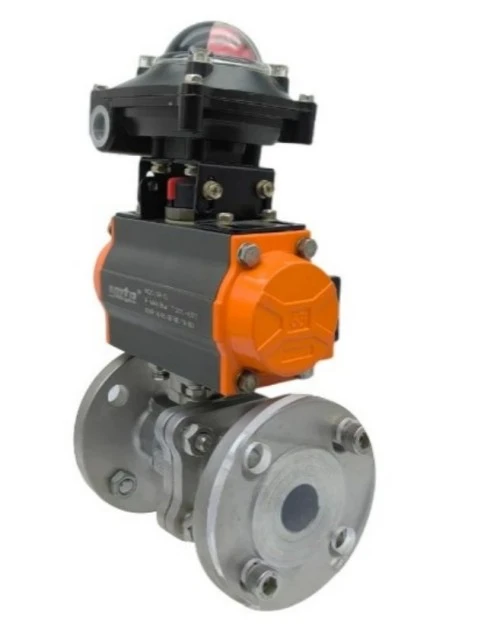
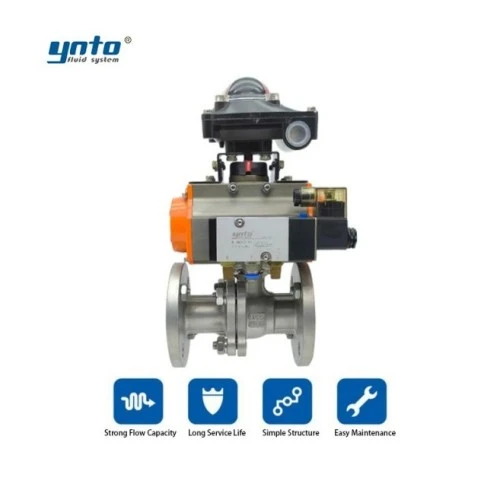
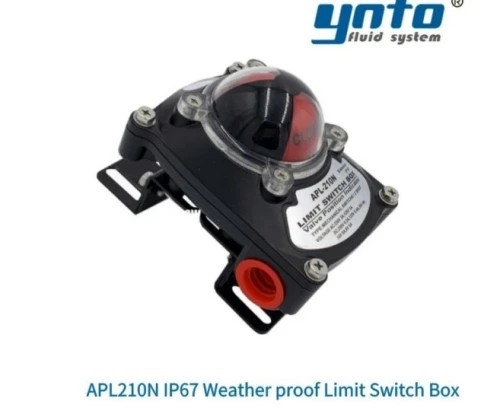
Position feedback closes the diagnostic loop. The APL210N IP67 limit switch box is one YNTO option for reporting actuator end positions. Its switch indication confirms travel at the adjusted cam; it does not prove that a leaking process seat is tight. Log command-to-switch time and, where necessary, independent process-pressure or leak-test results.
Evaluating Replacement Necessities
Valve Replacement Cost and Repair Decisions
A replacement quote includes coil and connector, adapter and gasket, mufflers, tubing, panel-output compatibility, air treatment, labor, downtime, and testing. A cheap pilot needing rework can cost more installed than a compatible direct-mount unit.
Repair makes sense when a compatible coil or seal kit is available, the spool bore is sound, and the failure cause is known. Replacement becomes attractive when sticking recurs, corrosion has damaged the mounting face, spares are unavailable, or the old configuration cannot meet the required timing and certification. Ask the supplier for a marked pneumatic schematic, dimensions, material list, test record, and the exact model code on the offered unit.
Performance Indicators for Replacement
Compare air pressure, coil voltage, process differential, temperature, stroke time, and feedback across cycles. Delay after idling suggests spool stiction; voltage dropping under load points to wiring. Exhaust leakage while a chamber is pressurized may indicate seal wear, after circuit verification.
If cycle time rises only when the process line is hot, investigate thermal expansion and process-valve torque. A temperature swing can harden an incompatible seat, increase breakaway torque, and delay closure; the resulting overshoot may prompt repeated cycling and further seat wear. Replacing the pilot alone will not cure that chain.
Solenoid Valve Maintenance Strategies
Preventive Maintenance Practices
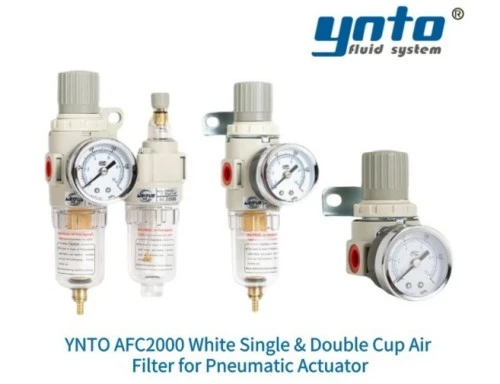
Dry, clean air is the first defense against spool sticking. Water and particles reaching the pilot abrade its clearances; friction increases, the spool responds late, and the plant sees erratic stroke times. A YNTO AFC2000 air filter for pneumatic actuators can help remove particles and moisture when selected and maintained for the air duty. Size the air-preparation train for peak simultaneous demand, drain condensate, and replace elements at the plant's specified interval.
Follow lockout and permit rules before opening an air line. On toxic, high-pressure, corrosive, or hot service, isolate process energy separately; instrument-air isolation does not make the process safe. Vent, verify zero pressure, and return overrides and interlocks to their approved state before service.
Common Maintenance Challenges
Coils are easy to replace; small air-path faults are harder to see. Inspect mufflers for oil or dust, fittings for leaks, gaskets for misalignment, and bowls for chemical attack. Monitor the pressure at the actuator during movement, because a healthy reading at the main regulator can hide a local drop. If a filter bowl is exposed to solvent vapor or aggressive cleaning chemicals, verify its material compatibility and shielding.
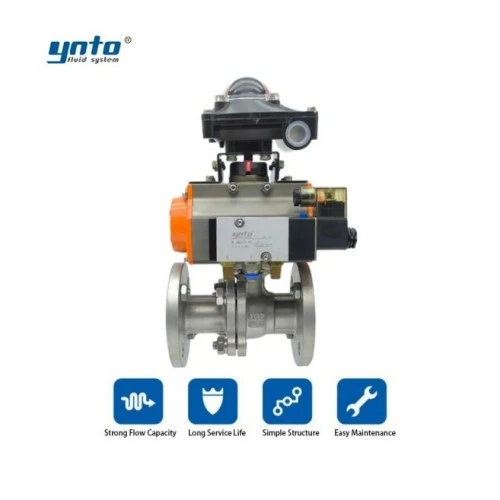
Material specifications must distinguish two circuits. The pneumatic pilot commonly uses an aluminum body and elastomer seals exposed to instrument air. The separate process valve may need a 316L or Duplex body for chloride-bearing fluids, PTFE seats for suitable chemicals, or EPDM or FKM seals where temperature and media compatibility permit. Carbon steel and protective FBE may suit external corrosion control on other process equipment. Do not transfer a process-valve material rating to the solenoid or claim the pilot is wetted by the process under normal operation.
For procurement, standards must also be scoped. VDI/VDE 3845 Part 1 governs the relevant pneumatic-actuator accessory interface, while ISO 5211 addresses part-turn actuator attachment to a process valve and DIN EN 15714-3 addresses pneumatic part-turn actuator requirements. ANSI/ASME B16.34 concerns applicable metallic process-valve pressure-temperature ratings and testing; API 598 concerns process-valve inspection and pressure testing. Neither is, by itself, a qualification of a 5/2 pilot's wiring logic or complete actuator stroke time. Specify the applicable edition, component, acceptance test, and records in the purchase order.
Conclusion: Restore the Intended Function
Benefits of Timely Replacement
A suitable 5/2 NAMUR replacement restores predictable switching only when the interface, port map, coil circuit, and air capacity match the installed actuator. Document the process valve's actual movement and both stroke times at representative pressure. Then repeat the plant's required power-loss, air-loss, and end-switch checks before signing off.
Proactive Maintenance and a Better Enquiry
Send YNTO the old model code, photographs of the NAMUR face and gasket, actuator type and chamber volume, supply-air range, coil voltage, mounting orientation, required fail action, and measured opening and closing times. Include process media, pressure, temperature, area classification, and the applicable inspection plan. That information lets a supplier propose a defensible pneumatic solenoid valve package and helps maintenance distinguish an electrical fault from a pneumatic restriction or a worn process valve.
- 2026-11-06 08:48:06
- 2026-11-05 09:31:18
- 2026-11-02 08:31:38