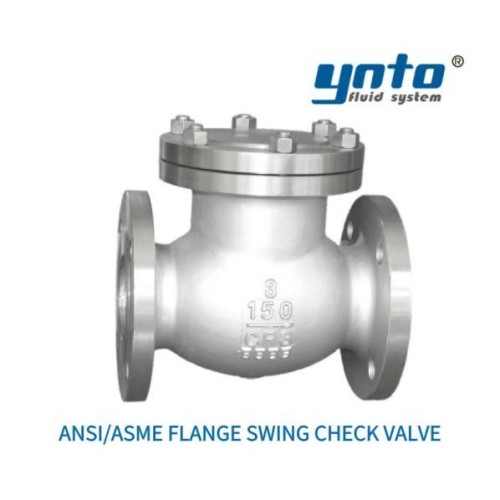
Maximize Systems with Anti-Crystallization Ball Valves
- 2026-05-11 08:54:06
- admin
- NO COMMENTS
Introduction to Anti-Crystallization Ball Valves
What They Are
Walk a late shift in a chemical unit and the problem is usually visible before anyone says it out loud. The positioner keeps correcting. The actuator current climbs a little higher than last month. A valve that used to turn cleanly now hesitates just before full closure, and the pressure gauge upstream flickers instead of settling. In crystallizing or polymerizing service, that is often the first field sign that deposits are starting to occupy space the process cannot spare. One common cause-effect chain is brutally simple: the fluid cools or crosses a supersaturation window, crystals start growing on the ball or in cavity zones, operating torque rises, and the actuator or stem connection ends up taking abuse it was never meant to see. The Chinese patent literature on anti-crystallization ball valves describes this exact failure mode and links it to damage at the ball, seat, and stem-driving interface when deposits hinder rotation.
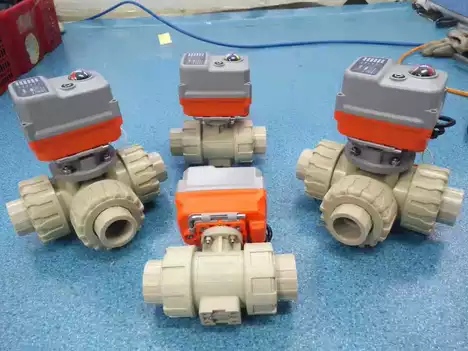
That is why an anti-crystallization ball valve is better understood as a design strategy, not a marketing label. The best versions reduce cavities, protect sealing surfaces, control adhesion, and keep flow passages as smooth and self-clearing as possible. In practice, that can mean a cavity-minimized lined ball valve, a full-bore geometry, a protected seat, a low-friction fluoropolymer interface, or a control trim that can shear soft solids before they accumulate. For plants comparing off-the-shelf hardware with a tailored package, YNTO’s catalog is useful because it spans pneumatic ball valves, lined control valves, plastic ball valves, diaphragm valves, and automation hardware rather than forcing one valve style into every service.
Why They Beat Traditional Valves
Traditional ball valves do many jobs well, but crystallizing media expose their weak points. If the body cavity welcomes stagnant fluid, deposits can settle and harden. If the seat material is chemically wrong, the surface roughens and gives crystals more anchor points. If the valve is undersized, the pressure drop rises, local turbulence increases, and the control element starts to hunt. Bray’s control-valve sizing guidance is blunt on this: undersized valves need a larger pressure drop to deliver capacity, while oversized valves lose controllability and may cycle. At the same time, research on fouling taxonomy shows that deposits constrict channels, raising pressure drop or cutting flow rate, and that material choice or surface modification can reduce early fouling adhesion.
Fluid Dynamics and Process Optimization in Chemical Processing
Role in Ensuring Optimal Flow
For engineers working on site, fluid dynamics is not an abstract calculation; it is what shows up as a slow batch, an unstable feed ratio, or a control loop that never quite settles. A full-bore, cavity-minimized flow path matters because it keeps solids moving, lowers local stagnation, and avoids giving crystals a quiet corner to grow. AZ Armaturen’s lined ball valve data emphasizes full-bore designs for maximum flow rates and no pressure loss, while its cavity-free engineering literature explicitly contrasts crystallizing media with conventional ball-valve cavities where material can settle, form clots, and drive torque upward. That lines up with what operators actually see in service.
When the process also needs throttling, not just isolation, geometry becomes even more important. A standard open-or-close ball valve may survive for a while, but it will not give stable control in slurry or fiber-laden lines. A pneumatic V-type control ball valve is a better answer here because the V-notch changes flow area predictably and its shearing action helps cut fibers before they jam the seat. YNTO’s own product data describes that shearing behavior, while Bray notes that V-port rotary control valves combine tight shutoff with high rangeability, lower pressure drop, and fast response.
Impact on Chemical Processing Systems
Crystallization fouling is not just a cleanliness issue. It increases flow resistance, pushes pumping power upward, and gradually turns a stable system into an expensive one. Recent heat-transfer research still describes crystallization fouling as a persistent industrial problem because accumulated scale raises both thermal and flow resistance, degrading efficiency and increasing maintenance demand. In other words: deposits create drag, drag creates energy loss, and energy loss creates operating cost.
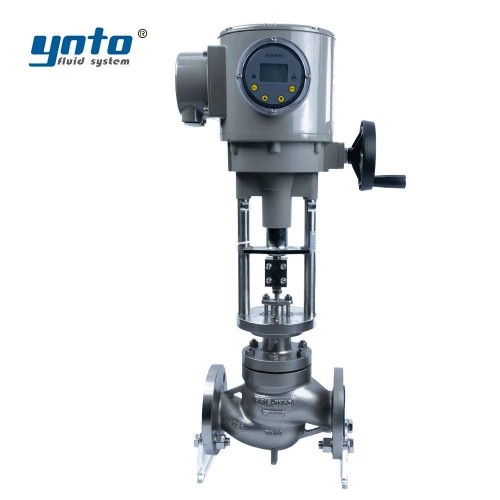
In chemical processing systems, that means anti-crystallization valves are part of process optimization, not just a maintenance upgrade. A plant that keeps the valve internals cleaner usually sees more stable flow assurance, less cycling, and fewer shutdown interventions. YNTO’s self-operated pressure control valve is relevant here for trim-stability duties around gas, liquid, and steam, because using the medium’s own pressure to stabilize upstream or downstream conditions can remove some of the pressure-wave behavior that accelerates valve wear in the first place. Meanwhile, their control valve range gives buyers a path when the process calls for regulation rather than simple on-off service.
Corrosion Resistance and Valve Material Selection
How Anti-Crystallization Valves Resist Corrosion
Deposits rarely act alone. Corrosion and fouling often reinforce each other. Once a wetted surface pits or roughens, more crystals attach. Once more crystals attach, crevices stay wet longer and corrosion gets worse. That second cause-effect chain matters in real plants: corrosive media plus the wrong body or seat material lead to localized attack, the damaged surface holds deposits more easily, and the valve’s response gradually slows while leakage risk climbs. YNTO’s chemical service guidance argues for fluoropolymer-lined valves exactly because they isolate aggressive media from the base metal, especially in acid, chlorine, and other ultra-corrosive streams.
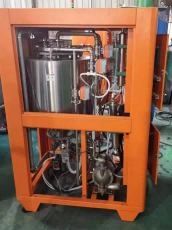
For severe corrosive and hazardous service, a fluorine-lined bellows control valve is a strong option because it combines an anticorrosive flow path with multiple sealing barriers. YNTO’s product page describes PTFE, PFA, and related fluoropolymer linings, plus PTFE bellows sealing for hazardous or highly corrosive media, and claims ISO 15848-1 / TA-Luft style low-emission performance. That sort of architecture does not magically eliminate crystallization, but it does reduce adhesion points, fugitive leakage risk, and body attack at the same time.
Lifespan and Cost-Effectiveness
Material selection is where a lot of lifecycle cost is won or lost. 316L remains a common baseline, but chloride-containing environments at elevated temperature are exactly where standard austenitic grades become vulnerable to stress-corrosion cracking. Outokumpu’s corrosion data repeatedly notes that conventional 304L and 316L grades are more susceptible in chloride service, while duplex stainless steels offer much better resistance and higher strength. That is why duplex or super duplex often makes sense for chloride-rich, erosive, or higher-pressure duty where a plain 316L body would be living on borrowed time.
Seats and soft parts deserve the same discipline. Parker’s PTFE sealing guidance is useful here: PTFE brings low friction and strong chemical inertness, which is exactly what helps reduce stick-slip and deposit adhesion, but virgin PTFE also creeps under load, so filled or modified PTFE is often the better engineering answer at higher pressure, velocity, or thermal cycling. EPDM and FKM should also be chosen by media rather than habit; Parker’s elastomer data shows EPDM working well with hot water, steam, many acids, and alkalis, while FKM brings strong high-temperature and chemical resistance, especially in oils, fuels, and many solvents.
Where uptime matters more than the cheapest purchase price, buyers should be comfortable mixing materials strategically: carbon steel or alloy steel shells for pressure containment, PTFE/PFA/FEP lining for media isolation, duplex internals where chloride attack is credible, and seal packages tailored to the actual chemistry. YNTO’s PPH/PVDF pneumatic plastic ball valve shows the other side of that decision: when pressure class is moderate and corrosion is dominant, thermoplastics can be the more economical long-life answer. Its product page lists PVC-U, CPVC, PP-H, and PVDF body options with EPDM or FPM seals across environmental, water treatment, semiconductor, and chlor-alkali work.
Industrial Valve Applications and Performance Gains
Examples in Different Sectors
Anti-crystallization ball valve solutions show up in more sectors than most buyers first assume. Chemical processing is obvious, especially where salts, polymer precursors, acids, or slurries have a narrow temperature window. But the same logic fits chlor-alkali systems, water-treatment side streams, mining reagents, and certain semiconductor or PCB chemical modules where scale, residue, or precipitates can destabilize flow. YNTO’s product and application pages span those sectors, including environmental technology, chemical engineering, mining, and microelectronics.
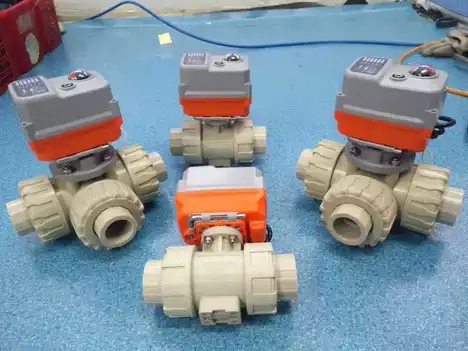
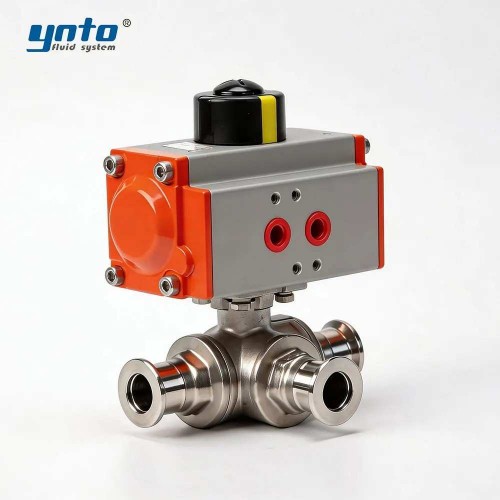
There is also a practical selection rule many engineers follow: when you need minimum pressure loss and quick isolation, a full-port lined or metal ball valve is attractive; when the duty is corrosive and low pressure with strict contamination control, a PVDF diaphragm valve may actually be the cleaner answer; and when sanitary or branch diversion duty matters, an electric 316 stainless steel 3-way clamp ball valve can simplify skids and CIP-compatible loops.
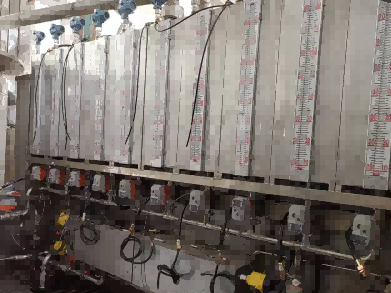
Case Evidence on Performance Improvements
Independent published field data on anti-crystallization ball valves are still thinner than most procurement teams would like. What is available, though, points in a consistent direction. YNTO’s HFC-134a case history is more corrosion-focused than crystallization-focused, but it is still instructive: the plant used customized seat, packing, and alloy/lining choices, added positioner feedback to flag torque increase as an early fouling or corrosion signal, and then reported no HF-related valve leaks or failures in the first three years in YNTO-equipped sections, along with better containment and more stable control. That is exactly how good valve selection pays back in chemical service—first by reducing leakage risk, then by protecting uptime.
For global buyers, the supplier question matters almost as much as the valve question. Guangdong Yuantong Industrial Technology Co., Ltd. says on its site that it has 25 years in automation valves, service in 159+ countries and regions, and product technologies built around brushless motors, wide-voltage operation, and IP67 electric protection. Its recent in-house technical content also explicitly mentions customizable valve assemblies and ODM/OEM-style support for specialized tools. That does not replace an FAT, MOC review, or corrosion coupon program. But it does matter for buyers in Europe and North America who need seat compounds, flange drilling, actuation logic, or mounting standards tailored to plant specs rather than bought from a fixed catalog.
Automated Ball Valves and Valve Maintenance
Trends in Automation for Industrial Valves
Automation is no longer optional once a valve starts living in unstable service. Emerson’s diagnostics material makes the case well: modern digital valve controllers run and store diagnostic tests using pressure, temperature, and travel data, and condition-monitoring programs are built specifically to identify degradation before it becomes downtime. In other words, smart diagnostics shorten the gap between “something feels off” and “we know exactly what to replace.”
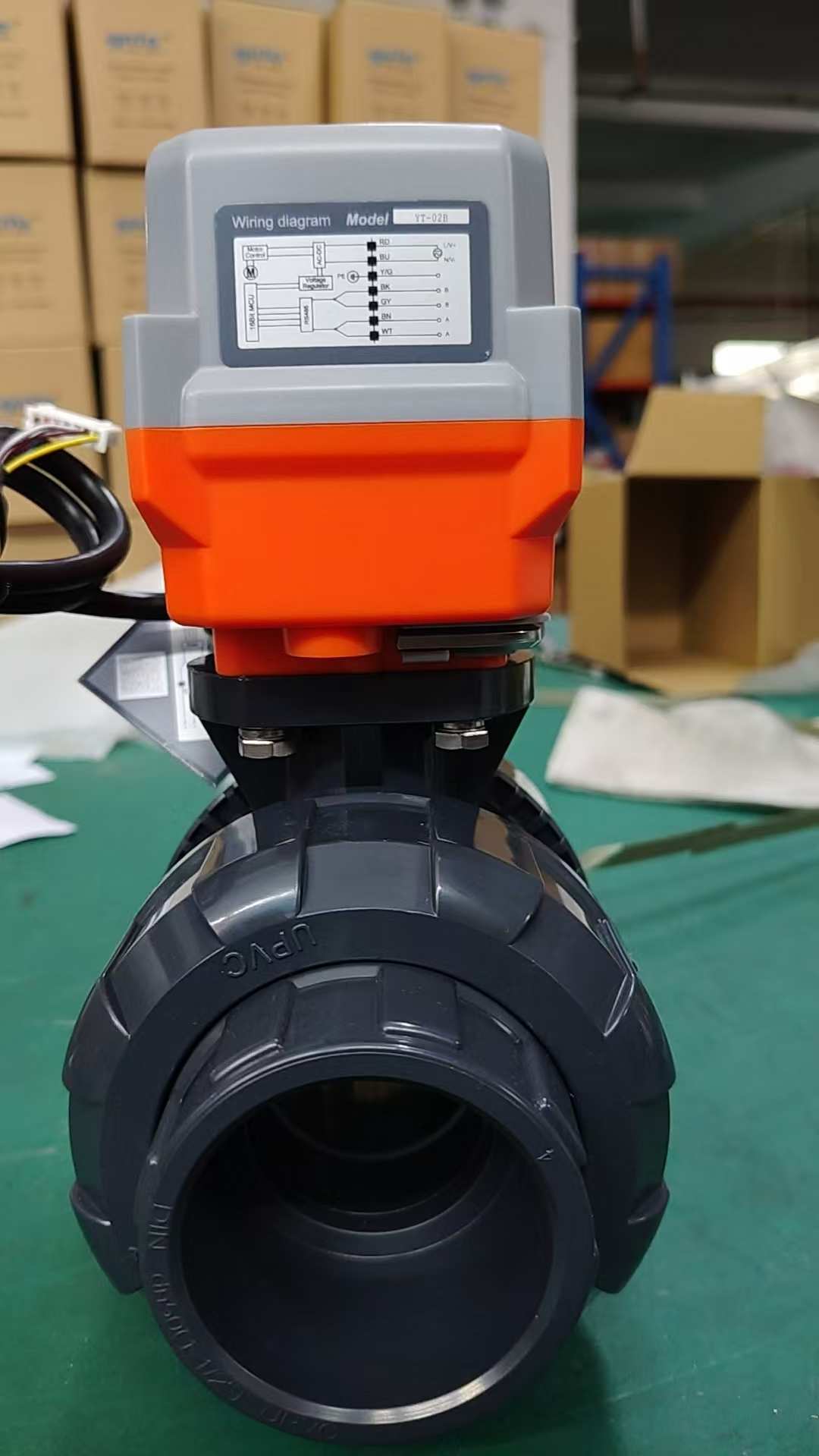
That is where electric ball valves and YNTO’s YT-series electric actuators fit naturally into anti-crystallization strategy. The actuator page describes brushless designs, multiple control modes, overload protection, and service for 2-way and 3-way ball valves. Paired with torque trending or position feedback, that gives maintenance teams an objective way to catch build-up before the valve sticks hard enough to damage the stem, seat, or actuator gearbox.
Benefits of Automation in Maintenance
Meanwhile, standardized interfaces matter more than they seem during procurement. ISO 5211 defines the interface between part-turn actuators and industrial valves, which is one reason retrofit automation is not as painful as it used to be. AZ’s lined ball valve literature and several YNTO product pages also emphasize ISO 5211-style mounting, because a standardized attachment saves time when actuator replacement or upgrade becomes necessary.
And no serious chemical buyer should ignore standards. ANSI/ASME B16.34 governs pressure-temperature ratings, materials, tolerances, NDE, testing, and marking for many metallic valves. API shows API 608 updated to a 7th edition in April 2025 for metal ball valves, while API 622 and API 641 remain important reference points for fugitive-emission type testing of packing and quarter-turn valves. DIN EN 558 still matters for face-to-face dimensions and interchangeability. Those standards do not make a valve anti-crystallization by themselves, but they do define the baseline for pressure containment, mounting, leakage testing, and replacement compatibility that separates a credible industrial package from a risky one.
Conclusion
Anti-crystallization ball valve solutions work because they respect the real physics inside the line. Crystals do not care about brochure language. They grow where flow slows, where cavities trap residue, where temperature drifts below the safe window, and where damaged surfaces give them something to grip. The right ball valve fights back with controlled geometry, the right seat system, the right metallurgy or fluoropolymer barrier, and—when the duty demands it—automation that catches torque growth before people in the field have to force a stuck valve.
For procurement teams with buying intent, the practical shortlist is clearer than it first appears. If the problem is corrosive crystallizing media, start with lined or fluoropolymer-wetted designs. If the line contains fibers or fine solids, look hard at V-port or shearing trims. If pressure stability is poor, treat regulation and isolation as one system, not two unrelated purchases. And if the plant is standardizing across sites, buy from suppliers that can support OEM/ODM adaptation instead of pushing a one-size-fits-all valve. That is where YNTO’s combination of control valves, electric ball valves, plastic valves, lined options, and actuator platforms becomes commercially interesting for Western buyers who need customization as much as hardware.
Open Questions and Limitations
The evidence base is strongest on three points: crystallization and fouling increase pressure drop and torque; material/surface choices can reduce adhesion and wear; and automation improves early fault detection. The weaker area is independent, peer-reviewed field data comparing anti-crystallization ball valves against standard ball valves across many industries. Some of the most specific performance claims come from patents and manufacturer literature rather than third-party trials, so final valve selection should still be validated through media-compatibility review, temperature-window analysis, Cv sizing, fugitive-emission requirements, and site-specific FAT/SAT criteria.
- 2026-09-21 15:23:44
- 2026-09-18 09:42:46