

Low-Flow Cooling-Water Valve Retrofits: Sizing and Trim
- 2026-11-09 10:30:10
- admin
- NO COMMENTS
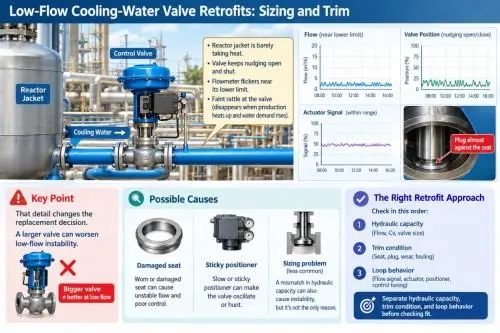
On a chemical-plant cooling branch, the reactor jacket is barely taking heat, yet the control valve keeps nudging open and shut. The flowmeter flickers near its lower limit. At the valve, there is a faint rattle that disappears when the production batch heats up and water demand rises. An engineer looking at the trend may see the actuator working within its signal range while the plug spends most of the shift almost against the seat.
That detail changes the replacement decision. A larger valve can worsen low-flow instability. Meanwhile, a damaged seat or sticky positioner can imitate a sizing problem. A useful retrofit separates hydraulic capacity, trim condition, and loop behavior before checking fit.
Low-Flow Cooling-Water Control Valve Retrofits: Sizing and Trim Checks for Chemical Plants
Overview of Low-Flow Valves in Chemical Plants
Definition and Functionality
“Low flow” is relative to the duty, not a fixed valve diameter. A jacket branch that needs only a fraction of its design flow for much of the year may still require a substantial peak flow during a rapid cooldown. A control valve must cover both conditions with enough useful travel at the low end, sufficient capacity at the high end, and stable response between them. A shutoff valve alone cannot provide that behavior.
If a modulating valve lives near its closed stop, small changes in stem friction become large changes in flow. Pressure fluctuations move the plug back and forth; repeated contact wears the seat; leakage and delayed response then disturb temperature control. It is easy to blame the controller.
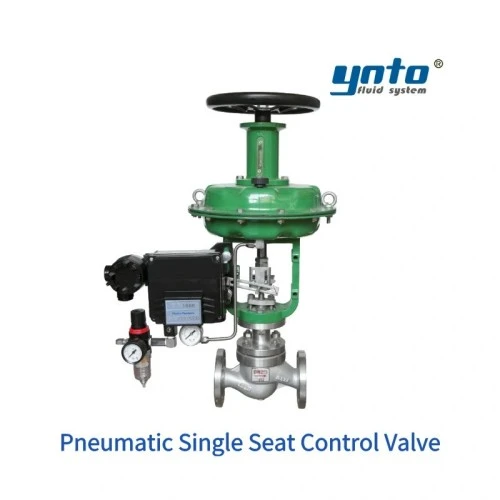
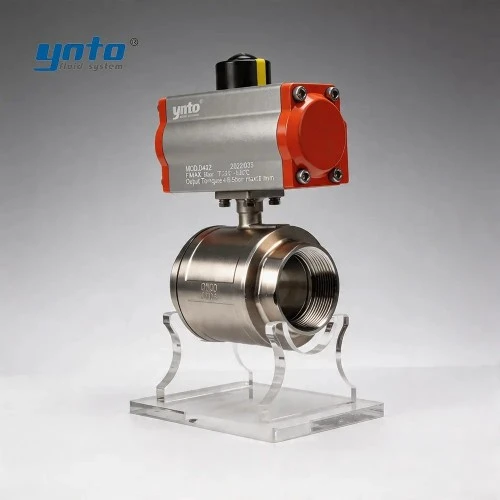
YNTO’s pneumatic single-seat control valve is a candidate for clean cooling water where controllable flow and specified shutoff matter. Its listed linear or equal-percentage characteristics and leakage grades are starting points, not proof that a given trim will handle a particular low-flow duty. Request the selected trim’s flow-coefficient-versus-travel data and the applicable differential-pressure and leakage limits.
Common Applications in Chemical Plants
Jacketed reactors, heat exchangers, seal-water branches, condenser auxiliaries, and sample coolers all operate below nominal design load at times. Cooling-water temperature also shifts with season and tower performance. A valve that seemed steady on a summer acceptance test may hunt in winter when the same thermal duty needs less water and the pump provides more available head.
An exchanger temperature loop cannot be judged without its hydraulic conditions. A plugged strainer, fouled exchanger, open bypass, or changed pump can move the valve to a different part of its characteristic. Record flow, pressures, water temperatures, travel, and controller output before specifying trim.
Key Components of Cooling-Water Control Valves
Valve Types and Their Features
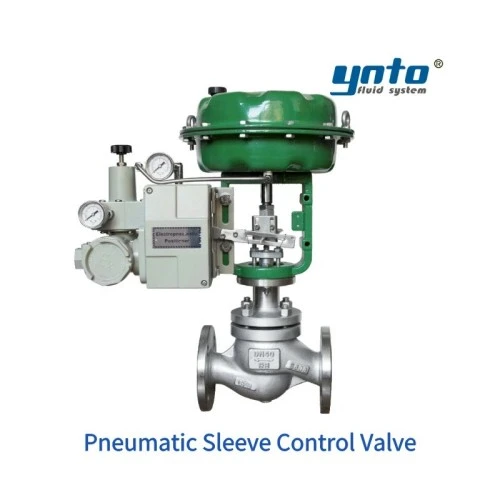
Single-seat globe valves provide a defined plug-and-seat throttling path and are often attractive when lower leakage is required. Sleeve-guided globe designs offer guidance and trim options that may improve stability when the differential pressure or dynamic forces are more demanding. A characterized rotary ball valve can be useful for suitable water containing fines or fibers, but its controllable minimum flow and shutoff class must be demonstrated for the selected port and seat.
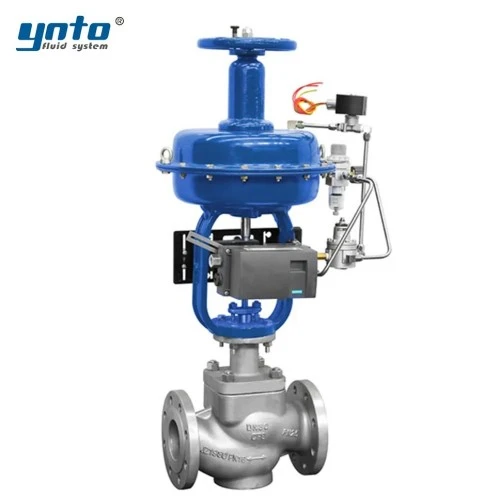
For a branch showing noise and valve-stem vibration as pump head rises, sleeve-guided trim is worth reviewing. The sleeve guides the moving element, and alternative trims may be available. Do not infer cavitation resistance from body style alone: obtain trim geometry, pressure-recovery data, predicted noise, and minimum controllable flow. At a very small opening, an otherwise robust valve can still erode.
The actuator and positioner deserve the same attention as the body. A diaphragm actuator needs force to overcome maximum differential pressure and packing friction. If the process requires cooling on loss of air, fail open may be appropriate; where flooding is the dominant hazard, the choice may differ. Document the consequence before choosing spring direction.
Importance of Precision Flow Control
Precision flow control means a small command produces a repeatable change in installed water flow. At low flow, stiction holds the stem until actuator force builds, then releases it suddenly. The controller reverses its command, and the cycle repeats.
Check position against flow and jacket temperature. If position moves but flow does not, investigate meter turndown, the plug, and upstream restrictions. If position holds while flow swings, examine differential pressure, other branches, and pump control. Coordinating upstream pressure control valves can improve water flow management before the branch valve is replaced. Where trim vibration persists at a measured differential, compare YNTO’s pneumatic sleeve control valve against the installed-duty calculation.
Sizing of Control Valves for Low-Flow Cooling Water
Understanding Flow Requirements
Begin with process heat duty, not the line size. The water flow needed for a steady heat load is related to duty divided by water density, heat capacity, and the permitted water temperature rise. Validate the estimate against operating records, especially during startup, peak reaction, turndown, and cleaning. A design sheet that lists only maximum flow leaves the hardest operating point undefined.
Record minimum, normal, and peak flow with corresponding pressures and temperatures. Identify the pressure drop actually available. Pump behavior, other branches, and fouling change that differential, so installed flow can depart sharply from a catalog's inherent curve.
The valve flow coefficient expresses capacity under specified conditions. For a preliminary metric water calculation, Kv ≈ Q/√Δp when Q is in m³/h and Δp is in bar. Thus 2 m³/h at 0.25 bar suggests Kv about 4 at that operating point. This is a screening check, not a final trim selection: account for actual density, viscosity, fittings, the changing system curve, and possible cavitation using the applicable control-valve sizing method.
Steps for Accurate Sizing
Calculate the coefficient at minimum, normal, and maximum flow using each case's pressure drop. Request coefficient-versus-travel data. Peak capacity is insufficient if minimum duty sits against the seat or below the stated controllable range. Compare expected travel with positioner resolution and tested rangeability.
At high pressure drop, evaluate local pressure at the vena contracta. Vapor bubbles collapse as pressure recovers, producing cavitation and pitting. Pump swings excite the damaged trim, reducing repeatability and slowing temperature control. If the cavitation assessment is unfavorable, review staged trim or a changed pressure distribution instead of simply enlarging the valve.
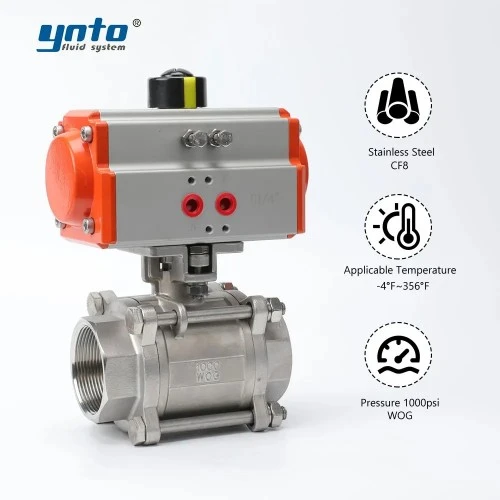
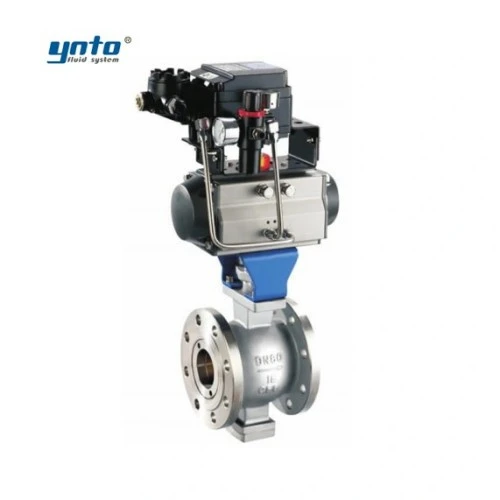
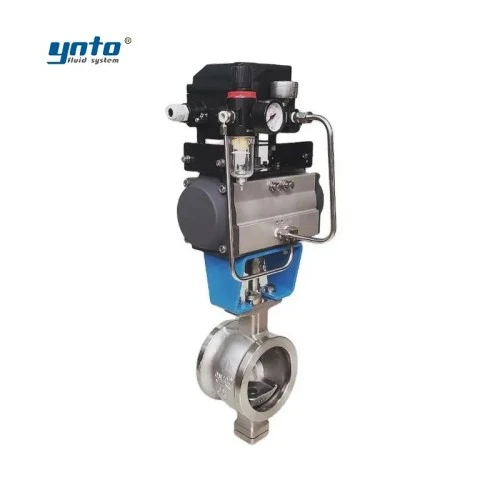
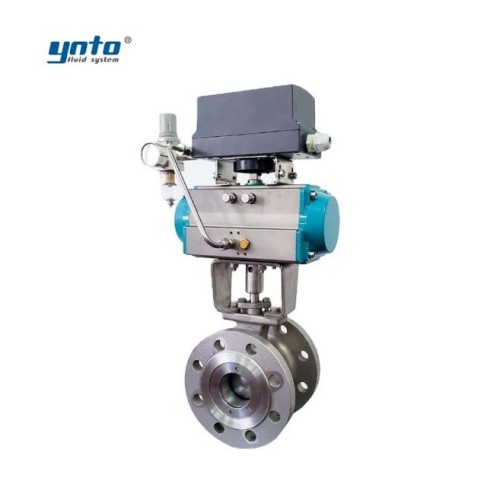
Where the cooling stream contains suspended solids, YNTO’s pneumatic V-port control ball valve provides a characterized opening and shearing action for suitable particle-bearing media. It is an option to compare against globe trim, not an automatic upgrade for clean low-flow water. Ask for the selected V-port’s minimum controllable coefficient, actuator torque, erosion allowance, and required shutoff leakage at the plant’s pressures.
Considerations for Retrofit Applications
The old valve may be oversized because its predecessor was chosen to match the line. A smaller trim inside a suitable body can sometimes improve control without rebuilding the whole branch; a smaller body with reducers may be justified if velocities and fitting losses remain acceptable. Neither approach is universal. Ask whether replacement trim is available for the existing body and whether the seat, bonnet, and actuator geometry support it.
Measure face-to-face length, flange drilling and facing, bore, clearance, and actuator height. Pipe strain from a forced fit can bind a stem. If a strainer or spool is added, include its pressure loss in the sizing case. For applicable metal valves, ASME B16.34 sets pressure-temperature and testing requirements; ANSI/ISA-75.01.01, aligned with IEC 60534-2-1, provides sizing equations. DIN EN 1092-1 governs PN steel flanges where specified. API 598 may cover an associated isolation valve, while ISO 5208 defines pressure and closure testing for metallic valves. Name the relevant test and leakage acceptance in the purchase order.
Material selection follows water chemistry. Carbon steel may be sufficient for a controlled, treated closed loop; 316L may be useful where corrosion risk is higher, though chloride content and temperature can still limit it. Duplex may warrant consideration for more severe chloride exposure after a materials review. EPDM often serves treated cooling water, while PTFE may suit selected chemicals in the circuit. Check oxidizing biocides, glycol, temperature, and the actual seat and packing compounds instead of assuming that a generic “water-compatible” seal is adequate.
Maintenance and Trim Checks Before Retrofit
Routine Maintenance Procedures
Before disassembly, lock out pumps, isolate and drain the branch, and prove zero pressure. Cooling water can carry biocides or process contamination; collect drainage under plant procedures. A hot return can scald, a high-pressure header can retain energy, and a leaking bypass can refill an isolated section.
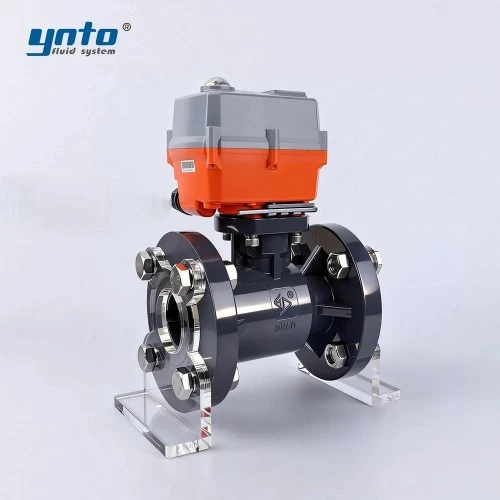
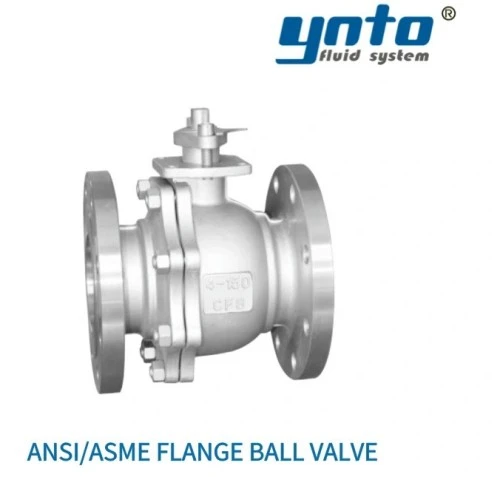
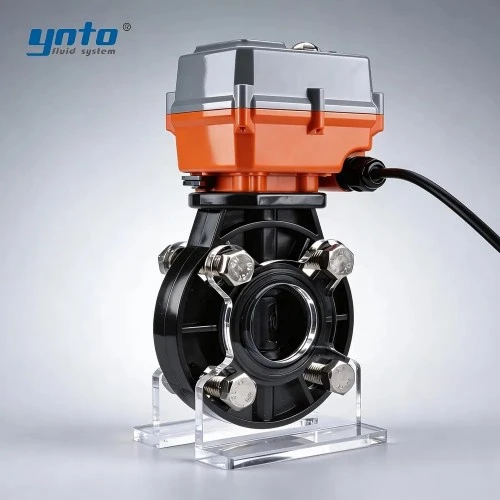
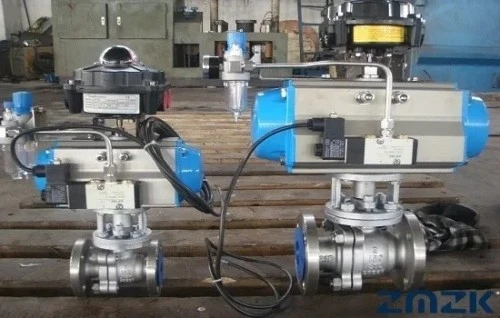
Where the line needs a new isolation point, an appropriately rated ANSI/ASME flanged ball valve may simplify future access to the control valve. Its manual shutoff role is distinct from throttling. Check its pressure-temperature rating, flange compatibility, water chemistry, cavity effects, and leakage requirement before procurement; do not use the handle position as the only proof of isolation.
Inspect plug and seat contact, stem, sleeve wear, deposits, packing friction, diaphragm, and positioner calibration. Compare as-found travel with records. Rebuilt trim that tracks well on a bench may still hunt at installed pressure; commissioning must cover the hydraulic cases.
Indicators of Performance Degradation
During rounds, engineers often notice a slow increase in actuator-air demand, a small external packing leak, or an oscillating flow signal at low demand. A stroke test may show deadband on reversal. Sediment can lodge near a seat, causing increased closing force; the actuator reaches its stop later; leakage then persists even with a closed command. Temperature cycling can harden elastomers and change friction, adding another delay before the controller sees a response.
Compare position with pressures, loop output, exchanger duty, and flowmeter uncertainty. If the meter cannot resolve the low end, use a calibrated measurement method. A steady display below the meter’s reliable range is not evidence of stable flow.
Enhancing Efficiency with Automation
Role in HVAC Control Systems
Chemical-plant cooling loops share some principles with HVAC control systems: variable loads, interacting branches, pump head changes, and the temptation to throttle a large valve nearly shut. But process temperature excursions can affect reaction quality or plant safety, so cooling system controls must reflect the process hazard analysis, not a generic comfort-cooling sequence.
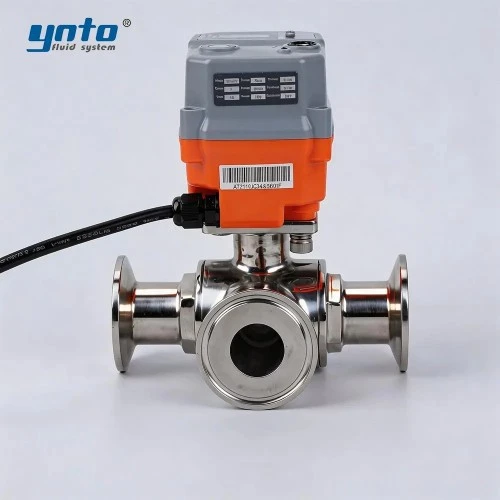
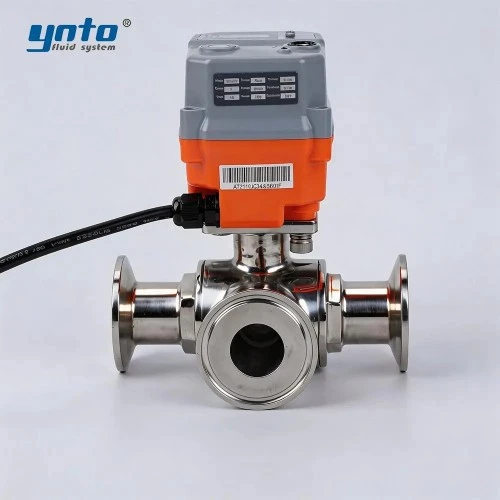
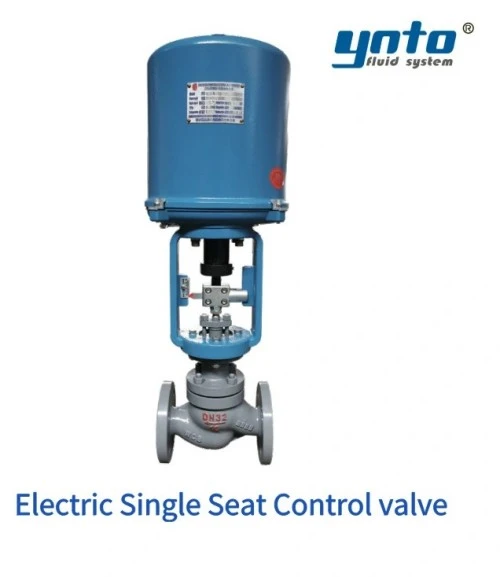
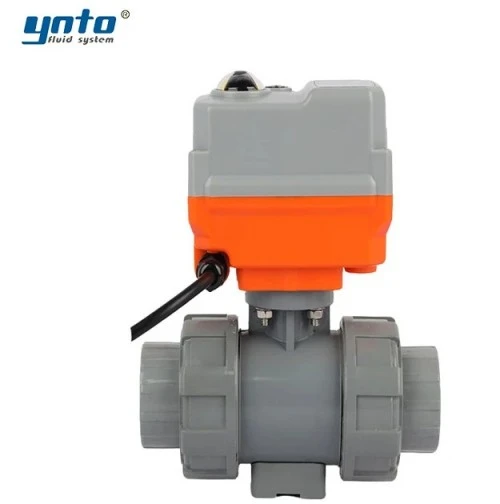
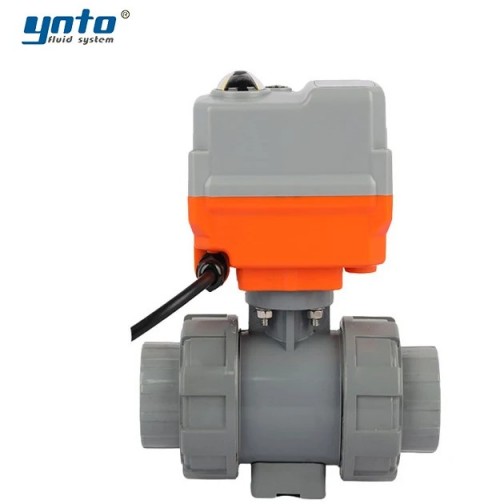
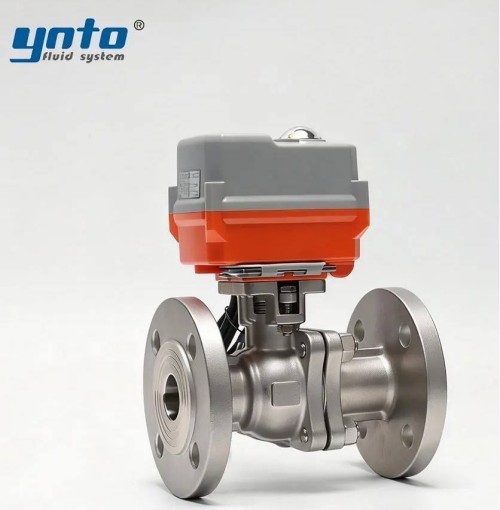
An electric actuator may be suitable where instrument air is unavailable and the required stroke speed and failure behavior are acceptable. YNTO’s electric single-seat control valve accepts a 4–20 mA input in its published configuration and offers a metal control-valve option for moderate differential-pressure duties. Confirm control response, manual override, enclosure, power-loss position, and the chosen trim curve. An electric valve does not correct an oversized coefficient.
Innovations in Process Automation Solutions
Useful process automation solutions show more than a commanded position. Trend actual travel, flow, pressure drop, water temperatures, and alarm events together. A rising pressure drop with declining flow may point to fouling; rising travel at the same heat duty may indicate loss of cooling-water pressure or exchanger performance. Positioner diagnostics can flag friction or lost motion, but they need a measured baseline and a technician who can distinguish a process disturbance from mechanical wear.
Tune the controller after hydraulic acceptance, especially if the new trim has a different installed characteristic. Test minimum-load stability, peak cooling response, and the agreed loss-of-air or loss-of-power action. A fast valve can amplify pressure transients in adjacent branches; a slow one can let a hot process outrun cooling. The target is a repeatable process response with documented safe behavior, not the quickest actuator on a datasheet.
Final Thoughts on Low-Flow Valve Retrofits
Importance of a Proper Retrofit
Good sizing connects three pieces of evidence: actual minimum and peak duty, the pressure drop available in each mode, and the selected trim’s controllable coefficient over travel. Maintenance evidence shows whether the old valve is genuinely underspecified or merely worn. Mechanical dimensions, materials, and shutdown procedures determine whether the replacement works safely once installed.
Looking Ahead: Advances in Valve Technology
Better trim data, actuator feedback, and plant historians make low-flow problems easier to locate before they become chronic. For a practical quotation, send YNTO the cooling-water analysis, flow and pressure cases, required leakage and failure action, existing valve drawing, connection standard, control signal, and any cavitation or noise limits. Those details let a supplier compare single-seat, sleeve-guided, rotary, and electric packages against the same duty rather than recommend a valve by nominal size alone.
- 2026-11-09 10:30:10
- 2026-11-06 08:48:06
- 2026-11-05 09:31:18