

Check Valve Guide to Prevent Backflow Contamination
- 2026-06-08 14:43:03
- admin
- NO COMMENTS
You usually notice the problem before anyone says the word “backflow.” In a pump room, the line pressure sags after a sudden demand change, the disc inside the valve chatters once or twice, and then the pipe goes quiet in a way that makes experienced operators look up. A few days later, there is a faint seep at the downstream flange, or a complaint that the system lost prime overnight. In higher-risk plumbing cross-connections, the consequences are far more serious. In late May 2026, city officials in Laredo, Texas said a failed backflow prevention device at a single residence triggered a boil-water notice, a reminder that reverse flow problems are not theoretical and that one weak point can quickly become a public-health issue.
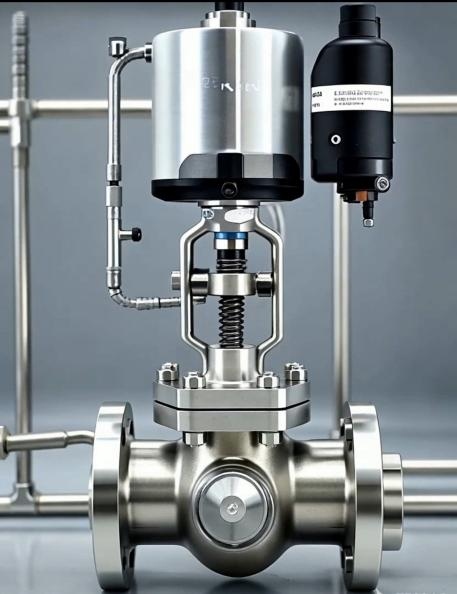
Understanding Backflow Contamination
Backflow is simply reverse flow, but in practice it happens in two different ways engineers have to respect. One is back pressure, when downstream pressure rises above supply pressure. The other is back-siphonage, when supply pressure drops and contaminated liquid is drawn backward into the clean line. That can happen after a main break, a fire hydrant draw, a pump stop, or a sudden jump in demand. In water treatment and building service work, that reversal can carry fertilizers, process chemicals, wastewater, or biological contamination into a potable or treated-water line. That is why a well-selected check valve line matters so much in equipment protection, even before the conversation reaches code-required backflow assemblies.
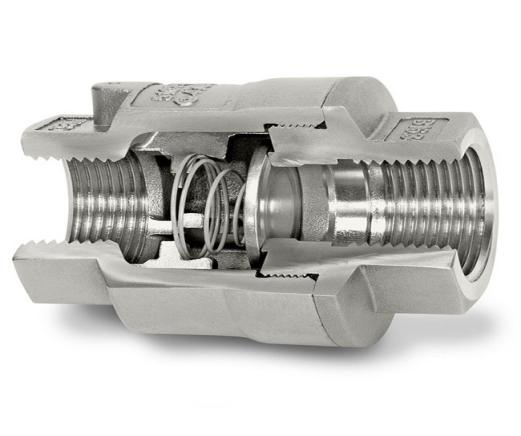
The Function of Check Valves
At the mechanical level, a check valve is a self-operating, one-way valve, also commonly called a non-return valve. It has an inlet, an outlet, and a closure member that stays closed until upstream pressure is high enough to open it. When forward flow weakens or reverse pressure develops, the closure member returns to the seat by spring force, gravity, counterweight, or back pressure. That simple construction is exactly why check valves remain indispensable in industrial and utility piping: no operator has to remember to close them, and no power supply is needed for basic one-way protection.
Plumbing Check Valve vs. Hydraulic Check Valve
A plumbing check valve is typically selected around contamination risk, drainage behavior, and code acceptance. It is there to stop nuisance reverse flow, keep a sump or booster line from emptying, or protect pumping equipment from reverse rotation and line drainback. But reputable technical guidance also makes the limitation clear: check valves do not provide the same degree of protection as a real backflow preventer and should not be treated as interchangeable where potable water protection is required.
A hydraulic check valve uses the same one-way principle, but the engineering emphasis shifts. In hydraulic, pneumatic, and HVAC circuits, engineers care much more about cracking pressure, seal stability under oil or air service, and holding pressure on pumps, cylinders, compressors, or heat-transfer loops. That is why field technicians often talk about a valve “opening too early” or “closing a touch too hard.” They are really talking about cracking pressure and dynamic closure behavior, not just contamination. In practice, specifying a hydraulic check valve without checking real operating differential is asking for flutter, heat, and short service life.
How Check Valves Prevent Backflow
The working principle is straightforward, but the details decide whether a valve behaves well or becomes a maintenance problem. A check valve opens only after the inlet pressure overcomes the closing force. That minimum opening threshold is the cracking pressure. If the line operates too close to that threshold, the closure member can hover instead of traveling cleanly. Engineers in the field often notice this during commissioning as unstable noise, minor vibration, or inconsistent downstream pressure. The sequence matters: marginal differential pressure leads to repeated disc or ball movement, repeated movement causes wear, and wear eventually shows up as leakage or late closure.
Design choice matters just as much. A swing design is common in water lines because it is simple and widely used in distribution service; YNTO’s ANSI/ASME flange swing check valve is a good example of the industrial pattern, with BS 1868 / ANSI B16.34 design references and API 598 pressure testing listed on the product page. Ball check valves, meanwhile, tend to handle solids better and are often preferred in sewage or wastewater service because the closure element interferes less with the flow when open. For potable hazard protection, though, engineers should remember that a pressure relief valve is not a substitute for a check valve, and a simple inline check valve is not a substitute for an RPZ or other testable backflow assembly.
Installation and Maintenance of Check Valves
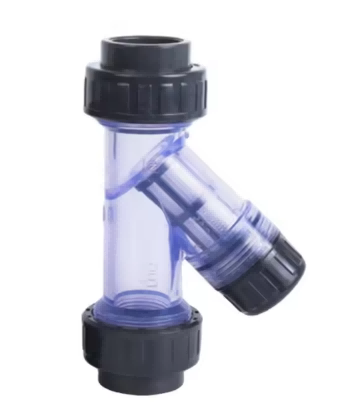
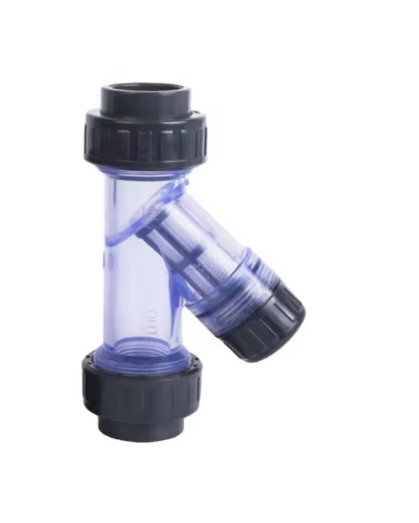
Most costly mistakes happen before the valve ever sees service. Orientation is the first one. Some designs can run horizontally or vertically, others cannot, and foot valves specifically depend on gravity and must be installed in the pump suction line in the correct vertical position. Size and cracking pressure come next. Install a valve with too much opening resistance and it never fully opens; install one with too little, and it will not seat with enough authority under transient conditions. Upstream debris control matters too. In dirty systems, putting a Y-type filter where it can actually protect the seat is often cheaper than replacing one-way valves after every upset.
During inspection rounds, engineers usually look for three things: seat condition, closure speed, and hammer evidence. A worn seat can start as a very light seep that only appears after shutdown. A disc that has been cycling in partial-open service often shows hinge wear or asymmetrical contact marks. And if the line has experienced abrupt reverse flow, the pipework will often tell the story before the valve does. Tameson notes that foreign material can block a check valve open and that fast closure can make check valves vulnerable to water hammer; Hawle adds that check valves are often installed specifically to reduce water hammer and protect upstream equipment like pumps, meters, and filters. That is another cause-and-effect chain field teams know well: pump trip or reverse-flow event leads to rapid closure, rapid closure creates a pressure wave, and the pressure wave shortens the life of both the valve and the piping around it.
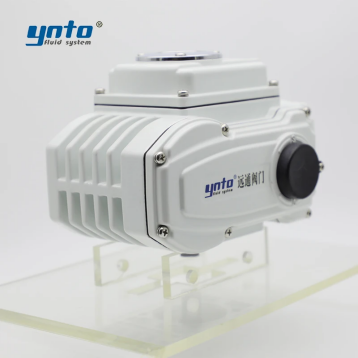
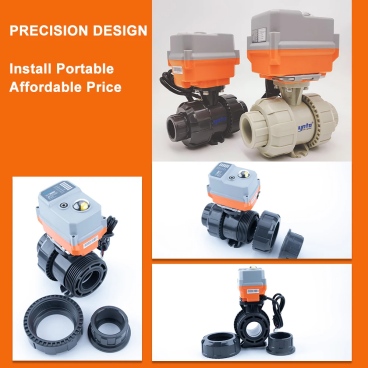
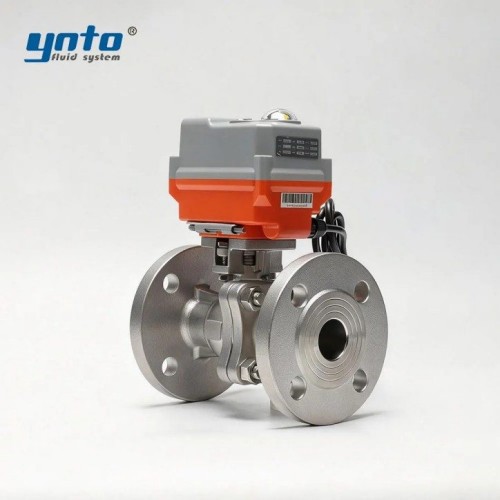
In many field operations, maintenance becomes much easier when the one-way valve is not working alone. Pairing it with an upstream electric ball valve and a compact electric actuator lets operators isolate branches cleanly, prove a seat during shutdown windows, and reduce manual intervention in hazardous or hard-to-access pits. YNTO’s catalog also highlights brushless motor, wide-voltage, and IP67 waterproof electric-valve technologies, which is relevant when the installation is outdoors, washdown-prone, or exposed to unstable site power.
Case Studies in Plumbing and Wastewater Management
In plumbing systems, the clearest lesson is that “small” failures do not stay small for long. The Laredo boil-water incident is a useful recent example: officials linked the event to a failed backflow prevention device at one residence, yet the operational consequence spread far beyond that site. That is why procurement teams should not reduce the question to unit price alone. On the clean-water side of a cross-connection, the real financial exposure sits in testing, liability, service interruption, and loss of trust, not in the valve body cost.
Wastewater management tells a different story. Here, the usual enemy is not only pressure reversal but solids. Hawle notes that ball check valves perform especially well as sewage check valves, while ValveMan notes that swing types are widely used in water and wastewater but can be held open by debris. Engineers recognize the symptom immediately: the pump stops, line flow decays, and instead of firm closure you get a slow return and contamination risk between two reservoirs or process zones. In sewage and screened-slurry lines, that is why the wrong internal geometry can cost months of service life.
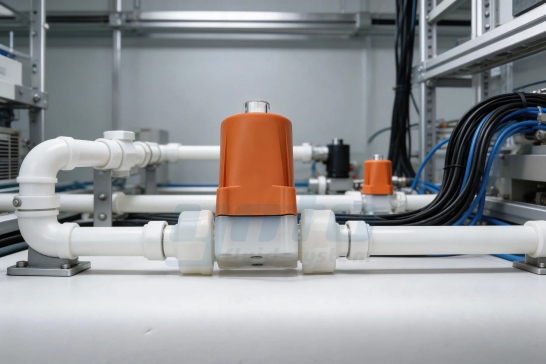
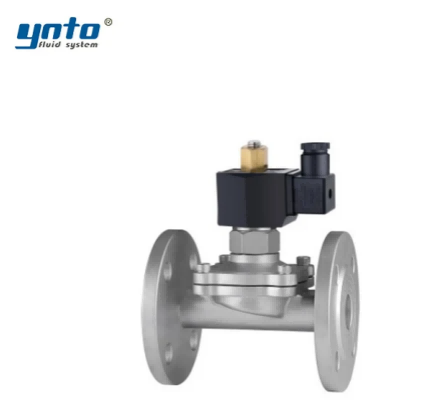
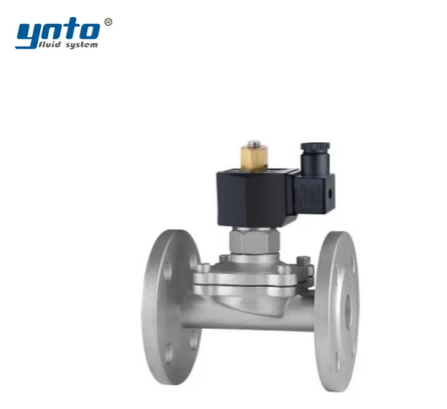
There is also a hygienic case that buyers increasingly overlook. In food, pharma, and ultrapure process branches, the question is not just reverse flow; it is cleanability and dead-leg control. A sanitary check valve or clamp-end stainless arrangement is often the better choice there, and where isolation has to stay hygienic, a diaphragm valve is usually the safer companion valve. YNTO’s diaphragm-valve range includes 316L sanitary models as well as PTFE-lined and PVDF variants for chemical and semiconductor-grade duties, so buyers can keep contamination control and material compatibility in the same sourcing conversation. If the skid also needs interlocks or drain sequencing, a compact solenoid valve can simplify that automation layer.
Choosing the Right Non-return Valve
Material selection decides whether a valve stays tight after the first year. For clean water and hygienic washdown service, 316L stainless remains the conservative choice because it gives good corrosion resistance and cleanability. PTFE-lined constructions make sense where chemical compatibility matters more than mechanical simplicity. PVDF earns its place in high-purity and aggressive media loops, while ductile iron with a quality epoxy coating remains practical in many water distribution duties where cost control and corrosion resistance must coexist. What matters is the match between medium, temperature, pressure, and closure dynamics. When material is wrong, the failure sequence is usually predictable: incompatible chemistry hardens or pits the sealing interface, the seat stops sealing uniformly, and reverse-flow leakage begins long before the body looks visibly damaged.
Standards are where serious buyers separate a catalog item from a usable engineered component. ASME B16.34 covers pressure-temperature ratings, dimensions, tolerances, materials, NDE requirements, testing, marking, and related safe-use considerations for flanged, threaded, and welding-end valves. YNTO’s ANSI/ASME flange swing check valve lists BS 1868 / ANSI B16.34 design, ANSI B16.10 face-to-face dimensions, ANSI B16.5 flanges, and API 598 pressure testing. On the broader company side, YNTO also states compliance activity tied to ISO 15848-1, EN 12516-4, ISO 5211, and ASME/API frameworks in different industrial markets. In European procurement packages, that often translates into DIN/EN-style documentation expectations as well, especially when projects are being bought into German and wider EU supply chains.
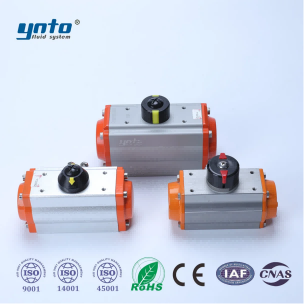
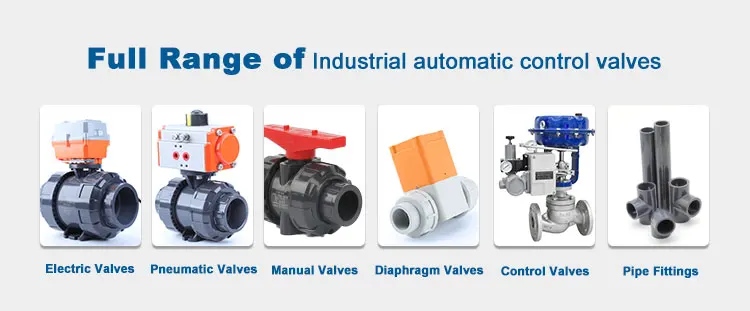
From a sourcing standpoint, this is where a supplier with a wider valve package becomes useful. If you only buy the non-return valve, you still have to coordinate upstream filtration, isolation, control, and actuation somewhere else. If you buy from a line that already includes Electric Ball Valve options, pneumatic actuator packages, manual check valves, Y-type filters, and hygienic diaphragm models, you can solve the branch instead of just the symptom. That matters for retrofit work, especially where drain-down control, bypass logic, or automated isolation has to be added without turning the whole skid into a custom fabrication project.
The best buying checklist is not complicated, but it has to be honest. First ask whether you are protecting equipment or protecting potable water. Then ask what the real reverse-flow trigger is: pump stop, fluctuating demand, dirty media, back pressure, or back-siphonage. After that, size for actual cracking pressure and flow, choose a body and seat material that match the media, and insist on standards that fit your region and hazard level. A cheap valve that chatters, corrodes, or traps debris is rarely cheap by the second shutdown.
Conclusion
A check valve is one of those components that disappears into the drawing until it fails. Then everyone remembers it at once. In low-risk service, a well-chosen check valve or non-return valve is still one of the cleanest ways to stop reverse flow, protect pumps, and prevent mixing between process zones. But when contamination of potable water is on the table, engineering judgment and code practice both point the same way: use a true backflow prevention assembly, test it, and do not confuse one device with the other.
If you are buying for industrial water, wastewater, process utilities, or hygienic branches, the right move is to treat reverse-flow control as a small system, not a single SKU. Start with the check valve, then look at filtration, isolation, material compatibility, and automation around it. That is where suppliers like YNTO become practical, because the same sourcing path can cover check valves, hygienic diaphragm isolation, actuated ball valves, and control hardware without forcing the project team to piece the solution together from multiple catalogs.
- 2026-10-19 08:49:57
- 2026-10-16 10:48:59
- 2026-10-15 14:23:43