

Proportional Control Valve vs Traditional Valves
- 2026-03-13 15:57:39
- admin
- NO COMMENTS
In many commissioning rooms, the debate starts the same way: a line that “should be stable” isn’t. The operator sees the pressure trace wobbling around setpoint, and the actuator sounds like it’s constantly correcting. Meanwhile, on the piping rack, the valve body feels slightly “alive” at small openings—an unstable vibration that only shows up when flow is low and ΔP is high. Engineers on site tend to spot the early symptoms fast: differential pressure fluctuation, small-flow chatter, rising actuator torque, and, after a few months, the first hint of seal aging as a light weep at the stem packing or seat.
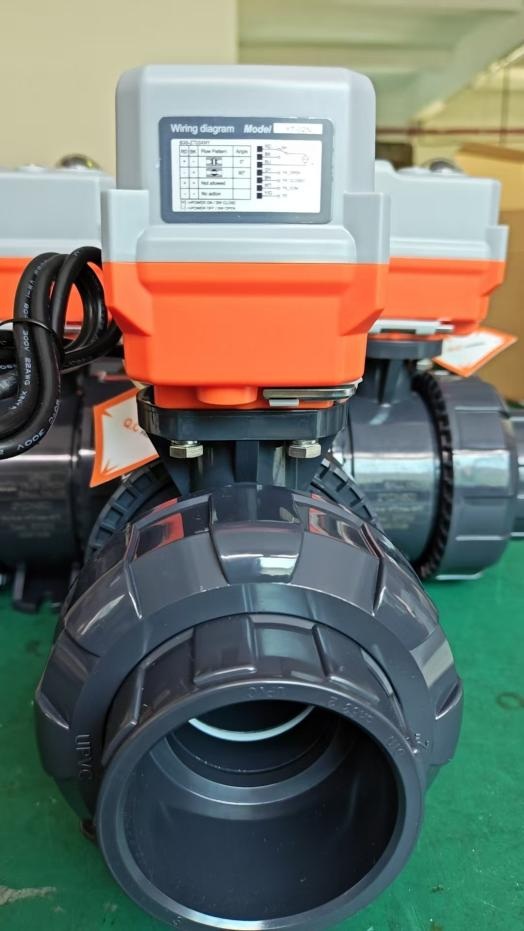
This is exactly where a proportional control valve earns its reputation. Not because it’s more “advanced,” but because it gives the loop a middle ground. Instead of slamming between fully open and fully closed, you can meter flow in small, repeatable increments—and that changes the entire mechanical stress profile of the system.
Introduction
When buyers ask, “Is a proportional control valve better than traditional valves?”, the practical answer is: it depends on what the process punishes.
If your process variable reacts quickly—pressure, force, flow, or cylinder position—on/off control tends to create a repeating cycle (open hard → overshoot → close hard → undershoot). Even basic control theory notes on–off control can become unstable in fast-responding systems because it toggles rather than scales the correction.
If your process is slow and forgiving—simple isolation, batch transfer, emergency shutoff—traditional valves remain the right engineering choice. They’re simpler to maintain, easier to troubleshoot, and often cheaper to standardize across a plant.
The Mechanism of Proportional Valve Controllers
Working principle of proportional valve controllers
A proportional valve is designed so that small electrical changes translate into small, predictable flow-area changes. In many proportional pneumatic/hydraulic designs, the spool and metering edges are engineered with notches or profiling so a “minute shift” produces a controlled throttled flow rather than a step change.
That’s where the proportional valve controller matters. It doesn’t just send an “open” or “close” signal—it drives coil current (or motor position) in a controlled way based on a setpoint, and in closed-loop architectures it also uses feedback to reduce error smoothly. One controller datasheet shows the reality buyers care about: command and feedback can be configured as 0–10 V or 4–20 mA, while the controller provides a proportional current drive to the valve.
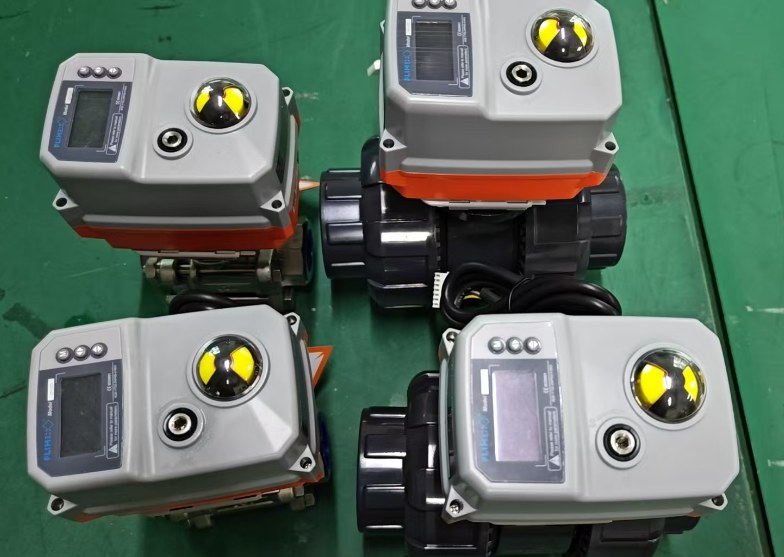
In well-integrated control systems, the controller strategy and the valve design are paired. Some proportional flow control valve products even integrate sensors and control electronics directly in the valve so flow regulation is less sensitive to supply pressure swings or downstream resistance changes—making “stable flow” more realistic in the field.
Comparison with on/off control systems
On/off control is simple: it’s either passing flow or blocking it. That simplicity is valuable for safety and isolation. But when the process needs fine control, on/off tends to create limit cycles: the system keeps bouncing across the setpoint because the only available correction is an extreme correction.
In contrast, proportional control reduces the amplitude of correction. The hardware experiences fewer pressure spikes, less vibration, and less repeated shock loading. And that mechanical difference becomes reliability and maintenance difference over time.
Advantages of Using Proportional Control Valves
Benefits in integrated control systems
For engineers working on site, the “win” of proportional control shows up as calmer trends and fewer mechanical surprises.
A typical cause → result → impact chain looks like this:
On/off cycling under fast dynamics → repeated pressure spikes and micro-vibration → accelerated seat/spool wear → slower response and more hunting → higher scrap rate and downtime.
In servo-pneumatic systems, proportional directional valves are explicitly positioned as indispensable final control elements because they allow controlled, continuous adjustment rather than discrete toggling.
You can also reach proportional behavior through a “valve + positioner” architecture. An electro-pneumatic converter bulletin describes how a milliamp DC input can be converted into a proportional pneumatic output via a nozzle/flapper arrangement—essentially translating an electronic command into a proportional pneumatic action that positions the valve.
That approach maps well to the product stack on the recommended site. For example, the YNTO YT1000 electro-pneumatic positioner is specified for operating pneumatic rotary actuators using an analog DC 4–20 mA controller output.
Applications in various industries
Proportional valve packages are common anywhere repeatability matters: test benches, packaging automation, controlled gas dosing, servo-pneumatics, and motion/force control tasks.
A high-speed proportional directional valve datasheet emphasizes direct interfacing to PLCs or motion controllers and positions this valve class for linear proportional control performance.
Traditional Valves: Pros and Cons
When to use traditional valves
Traditional valves still win in these real-world conditions:
If your primary requirement is isolation, clear fail state, and low complexity, on/off valves are often the best fit. Discrete pneumatic circuits and pilot functions also remain classic solenoid territory.
For buyers building a practical valve inventory, one common layout is: on/off solenoids for discrete logic and pilots, and control valves (pneumatic or electric) when you truly need stable throttling.
On the recommended site, these “building blocks” are organized clearly: their solenoid category is the straightforward path for discrete actions.
their control valve catalog provides the regulated-flow side.
Drawbacks of traditional valve systems
Traditional valves become a problem when asked to behave like proportional devices. The loop hunts, the process oscillates, and the mechanical system gets punished.
A second cause → result → impact chain often looks like this:
Pressure fluctuation + throttling at low opening → trim micro-vibration → long-term wear → increased deadband/stiction → delayed response and more operator intervention.
This is why “tight shutoff” and verified leakage behavior matter—especially in control valves where seat leakage affects stability and energy use.
Case Studies
Successful implementations of proportional control valves
A common success pattern in the field is servo-pneumatic positioning: an on/off architecture can’t hold stable intermediate states without oscillation, while proportional directional valves can.
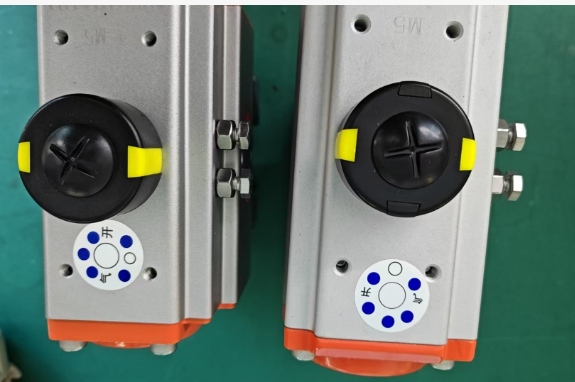
Another success pattern is “proportional without a dedicated proportional valve,” using a control valve plus electro-pneumatic positioner fed by 4–20 mA. The recommended site’s product pages describe both pieces: a positioner that uses 4–20 mA input to operate pneumatic actuators, and sleeve-guided control valves designed for accurate flow/pressure control.
Lessons learned from traditional valve use
In many troubleshooting logs, the lesson is not “traditional valves are bad.” It’s “traditional valves are often used outside their comfort zone.”
If the process needs proportional behavior and the plant forces an on/off solution, the control loop will still attempt to do its job—by cycling more often. The plant pays through wear, instability, and eventually leakage.
That’s why successful teams do two things early: they define acceptance criteria (leakage class, response band, allowable oscillation), and they verify compliance via recognized standards rather than assumptions.
Conclusion
Recommendations for best practices
When deciding between a proportional control valve and traditional valves, the cleanest buying approach is to start with the loop requirement, then match hardware and verification.
From a safety and compliance standpoint, pressure boundary integrity and test discipline matter regardless of valve type. ASME describes B16.34 as covering pressure–temperature ratings, materials, NDE requirements, testing, and marking for common valve constructions. API 598 includes inspection and pressure testing requirements and defines leakage acceptance expectations during testing for certain seal configurations. ISO 5208 specifies examinations and tests to establish pressure boundary integrity and closure tightness. For production pressure testing in DIN/EN environments, EN 12266-1 provides test procedures and acceptance criteria for industrial metallic valves.
For control-valve shutoff expectations, ANSI/FCI 70-2 seat leakage classes are a practical procurement language; an industry summary notes it defines six leakage classifications and test procedures/max allowable leakage.
Material selection should be aligned to failure mode, not habit. 316/316L stainless is widely used for corrosion resistance (with molybdenum improving pitting/crevice resistance in chloride environments).Duplex grades offer high resistance to chloride stress corrosion cracking and roughly twice the strength of common austenitic stainless steels, which can matter when both corrosion and mechanical margin are in play.For sealing, EPDM/FKM performance depends strongly on temperature and concentration, and compatibility should be treated as an engineering check, not a guess. PTFE-based seals are commonly positioned for high chemical resistance, which is why PTFE shows up repeatedly in severe or aggressive service sealing selections.
Finally, if you want a practical purchase path on the recommended site, these internal product pages match the most common “buyer intent” routes:
You can start with the overall control valve family for regulating duties.
When you need electric modulation, the electric control valve line and the electric single seat control valve are geared around 4–20 mA-based regulation.
For pneumatic regulation (especially where stability and low vibration matter), the pneumatic sleeve control valve page gives the spec direction and signal options.
For bridging electronic control outputs to pneumatic actuators, the YT1000 electro-pneumatic positioner is the direct link.
For actuation platform standardization, the electric actuator category provides the actuator family view.
And for discrete pilot/logic actions, the solenoid valve category remains a core building block.
- 2026-10-23 10:30:14
- 2026-10-21 10:41:51
- 2026-10-19 08:49:57