

The Ultimate Guide to SS Electric Valve Selection for Your Projects
- 2026-01-30 12:00:00
- admin
- NO COMMENTS
Introduction to Electric Valves
Use Case: In one plant, an erratic pump caused pressure spikes that repeatedly slammed a butterfly valve shut. The sudden surges (cause) induced vibrations (effect) that prematurely wore the PTFE seals (impact), leading to persistent leaks and downtime. In another refinery example, a tiny metal grit lodged between a ball and its seat (cause), jamming the valve partly closed (effect) and causing overpressure (impact). Such cause–effect–impact chains highlight why the right valve matters. A seasoned engineer recognizes that pressure fluctuations → vibration → seal wear often stems from mismatched valve selection.


An SS (stainless steel) electric valve pairs a corrosion-resistant valve body (often 316L stainless or duplex steel) with an electric actuator. The valve may be a ball, butterfly, globe, diaphragm, etc., and the actuator is a geared electric motor. Stainless steel resists corrosion and high heat – “Grade 316 stainless steel has excellent pitting corrosion resistance…high-temperature strength” – making these valves ideal for harsh fluids. Components like stems, housings, and fasteners are often 316L or higher alloy to prevent rust in acids or seawater. The actuator is usually weatherproof (IP65/67) and can include explosion-proof enclosures for safety. Control options range from simple ON/OFF to modulating control (4–20 mA or 0–10 V input) for integration with PLCs. All parts typically meet industry standards (e.g. ASME B16.34, API 598, ISO 5208) for pressure ratings and leak-tightness.
Applications Across Industries: Electric valves are ubiquitous. They regulate cooling water in power plants, steam in chemical reactors, gas in pipelines, and fluids in water/wastewater systems. For example, an electric ball or butterfly valve with 316L construction is chosen for offshore oil rigs (saline and high pressure), while electric control valves (stainless steel globe or diaphragm) modulate flow in petrochemical units. In food and pharma, stainless steel valves prevent contamination. A cNYNTO guide notes that electric control valves “help to control the system’s fluid flow…regulating water, steam, or gas…with maximum performance”. In mining, they withstand slurries; in semiconductor plants, they survive aggressive chemistries. In short, wherever automation and corrosion resistance are needed, SS electric valves are applied.
Types of SS Electric Valves
Comparison of Electric Flow Control Valves
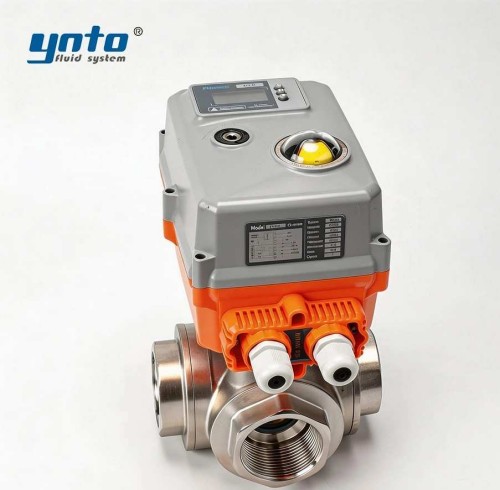
There are two broad modes: on/off valves (ball, butterfly) and flow-control (modulating) valves (globe, diaphragm). On/off valves offer fast isolation. For example, an Electric Ball Valve (two-piece or three-way) provides full-bore flow and zero leakage when shut; it’s ideal for slurries or clean liquids under pressure. In contrast, an Electric Butterfly Valve is lighter and simpler for large pipes: its disc is easy to turn and offers a low-pressure drop, though sealing is typically not as tight as a ball valve.
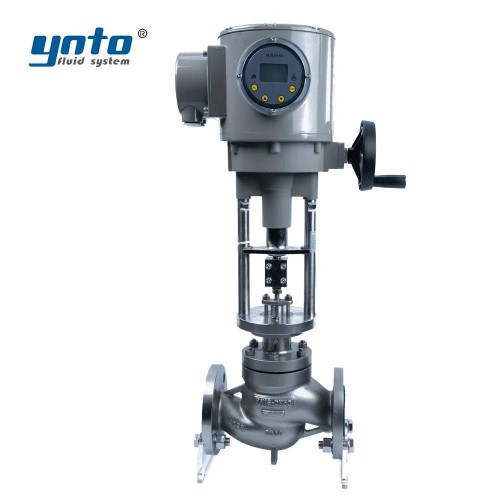
Flow control valves are used when you need throttling or proportional control. A stainless-steel globe or needle valve with an electric actuator (an “electric control valve”) can vary the opening smoothly. These come with linear or characterizable trims, designed to meet precise setpoints. However, globe valves usually have higher head loss than ball/butterfly. The trade-offs include:
- Ball Valve: Excellent leak-tightness, quick action (under motor torque), robust seats (often PTFE/RPTFE or FKM) that tolerate erosives; limited throttling range.
- Butterfly Valve: Cost-effective for large diameters, lower torque requirements; harder-seal versions (EPDM or high-temp Viton seats) can handle tougher service.
- Control Valve (Globe/Diaphragm): Precise flow control with actuators offering feedback (4–20 mA modulating). Suitable for fine pressure/flow regulation but heavier and slower to move.
Each type may be built in 316L, duplex, or even carbon steel bodies, with selection driven by fluid, pressure, and required precision.
Advantages of High-Pressure Electric Valves
High-pressure service (ANSI Class 600–1500 and beyond) demands special design. High-pressure electric valves have thicker walls, reinforced seats, and often forged bodies (ASME B16.34). For example, a forged 316L ball valve rated ANSI 1500 can shut off hundreds of bar with minimal distortion. Using 316L (or higher duplex steel) ensures the metal won’t yield or crack under pressure. Actuators for these valves are over-specced for torque and may be explosion-proof. Typical features for high-pressure valves include double-block-and-bleed seats (to vent cavity pressure) and robust packing materials. In practice, “valves are built to ANSI/ASME pressure classes…so one might use a stainless…valve when higher pressures or temperatures demand it”. Safety reliefs and sensors are often added: e.g. some actuators include pressure transducers or fail-safe springs to shut the valve if the electric supply fails under load. Overall, high-pressure electric valves maintain tight control without leakage or jamming even under surge loads, thanks to materials and standards compliance.


Importance of Valve Position Indicators
How They Enhance Control: A valve position indicator provides visual or electrical feedback on valve status (open/closed or % open). In automated plants, this is critical. For example, if a control system commands a valve open but flow doesn’t rise, the indicator can immediately reveal whether the valve actually moved. As one tech puts it, actuators include a position indicator so “the open/closed status can be checked visually”. This helps isolate faults: if the light shows “open” but still no flow, it’s a piping or pump issue; if it still reads “closed,” the actuator or power circuit is suspect. In emergencies, indicators verify that valves have latched in the fail-safe position. They also support remote monitoring by sending status signals (limit switches or feedback modules) to the control room.
In practice, almost every electric actuator incorporates this feedback. This might be as simple as a painted dial on top, or built-in switches. For instance, YNTO’s APL510N is a “rotary type position indicator” switch box that mounts on the actuator shaft. It includes SPDT micro-switches and a beacon light to show open/closed status, and it’s rated IP66/ATEX for explosive environments. On many motors, cams trigger limit switches at the end positions, even sending 4–20 mA feedback. The result: operators gain confidence in valve commands and can quickly troubleshoot by “confirm[ing] valve status without physically inspecting it”.

Technology Behind Position Indicators: Indicators can be mechanical, optical, or electronic. The simplest is a sealed dial or flag driven by the actuator shaft. More advanced switch boxes (like [43] APL510N) use stainless steel shafts and microswitches to generate multiple contact outputs. Still other systems have built-in transmitters: for example, some actuators output a variable signal proportional to travel. Digital displays or potentiometers can show the exact valve opening (in %). Crucially, all are designed per standards (e.g. IEC/EN 60947 for switches) and are often weatherproof/explosion-proof. They enhance safety by verifying manual overrides, preventing false assumptions, and enabling interlocks in automated safety systems.
Designing Valve Automation Solutions
Integrating SS Electric Valves into Systems: In modern piping systems, these valves form part of a larger automation solution. Typically, the valve+actuator assembly mounts directly onto the pipe (flanged or threaded per ANSI/DIN specs). The actuator connects to the plant’s power (24VDC, 110/220VAC or even 380VAC) and to the control system. For on/off valves, a simple wiring (3-wire control) can toggle open/close. For flow regulation, a PLC or DCS sends a 4–20 mA or 0–10 V command to a modulating actuator. The actuator’s gearing may be upgraded for faster cycling if needed (special gear for 1–2s open/close times). Manual overrides (handwheels or levers) are usually built in, and explosion-proof (ATEX/IP6) housings are available for classified areas.
Control logic often includes interlocks (e.g. one valve cannot open unless another closes) and safety features. Many electric actuators offer “fail-safe” modes: in a 2-wire (auto-return) setup, loss of power will spring-close or open the valve. This is crucial for critical shutdowns. Limit switches from the position indicator tie into the PLC for closed-loop verification. For example, a pressure sensor may trigger a PLC to send a “close valve” signal; once the indicator reports “closed,” the system confirms safe isolation. In other words, SS electric valves are chosen and wired so that commanding them, knowing their status, and enforcing safety happens automatically.

Real-World Implementation Examples: One example is a drinking-water treatment plant. Programmable actuators on stainless butterfly valves control flow to filters. The PLC uses flow meters to adjust valves (like an electric flow control valve in a feedback loop) to maintain constant flow rate. The valves’ position lights and limit-switch signals feed into SCADA alarms if they don’t reach the commanded position. In a petrochemical cracker, high-pressure steam flow is modulated by stainless globe control valves. Here, EPDM seat seals withstand steam (≤150°C) and PTFE gaskets handle chemical lubrication. Emergency shutdown logic closes all ball valves in sequence; their actuators’ gear-driven manual overrides allow operators to intervene. Across industries, well-designed valve automation combines valve position indicators, reliable actuators, and process sensors into a solution that meets both process and safety requirements.
Maintenance and Troubleshooting
Common Issues and Solutions: Even quality SS electric valves need care. Common problems include:
- Debris Clogging: Solid particles can lodge on seats or between components, causing flow restriction or incomplete sealing. For instance, sediment on a ball surface can cause leaks or jam the valve. Prevention: Install upstream filters or strainers and perform periodic flushing.
- Sticking/Jamming: Without lubrication, 316L valves still resist corrosion but may stick if exposed to scaling or after long inactivity. Cause: Rust or deposits on the stem/ball will bind parts. Solution: Regularly lubricate stem interfaces and cycle the valve. Use material coatings (e.g. hard chrome) if deposits are a problem. If a valve does stick, gentle manual operation after lubrication can often free it. 316L and FKM seals resist rusting, but in extreme cases consider 316L/CF8M and premium FFKM seats.


- Actuator/Indicator Faults: Electric motors can burn out from voltage spikes, and position switches can fail. Solution: Test actuators periodically (energize and watch indicators). Check wiring and fuses. Because actuators may have limit-switches, verify these after major cycling. Use rated weatherproof enclosures to prevent water ingress.
Best Practices for Longevity: Follow these guidelines to extend service life:
- Material Matching: Always match valve metallurgy to fluid. Use 316L (or 316L+Mo) in seawater or acidic service. In flue-gas or high-chloride conditions, use super-austenitic or duplex stainless steel. Carbon steel may be cheaper, but only in non-corrosive, dry applications.
- Standards Compliance: Ensure the valve is rated above your maximum pressure/temperature. A valve built to ANSI Class 300 (PN25) should not be used in a Class 600 (PN63) service. Conform to API/ASME test procedures – for example, seat leakage must meet API 598 or EN12266 specs on hydrostatic tests. Good practice is to purchase valves with certifications (CE, ISO) attesting to these standards.
- Appropriate Seals: Select sealing materials for the media. PTFE (Teflon) seals handle aggressive chemicals and up to ~+260 °C. FKM (Viton) works well with oils/ketones up to ~200 °C. EPDM is ideal for water and glycol (but not hydrocarbons) up to ~150 °C. Lubricants/actuator greases should also be compatible.
- Regular Inspection: Periodically cycle valves and inspect seats and stems. Check indicator accuracy by partially closing the valve and verifying against actual flow. Replace gaskets and O-rings at service intervals. Ensure actuator backdriving bolts are tight. For modulating valves, recalibrate controllers (e.g. 4–20 mA zero/span) to account for any drift.
- Safety Precautions: Always isolate lines and bleed pressure before maintenance. Many SS valves allow double-block bleed for safe servicing. Lockout/tagout electric supplies. Use rated PPE (as these valves can carry hot fluids or steam). Follow manufacturers’ guidelines for maximum opening/closing torques.

In summary, stainless steel electric valves (ball, butterfly, control, etc.) offer automated, reliable control in harsh industrial environments. By choosing the right type (e.g. electric flow control valve for modulating service, or high-pressure electric valve for extreme conditions) and integrating features like position indicators and compliant materials (316L, FKM, PTFE), engineers can solve problems of leakage, jamming, and pressure swings. The result is a robust valve automation solution that meets safety standards (API/ASME/DIN) and delivers long service life. For procurement managers, key products include Electric Ball Valve and Electric Butterfly Valve for on/off duties, Electric Control Valve for precise flow control, and complementary items like Valve Position Indicators and Electric Actuators to complete an automated system. By following industry best practices and choosing materials like 316L and seats like PTFE/FKM, these systems achieve safety and performance across all industries.

- 2026-09-14 15:59:43

- 2026-09-11 16:48:37
- 2026-09-09 09:50:27