

Brewery Sanitary Butterfly Valve Replacement: Seal Fit and CIP
- 2026-11-13 09:36:01
- admin
- NO COMMENTS
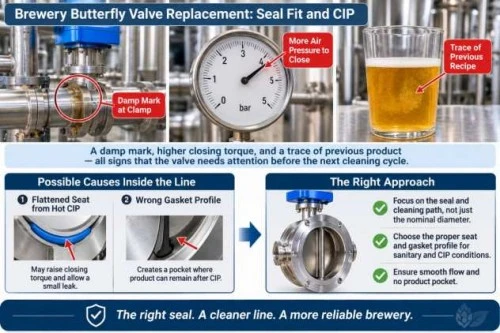
The blending pump starts, bright beer moves through the header, and a damp mark appears at the butterfly valve clamp. On the next changeover, the valve takes more air pressure to close, while a downstream sample carries a faint trace of the previous recipe. Both signs deserve attention before the next cleaning cycle.
Inside the line, repeated hot caustic washes may have flattened an unsuitable seat. A gasket with the wrong profile may also project into the bore, creating a pocket where product remains after clean-in-place (CIP). The first fault raises closing torque and permits a small leak; the second gives microbes or flavor residues a place to survive. A sanitary butterfly valve replacement should therefore begin with the seal and cleaning path, not the nominal diameter stamped on the old body.
Introduction
Purpose of This Brewery Valve Replacement Guide
For a beer, blending-water, or CIP return line, ask whether the new valve fits existing process piping systems, whether its wetted parts withstand product and cleaning chemistry, and whether the assembly can be cleaned and verified. A cheap “direct replacement” loses its appeal if it needs a new spool or lengthens every changeover.
Before removal, record leak location, differential pressure, actuator behavior, and the cleaning step after which the problem appears. A leak only after hot rinse suggests a different cause from one present throughout a cold run.
Definition of Sanitary Butterfly Valves
A sanitary butterfly valve uses a rotating disc and a resilient seat to open or isolate a hygienic flow path. Its short face-to-face length and relatively simple assembly can suit brewery transfer and blending lines. The word “sanitary,” though, describes design intent; actual cleanability depends on the ordered body, seat, connections, installation orientation, and validated cleaning procedure.
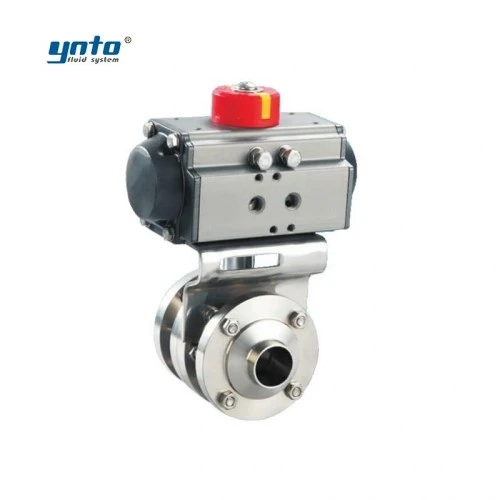
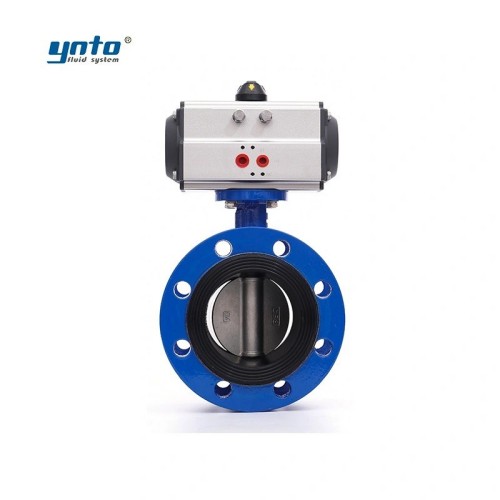
YNTO’s pneumatic sanitary stainless steel butterfly valve is presented for beverages and other clean process duties, with a polished passage and a design intended for quick disassembly. For a brewery retrofit, request the exact product-contact material, seat compound, connection drawing, allowable temperature, and maintenance instructions for the chosen configuration. A product-family page cannot establish that every variant matches an existing brewery skid.
On the removed valve, inspect the disc edge, seat compression band, and stem area. A polished bore cannot compensate for a rolled gasket or a residue pocket behind the seat.
Role in Process Piping Systems
Integration with Brewery Equipment
The line may connect deaerated water, tanks, flowmeters, a mixer, carbonation equipment, and CIP supply and return. A replacement must match ferrule geometry without compromising a flowmeter run or drain. Leave room for clamp tools, actuator removal, and inspection.
During commissioning, a pressure ripple may appear when the valve changes position as the pump ramps. Rapid closure loads the seat and instruments; repeated pulses fatigue the elastomer and increase leakage at batch changeover. Correct the timing and control logic as well as the seal.
Flow Control Valves in Brewing
Butterfly valves suit frequent on-off service and sometimes limited throttling. An oversized disc held nearly closed creates a fast local jet; small changes in opening then disturb the blend and erode one part of the seat. Check flow range and differential pressure before using the replacement as a flow control valve.
The flowmeter and recipe controller establish the ratio. Valve automation can sequence pumps, but “50% open” does not mean half of design flow. A diaphragm or control valve may suit a small dosing branch while the butterfly valve isolates the main line.
The CIP circuit may expose the valve to hot rinse, caustic, acid, and sanitizer at different pressure and flow direction. Verify cleaning reaches the disc, stem penetration, and blind branches. Hidden product-contact surfaces may require valve cycling or disassembly under the validated procedure.
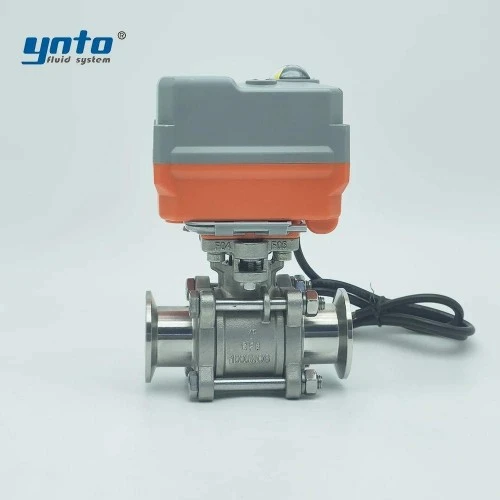
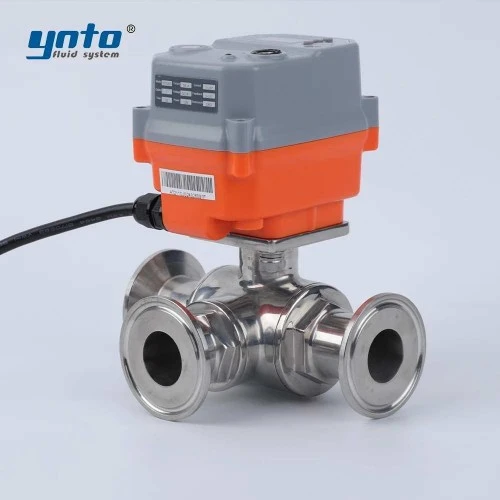
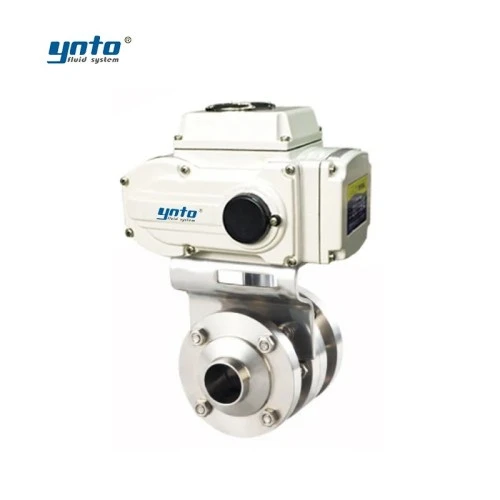
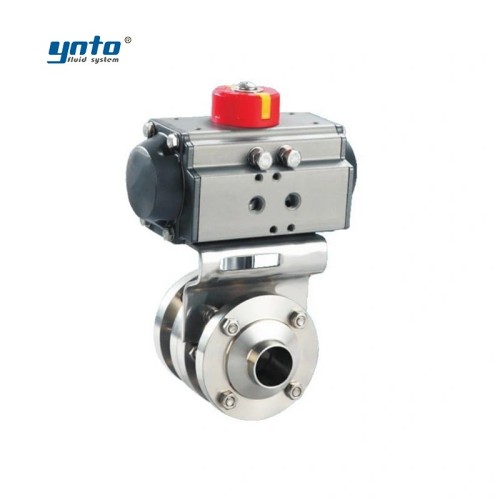
Some breweries use sanitary ball valves elsewhere on the skid. YNTO’s electric 316L clamp-type sanitary ball valve is worth comparing when a different shutoff arrangement is needed. Its seats and body cavity need their own cleaning assessment; it is not a drop-in hygienic replacement for every butterfly valve.
Selecting the Right Sanitary Butterfly Valve
Factors to Consider
Size and Dimensions
“DN50” on two drawings does not prove clamp fit. Record tube outside diameter, ferrule lip and groove, clamp profile, face-to-face length, and stem centerline. Identify the DIN, ISO, ASME, or other connection series. Mismatched ferrules can pass a cold water check and leak after heating.
An actuator may strike a tank leg or cable tray in the service position. Leave space to remove the disc and seat without cutting pipe; the shortest body is not necessarily easiest to maintain.
Material Specifications
For wetted metal, 316L stainless steel is commonly considered when cleaning chemicals, chloride content, and surface finish justify it. These stainless steel valves still need sound welds and a specified internal finish. Pitting near a weld or beneath a damaged gasket creates a retention site; residue persists after cleaning, and the next batch may fail a sensory or microbiological check. A higher-grade material cannot rescue an uncleanable joint.
EPDM is a candidate for many water, beer, and caustic-cleaning duties, but its grade and temperature range must match the chemicals, concentration, dwell time, and cycle frequency. FKM may be appropriate for selected chemical duties yet should not be assumed compatible with every hot alkaline CIP recipe. PTFE can resist many chemicals, although its stiffness changes how a seat is loaded. Specify food-contact documentation for the exact elastomer and any lubricant that touches product. Test against the actual sanitizer, not a simplified label such as “acid resistant.”
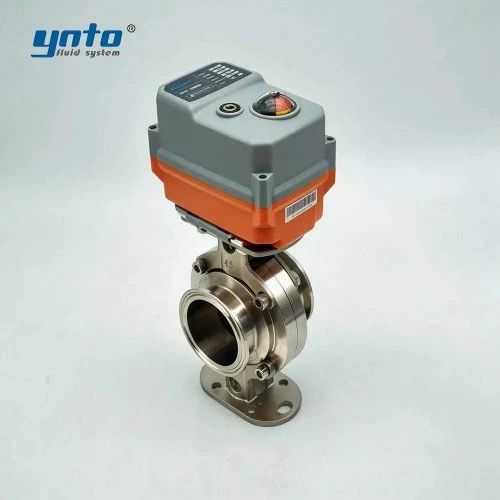
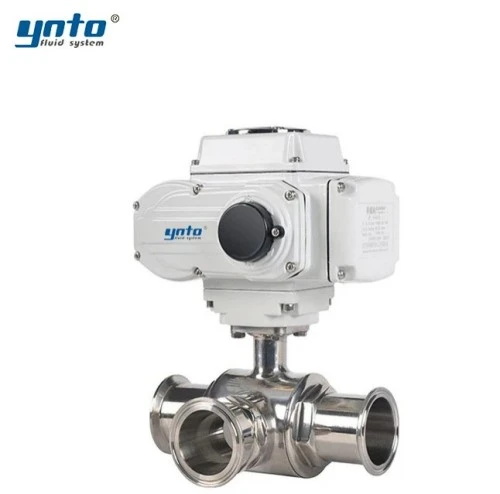
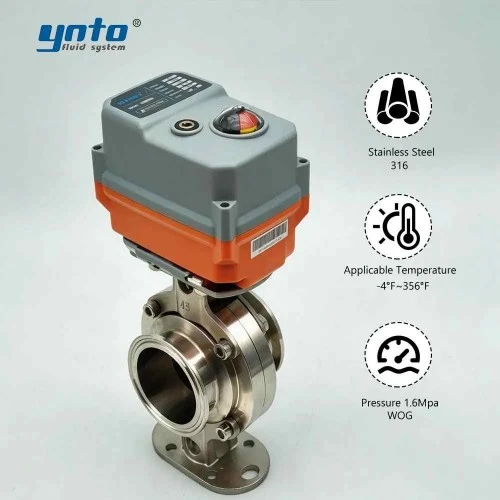
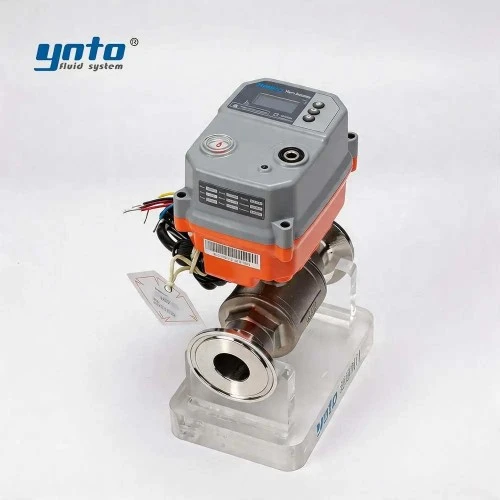
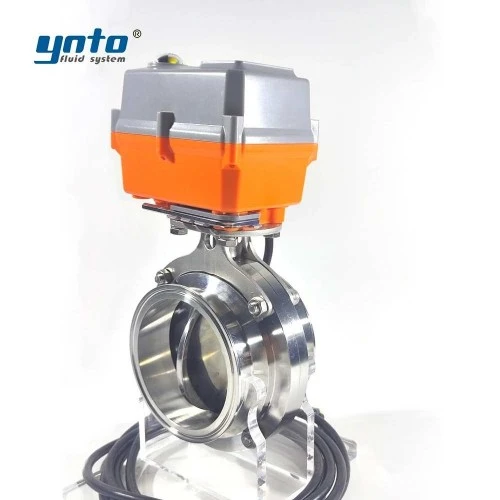
YNTO’s electric 316 stainless steel sanitary butterfly valve with clamp connection can be considered where electrical control suits the line. Obtain dimensioned ferrule and actuator drawings. Verify the ordered assembly’s seat compound, power-loss position, and feedback before calling it a direct replacement.
Carbon or alloy steel is generally for non-product-contact duties here. Duplex may suit severe chloride exposure, but cleaning chemistry, crevices, welds, and stagnation still govern selection.
Standards should be named for what they actually govern. DIN 32676 can inform hygienic clamp connection dimensions where that series is specified. ISO 14159 addresses hygiene requirements in machinery design; ASME BPE can provide a demanding framework for high-purity equipment when adopted by the project. A 3-A sanitary standard or EHEDG guidance may inform hygienic valve design and cleaning assessment, but certification must be verified for the exact model. API 598 provides an industrial valve pressure-test framework when agreed; passing it does not prove CIP cleanability.
Installation Best Practices
Preparations Before Installation
Before breaking a clamp, identify which tank and cleaning circuit the valve connects. Lock out the pump and actuator supply, isolate both sides, drain and depressurize the line, and confirm the fluid is safe to handle. A “closed” symbol on the control screen is not a substitute for local isolation. Hot caustic, acid, steam, or sanitizer trapped behind a disc can burn a technician even when the beer line is nominally empty.
Inspect the removed parts while their positions are still known. Photograph the old seat, disc orientation, ferrule faces, clamp, and stem arrangement. Retain the tag and dimensional drawing for a 1:1 quotation and valve installation plan. If the elastomer has swollen or taken a permanent set, investigate chemical and thermal history before fitting the same compound again.
Step-by-Step Installation Guide
Clean and inspect both ferrule faces. Nicks, weld beads, and uneven polish can cut a fresh gasket. Check the valve body and disc for handling damage, then compare the new seat profile with the drawing rather than forcing it into the groove. The gasket should sit squarely without folding into the bore. Align the pipe independently so the clamp is not used to pull two misaligned ends together.
Install the valve in the manufacturer’s approved orientation, with the disc able to swing without striking a tube end or gasket. Tighten the clamp to the specified method, leaving the valve accessible for the next seal change. An engineer checking the joint should view the bore alignment where possible and confirm that adjacent pipe supports do not impose a bending load on the valve.
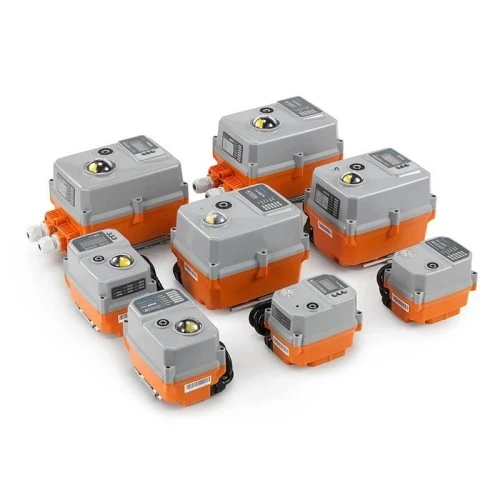
When retrofitting valve automation, size torque at the worst differential pressure and the seat’s end-of-life friction, not merely the clean bench value. YNTO’s AT pneumatic actuator series offers double-acting and spring-return options for a matched assembly. Confirm mounting interface, air supply, torque margin, fail action, washdown exposure, and stroke time. A double-acting actuator does not automatically move to a safe position when air is lost.

After installation, cycle with water under the approved procedure. Check stroke, feedback, external joints, and seat leakage at the specified differential. Verify drainage and CIP reach, then record baseline stroke time and air pressure.
Cleaning and Maintenance Considerations
Accessing Seals for Cleaning
Butterfly valves are mechanically simple, but the seat-to-body interface and stem penetrations deserve close attention. If the valve is cleaned in place, the validated sequence must show that all product-contact regions see enough cleaning action. A removable clamp makes disassembly easier; it does not prove that a closed seat is clean. Inspect the rear of the seat after a representative production and CIP cycle, especially where sticky additives or yeast-bearing residues may accumulate.
Does cleaning solution displace product from the area that retained flavor? Swabs, rinse conductivity, temperature records, and visual checks may help validate the answer. A bright exterior says nothing about a buried gasket groove.
Routine Maintenance for Longevity
Track leaks by location and timing. Moisture at the clamp suggests a joint or gasket issue; product passing a closed disc points toward the seat or disc edge; seepage around the shaft requires attention to the stem seal. A rising actuator air demand after cleaning may indicate swollen elastomer, fouling, or mechanical misalignment. Each symptom leads to a different repair.
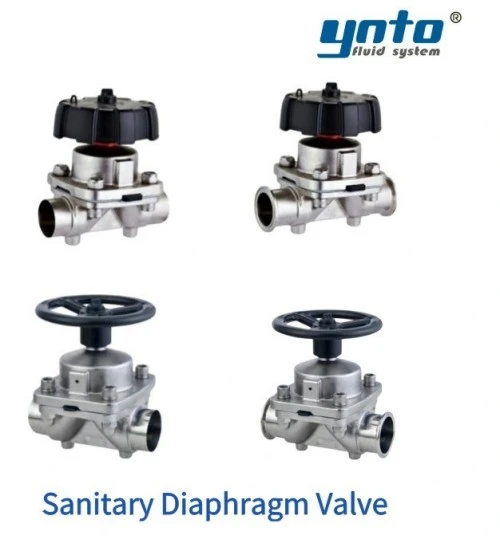
On a branch where the priority is isolating the actuator from product contact, YNTO’s 316L sanitary diaphragm valve is another design to assess. Its wetted path and diaphragm differ from those of a butterfly valve. It may suit a dosing or hygienic branch, subject to line sizing, diaphragm compatibility, and drainability. It is a separate process choice, not a like-for-like butterfly-valve spare.
Schedule inspection by cycles and cleaning exposure, not calendar time alone. In a high-turnover blending manifold, repeated caustic heating and cooling can fatigue a seat much sooner than light-duty service. Once the elastomer loses resilience, compression falls, tiny leaks appear at recipe changeover, and operators may compensate by increasing closing force. That extra force can accelerate disc and stem wear rather than restore hygienic sealing.
Keep replacement seats identified by valve model, size, compound, batch, and food-contact documentation. Mixing visually similar gaskets is a common source of repeat leaks. After a seal change, repeat the relevant pressure and CIP checks and log the results. Plant procedures should also define when an observed leak requires removing the line from production, rather than simply tightening the clamp while it is pressurized.
Conclusion
Recap of the Importance of Proper Valve Maintenance
A successful brewery butterfly valve replacement fits the actual ferrules, maintains a cleanable product path, seals across production and CIP conditions, and remains accessible for inspection. The useful purchase specification includes line dimensions, beer and cleaning-media details, pressure and temperature range, seat compound, operating cycles, actuator requirements, and acceptance tests. That is the information YNTO needs to assess a configured replacement against the existing brewery equipment.
Future Trends in Sanitary Process Equipment
More breweries are recording valve strokes and CIP conditions alongside batch data. That history can expose a slow-moving actuator or a seal that begins leaking after a particular wash step. Better monitoring is valuable when it directs a mechanic to the actual fault; it cannot replace a well-fitted gasket or a cleanable design. For the next retrofit, ask for a dimensioned drawing, materials list, seal documentation, and service instructions before committing to installation.
- 2026-11-13 09:36:01
- 2026-11-11 15:08:29
- 2026-11-09 10:30:10