

Pneumatic Butterfly Valve Retrofit for PFAS Ion-Exchange Skids
- 2026-11-11 15:08:29
- admin
- NO COMMENTS
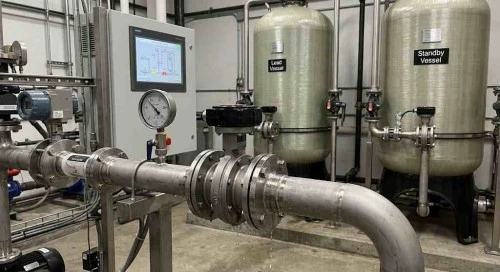
The lead ion-exchange vessel is due for a resin change. Operators close its inlet valve, but the pressure gauge falls more slowly than expected and a faint wet line appears at the downstream flange. Across the skid, the standby vessel is ready, yet the control screen still shows an ambiguous valve position. The pump is running; nobody wants to guess whether untreated feed can reach the finished-water header.
A rising vessel differential may mean the resin bed is loading. A valve that drags through its last few degrees points to seat damage, deposits, misalignment, or an undersized actuator. Forced closure abrades the liner; a bypass leak can defeat the changeover. The valve cannot remove PFAS. It holds the process boundary while resin and monitoring do their work.
Pneumatic Butterfly Valves for PFAS Ion-Exchange Skids: Vessel Isolation and Retrofit Fit
Understanding PFAS and Ion Exchange Systems
The Role of Ion Exchange Technology
In a PFAS treatment train, water passes through a vessel containing selective anion-exchange resin. The resin captures certain dissolved PFAS until its capacity is exhausted or an effluent monitoring threshold is reached. Many drinking-water designs use single-use resin and replace it rather than regenerate it on site. Other industrial systems may use a different resin and regeneration approach, so the actual process description matters.
Lead-lag vessels let operators monitor breakthrough and change the lead position. That requires a clear route through the intended bed to the treated-water header. Valves at inlets, outlets, drains, and sampling points have distinct duties; a passing inlet or undocumented bypass can undermine the sample. Specify isolation, throttling, backwash, or chemical-cleaning duty explicitly.
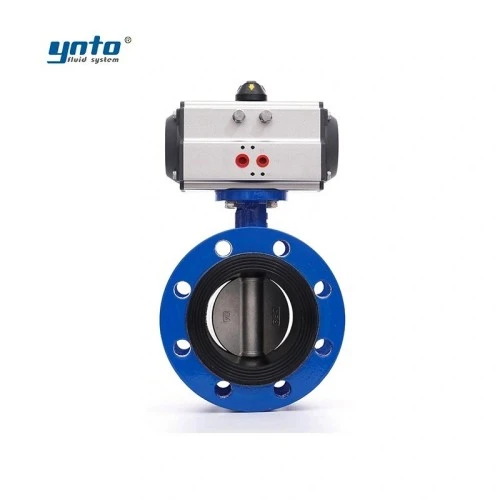
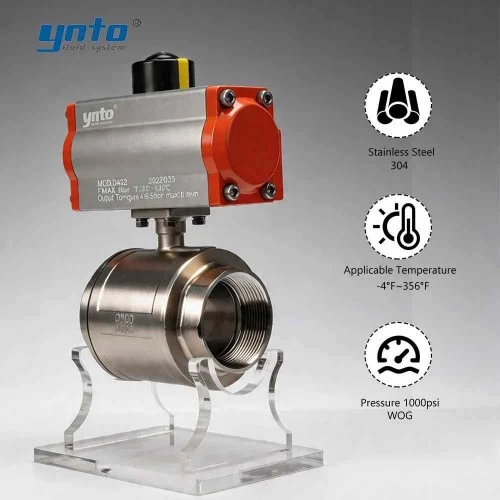
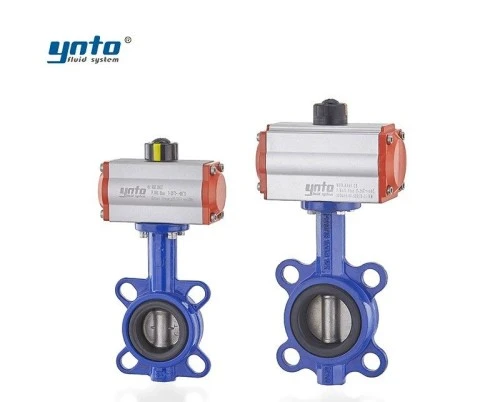
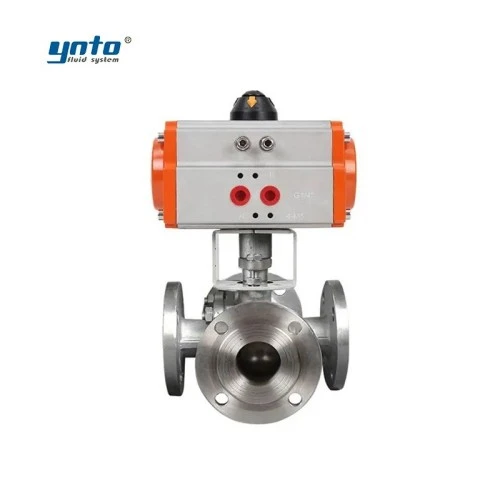
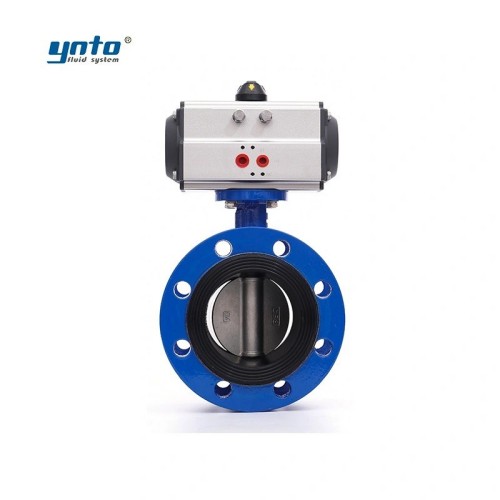
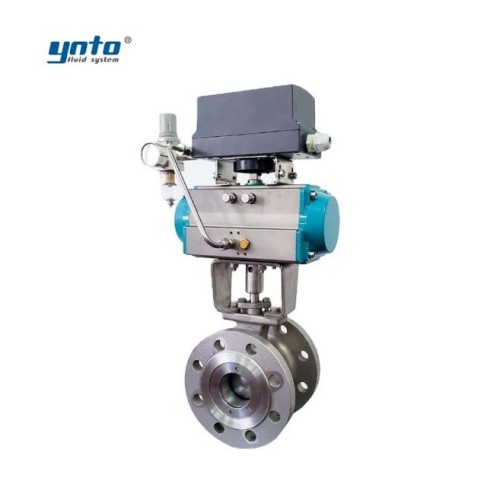
For a metallic water line with suitable flanges, YNTO's pneumatic flanged soft-seal butterfly valve is a candidate for automated vessel isolation. The page lists alternative body and seat materials and water-treatment use. Before specifying a particular assembly for drinking water, obtain its size-specific pressure and temperature rating, shutoff test, wetted-material list, and any certification required by the water authority.
Challenges in Water Treatment Systems
The bed differential rises gradually as fouling accumulates, while valve differential changes sharply when a vessel comes online. A gauge on one side cannot distinguish a blocked bed from a partly shut valve. Record inlet and outlet pressures, flow, and feedback through changeovers.
Pressure fluctuations can make a disc flutter when a butterfly valve is used to hold a small intermediate opening. That micro-motion wears the elastomer contact area; closing torque climbs; eventually the seat no longer seals consistently. For vessel isolation, use a defined open or closed state unless the chosen valve and actuator have been sized and characterized for modulation. Frequent throttling close to the seat can shorten the life of a valve selected for shutoff.
PFAS water treatment systems must also manage spent resin, flush water, and possibly contaminated maintenance drainage. Plan containment and disposal under the project's permit and local rules. A valve that makes isolation faster is valuable, but only if the process still prevents untreated water from crossing into a finished-water line during maintenance.
Advantages of Pneumatic Butterfly Valves
Benefits Over Manual and Electric Valves
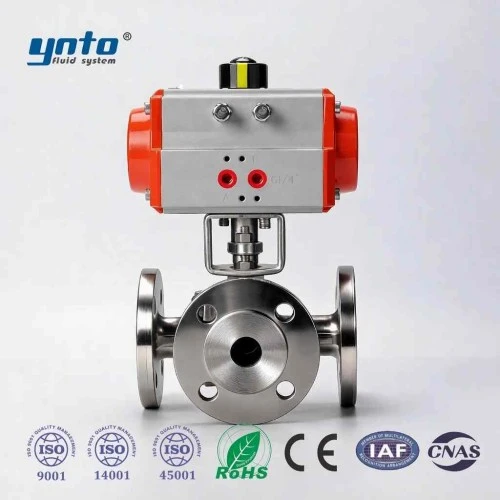
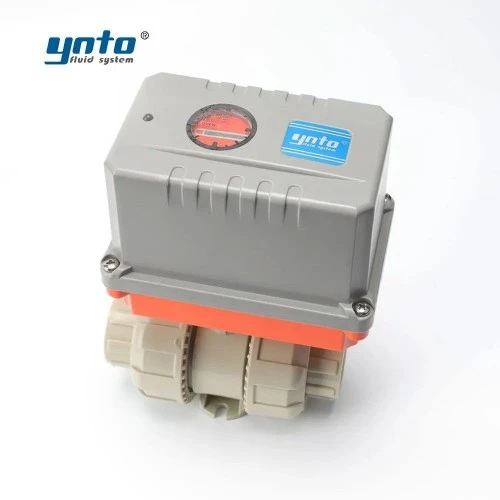
A quarter-turn actuator can give repeatable changeover positions. Unlike modulating pneumatic control valves, these isolation valves normally move between defined end positions. If clean instrument air is available, solenoids and end-of-travel signals can support the vessel sequence. Manual isolation still has a role; electric actuation may suit a skid without instrument air.
The safety question is what happens when power or air disappears. Double-acting actuators generally need air to drive either direction; a spring-return arrangement can move toward an agreed fail position. Fail closed is not always the safe answer. Closing all outlets while a feed pump runs can raise pressure; failing open on a finished-water crossover can admit an unintended path. Choose the position through a process hazard review, then verify the actuator has enough torque at the minimum air pressure and worst differential.
YNTO's pneumatic lugged wafer soft-seal butterfly valve provides another configuration to assess when space and bolting differ from a fully flanged body. A lugged outline alone does not prove it may hold pressure with one flange removed. If maintenance requires dead-end service, ask for a manufacturer-approved rating in that exact direction, with the downstream pipe removed, and document the isolation procedure.
Applications in Water Purification Skids
During a two-vessel swap, close and verify the exhausted bed, confirm the standby flow route, then transfer duty without an unmonitored bypass. Feedback and pressure checks should agree: a disc can reach its indicated angle while a damaged seat still passes water.
Some skids need a drain or flush path for resin removal. Those lines may carry PFAS-bearing water, so containment and valve orientation matter. Do not treat an actuator's rapid stroke as a substitute for a water-hammer calculation. A fast closure against a long water column can spike line pressure, strain flanges, and damage the very seat installed to improve tightness. Specify closing time based on the system's surge assessment.
Key Features to Consider for Vessel Isolation
Size and Material Selection
Start with the vessel nozzle and pipe schedule, design pressure, flow range, backwash or flushing mode if any, and allowable pressure loss. Match the butterfly valve's clear opening and disc travel to the adjacent pipe. A nominally matching valve may put its disc into a pipe liner, reducer, or check-valve internals. That collision can raise torque abruptly at commissioning and leave the valve partly open.
Materials deserve a water analysis. EPDM is common in water service; PTFE or FKM may suit selected chemical exposure but not every oxidant. A 316L disc can resist many waters, yet warm chlorides may call for Duplex or another validated alloy. Coated carbon steel or ductile iron may be economical when FBE coverage and service conditions are controlled. Verify every wetted component, including seals and fasteners. Chemical processing valves on a separate regeneration or cleaning line may require a different specification.
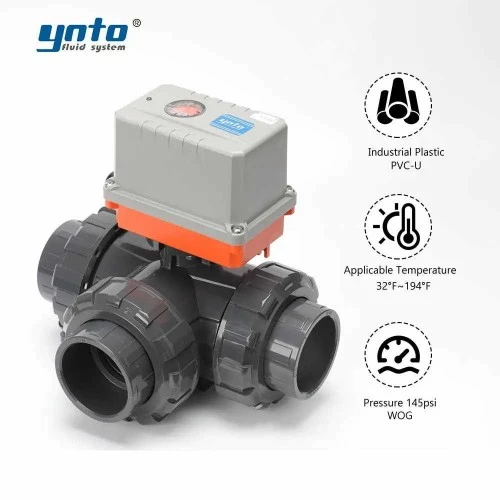
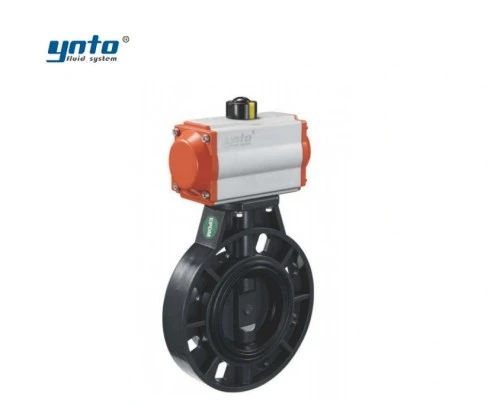
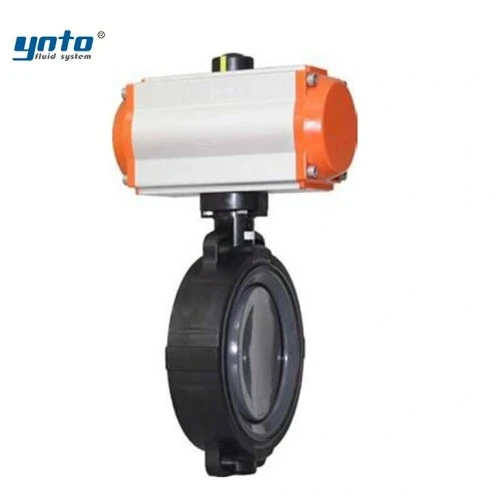
On a compatible plastic piping branch, YNTO's UPVC pneumatic butterfly valve offers another retrofit option. Check body and disc polymer, seat choice, temperature derating, flange dimensions, and external pipe support. Plastic corrosion resistance does not establish pressure capacity at every temperature. Its use in potable service also depends on the exact product's required drinking-water approvals; a broad website application claim is not a certification record.
For an applicable metallic valve, ASME B16.34 can inform pressure-temperature ratings and testing, while ASME B16.5 governs relevant flanges. DIN EN 1092-1 covers PN-designated steel flange dimensions where specified. API 598 and ISO 5208 provide inspection or pressure and closure test frameworks for valves within their scopes; name the requested test pressure and leakage acceptance in the purchase order. An ANSI/NSF/CAN 61 listing, where required for drinking-water contact, is a separate health-effects approval. None of these standards by itself proves PFAS removal performance.
Automation and Control Mechanisms
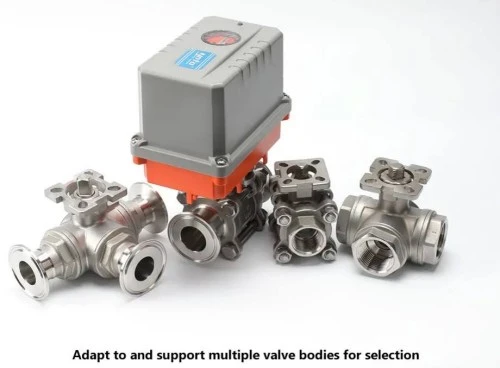
Valve automation solutions should implement the vessel sequence shown on the piping and instrumentation diagram. Define which valves are allowed open together, what pump permissives apply, and how a failed limit switch appears in the control room. A solenoid command is evidence of an electrical request, not of actual disc travel. End switches confirm the actuator's position; a pressure decay or leak test checks the fluid boundary.
Instrument air must be dry enough for the site conditions and available at the pressure used in the torque calculation. At low air pressure, deposits or aged elastomer can cause the disc to stall near the seat. The result is a plausible open or closed command but a flow path that does not match the operator display. Set alarms for travel timeout and disagreement between commanded and confirmed positions. Test the selected failure action during commissioning, with the pump and adjacent valves in controlled states.
Step-by-Step Retrofit Process
Assessing Current Infrastructure
Walk the skid before ordering. Mark flow direction, each vessel nozzle, drains, vents, sampling ports, and any bypass around the resin. Measure face-to-face length, flange standard, bolt-circle diameter, bolt access, pipe bore, actuator clearance, and space for removing the valve. On a wafer installation, both flanges generally support the assembly; removal of one pipe section can change what remains safely isolated. On a lugged installation, confirm the actual dead-end rating rather than inferring it from bolt holes.
Review pressure histories for normal filtration, pump start, isolation, and flushing. Look at design and upset temperatures too. Water may be cool in service but hot during cleaning or disinfection, and corrosive exposure may be highest in a drain line rather than the main feed. High-pressure transients, chemical leakage, and contaminated residual water affect both material selection and plant safety procedures.
Recommended Upgrades
Where torque margin is small or seat wear has been recurrent, a different disc geometry may be worth assessing. YNTO's UPVC double-eccentric pneumatic butterfly valve is one option for a compatible plastic-water branch. Its offset geometry is intended to reduce seat contact during travel. Verify the selected size's pressure and temperature limits, elastomer, flange compatibility, actuator torque, and certification before treating it as a direct replacement.
Install within the shutdown procedure: isolate electrical and pneumatic energy, stop and lock out the pump, drain and depressurize, and confirm the vessel cannot refill through a crossover. Collect PFAS-bearing drain water under the site's residuals plan. Align flanges without using bolts to pull pipe into place, use compatible gaskets, and support the actuator. After assembly, pressure-test the appropriate boundary, stroke the valve, verify both end positions, and perform an agreed isolation leak test. Recheck the sequence with the standby vessel online.
Case Studies: Practical Engineering Scenarios
Successful Implementations
Consider a hypothetical lead-lag skid where the existing wafer valve seals well until maintenance crews remove the downstream spool. The retrofit team selects a lugged arrangement only after obtaining its documented dead-end pressure rating and confirming the remaining flange, support, and isolation plan. During commissioning, they prove the closed-state leakage and the changeover interlock before allowing finished-water flow. The improvement is verifiable isolation for that maintenance sequence, not a claim that the valve makes resin last longer.
In another illustrative skid, a plastic branch has recurring closing-torque spikes after a disinfectant change. Engineers compare water chemistry, seat swelling, deposits, and actuator-air pressure before buying a new valve. A compatible body and seal are selected, the air supply is corrected, and the team repeats travel and leakage tests at the worst operating differential. This approach distinguishes chemical attack from a simple actuator-sizing problem.
Lessons Learned
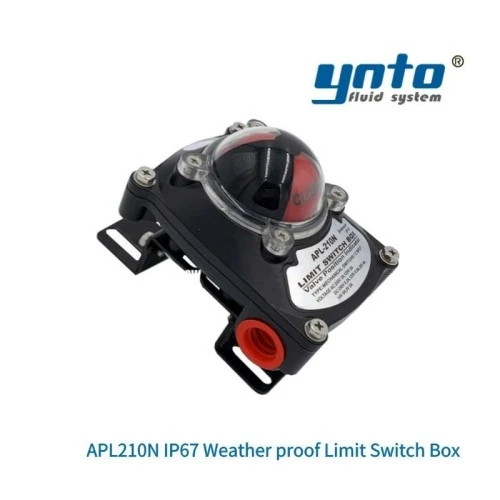
Both scenarios point to a rule: a valve's open/closed display and its ability to hold a fluid boundary are different tests. YNTO's APL210N valve limit switch box can report rotary-valve end position to a control system. Specify switch arrangement, enclosure, wiring, and mounting for the actual actuator, then prove feedback during travel tests. A limit switch cannot detect leakage past a damaged butterfly seat.
Document as-left torque or air-pressure settings, seat-test results, flange details, and the logic that prevents untreated bypass. Compare pressure drop through the vessel and valve after the retrofit with the pre-work baseline. If flow or pressure changes, investigate the hydraulic cause before interpreting a PFAS sample; laboratory sampling and breakthrough criteria remain the measure of treatment performance.
Conclusion: Reliable Fluid Control Systems
The Future of Fluid Control Systems
Valve feedback and pressure trends make changeovers easier to audit. A longer stroke or rising bed differential prompts inspection, while laboratory sampling remains the measure of treatment performance.
Emphasizing Reliability and Safety
For a useful quotation, send YNTO the line and vessel drawings, water analysis, design pressure and temperature, normal and upset flow, flange details, required isolation leakage, air supply, failure position, feedback logic, and any potable-water certification requirement. The right pneumatic butterfly valve is the one that fits the installed piping, protects the intended vessel boundary, and can be tested under the skid's real operating conditions.
- 2026-11-11 15:08:29
- 2026-11-09 10:30:10
- 2026-11-06 08:48:06