

How Does a Valve Actuator Work?
- 2025-12-10 12:00:00
- admin
- NO COMMENTS
Inside a chemical plant, thick-walled steam pipes radiate shimmering heat waves. Engineer Li Ming puts on heat-insulating gloves and carefully approaches a critical valve. The steam line hums, and he hears a faint hiss at the valve — the sound of high-temperature steam slipping through a gap. He looks at a nearby gauge: its needle continues to tremble slightly even though the control system says the valve is closed. Such anomalies barely register amid the workshop’s noise, yet an experienced engineer knows they signal trouble: the valve may not be closing fully, and its seal might be failing. In a high-temperature, high-pressure steam system, even a tiny leak or sluggish response can foreshadow more serious hazards.

This particular valve controls the flow of steam into a reactor. Recently operators have noticed that it takes more force to close the valve, and the sound of its electric actuator slowing down has become lower and drawn out, as if it is straining to turn the stem. When a shut command is issued, the steam flow often takes several extra seconds to decrease. The position indicator says the valve is closed, yet wisps of pale steam drift near the body — a tell-tale sign of a seat that leaks because its seal has aged. In a line carrying saturated steam, leakage wastes energy and means the equipment is under unusual stress. Why has the actuator become reluctant? To answer that question we must first understand what a valve actuator does.
Working principle of a valve actuator
From an engineer’s perspective a valve actuator acts as the muscle of the valve: it translates a control signal into mechanical motion that drives the valve plug or disc open and closed. There are three common types of actuators:
Electric actuators use a motor to generate rotation, often via a worm-and-gear reduction system. They deliver high torque at low speed. Depending on design they may provide 90° quarter-turn motion for ball or butterfly valves or multi-turn travel for gate or globe valves. When a control system sends an open or close command, the motor starts immediately, the gears multiply torque, and the stem rotates or travels to adjust the flow passage. Modern electric actuators incorporate limit switches or travel sensors and torque overload protection so they stop at the correct position and avoid damaging the valve.

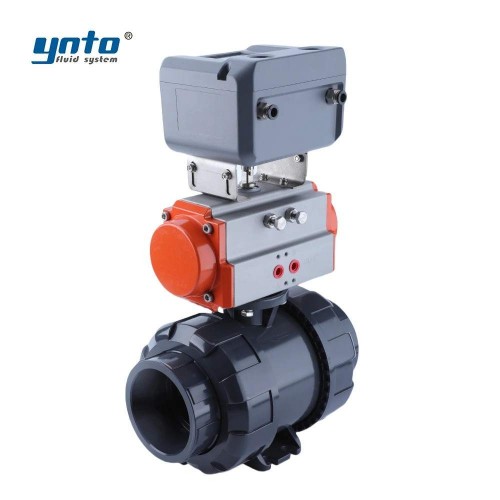
Pneumatic actuators rely on compressed air pushing a piston or diaphragm to create linear or rotary motion. They are fast and fail-safe if the air supply is lost but require clean, stable air.
Hydraulic actuators use hydraulic oil to generate very high force and are used for large-diameter or high-pressure valves but need a hydraulic power unit.
In our scenario the key component is an electric actuator. Normally, when the control system sends a closing signal, its motor should drive the gear train, turn the stem, press the plug tightly onto the seat and achieve a tight shut-off. Recently, however, closing has become slow and laboured. Something in the transmission is causing the actuator to strain. The root causes lie in how long-term operating conditions have affected the valve.
Common issues and their causes
Experienced engineers recognise that sluggish motion and leakage do not occur overnight; they result from the interplay of conditions over months or years. Several cause-effect chains are at work here.

First is thermal stress on the seals. Steam lines are frequently started and stopped, subjecting seals to repeated heating and cooling. Elastomeric or soft-metal seals fatigue under this cycling: they harden and lose elasticity, micro-cracks form, and they no longer conform perfectly to the seat. Put simply, violent temperature cycling → accelerated fatigue of sealing materials → unexpected small leaks. That faint hiss at the seat is a direct consequence.
Second is pressure fluctuation. When upstream pressure rises and falls, the valve plug vibrates subtly against the seat. Each micro-vibration is like fine sandpaper rubbing two surfaces. Over time this leads to wear: the seat becomes grooved, and the plug no longer presses evenly. The chain goes as follows: pressure oscillations → tiny valve-plug oscillations → gradual seat wear → delayed response and incomplete shut-off requiring higher actuator torque. The trembling needle on the gauge after closing hints at these oscillations.

Third, high temperatures attack the actuator itself. Steam temperatures often exceed 180 °C, causing grease inside the actuator’s gears to thin and eventually carbonise. Once lubrication deteriorates, friction between gears and at the stem packing increases significantly. Without sufficient lubricant the motor must work much harder to turn the gears; its operating noise deepens and its response slows. Prolonged strain can damage components such as worm gears, bevel gears, couplings or even the valve stem. The chain here is: heat → lubricant breakdown → increased friction in the gear train and stem packing → the motor struggles, taking longer to open or close the valve.
Finally, the external environment plays a role. High humidity or condensed steam may penetrate poorly sealed housings, corroding electrical contacts and triggering erratic signals. If the actuator is not adequately sealed, moisture can intrude, particularly in wash-down areas typical of process plants. Corrosion or short circuits can cause spurious operations or failure to actuate at all.
Technical solutions from an engineer’s perspective
Once the underlying causes are understood, a methodical engineer like Li formulates targeted remedies.
The first remedy is to select a replacement actuator with higher torque margin. The existing actuator is likely operating near its limit. In engineering practice a new actuator is sized with about 25 % additional torque beyond the valve’s maximum requirement to accommodate changes in friction and operating conditions. Li chooses an upgraded electric actuator whose motor delivers higher torque and is designed to handle the added load without stalling. In addition, he opts for a brushless motor because brushless designs are more efficient, produce less heat and enjoy longer life than brushed motors. Even under steam-heated conditions the torque remains stable and the motor is less likely to trip on overheating.

Next, Li addresses the seal and materials. He decides to overhaul the valve: replacing the seat and stem packing with materials better suited to the service. For the seat he switches from a soft PTFE seal to a reinforced graphite composite with a metal backing. Graphite withstands high temperatures and resists creep under load, while a metal-seated valve offers zero leakage at high temperatures. For the stem packing he selects FKM (fluoro-rubber) and live-loaded graphite packing, both of which handle temperatures above 200 °C and maintain elasticity longer than general rubber. He also upgrades the valve body and seat to 316L stainless steel, which resists corrosion by wet steam; where corrosion is severe, Duplex or Super Duplex stainless steel could be used. For the stem he chooses tempered alloy steel with a hard-coated surface to improve wear resistance. By combining these materials — 316L, FKM and reinforced graphite — the valve can endure temperature cycles, pressure swings and corrosive condensate.
On the control side, the new actuator comes with a smart control module. It reduces speed automatically when the valve nears its fully closed position, preventing the plug from hammering into the seat. It measures torque in real time and will stop the motor and raise an alarm if resistance suddenly increases — indicating debris, corrosion or other obstructions. During commissioning, Li tests the actuator at both cold and hot operating conditions to establish baseline torque values. These become benchmarks: if torque rises significantly in service, maintenance is triggered before a failure occurs. Such predictive monitoring extends equipment life and reduces unplanned shutdowns.

Li also improves the environmental protection of the equipment. The replacement actuator has an IP67 enclosure rating, which means it is dust-tight and can withstand immersion. This ensures that condensed steam, cleaning fluids or splashed chemicals cannot enter the housing. Since some areas of the plant handle flammable gases, he selects an explosion-proof actuator certified to ATEX and IECEx standards. The additional protection eliminates the risk of sparks igniting a hazardous atmosphere. All wiring and conduits are sealed, and the actuator’s cable glands are rated for the same protection level.
Finally, Li adheres to relevant industry standards. The valve and actuator assembly are designed for ANSI/ASME Class 300 pressure rating, ensuring they can safely handle the maximum pressure and temperature. The valve and seat tightness are tested according to API 598 leak-testing procedures to verify zero leakage at both low and high pressures. The mounting flange between actuator and valve complies with ISO 5211, guaranteeing interchangeability between different manufacturers. Wherever dimensions, tolerances or inspection rules apply, he references DIN and ISO standards to make sure the equipment aligns with global good practice. These standards are not mere paperwork: they provide confidence that the design, materials and manufacturing will yield a safe and reliable product.
Of course, solving the mechanical issues means also observing safety protocols during maintenance. Before replacing the actuator and seal, Li depressurises the line and vents residual steam. Only then does he remove the old actuator and seat. All workers wear heat-resistant protective clothing, and the area around the valve is cordoned off. Safety devices such as lock-out-tag-out are applied so that no one can accidentally open the steam line during maintenance. In high-pressure, high-temperature service it is dangerous to work under load or with live steam; the plant’s safety rules prohibit such practices.

Results and reflections
After Li completes these improvements, the valve returns to smooth, dependable service. When steam is delivered to the reactor again, the actuator operates quietly and confidently; the valve closes firmly with no audible hiss, and the gauge needle stays steady. In his routine inspection rounds, Li notices these subtle cues: the absence of leaks, the even tone of the actuator motor, the precise response to control signals. Each is a reassuring sign that the earlier symptoms have been resolved.
The episode underscores a key point for process engineers: you must see beyond the surface. A sluggish actuator and faint leak hint at deeper interactions between temperature, pressure, materials and mechanical design. Understanding those cause–effect chains allows engineers to propose concrete solutions: better materials, proper actuator sizing, improved sealing and control strategies, and adherence to standards. Only by combining technical knowledge with observation can one create reliable and durable valve automation systems. For experienced valve engineers, every challenge in the field is both a test of expertise and an opportunity to refine future designs.

- 2026-10-26 15:05:21
- 2026-10-23 10:30:14
- 2026-10-21 10:41:51