

The Ultimate Guide to SS Electric Valve Selection for Your Projects
- 2026-02-11 12:00:00
- admin
- NO COMMENTS
Introduction to Electric Valves
In a chemical processing plant, we often see stainless-steel electric valves in action – for example, an electric butterfly valve controlling a strong acid flow. Even with high-grade SS construction, two recurring issues emerge: subtle pressure oscillations and aging seals. In practice we’ve observed chains like pressure oscillation → stem micro-vibration → long-term wear → delayed response, or corrosive medium → seal deterioration → leaks. For instance, one corrosive pipeline traced a “corrosive fluid → standard seal fails → increased friction → actuator torque imbalance → inconsistent performance” chain. In a water-treatment skid we noted “pressure surges → internal vibration → seal wear” in one of the valves. These cause–effect chains make clear why material and design choices are critical. We always check that the valve meets the required pressure class (ANSI/ASME) and testing standards (API/ISO/DIN) so it won’t be the weak link in the line. In short, using electric stainless-steel valves (especially ones rated for high pressure) helps break the failure chains and stabilize the process.

Types of SS Electric Valves
In practice, SS electric valves come mainly in ball, butterfly, and precise control forms. Each style suits different needs: ball valves for tight on/off shutoff, butterfly valves for large-diameter flow control, and globe/needle (control) valves for fine throttling. We choose among them based on flow requirements, pressure, and media compatibility.
Electric Ball Valves
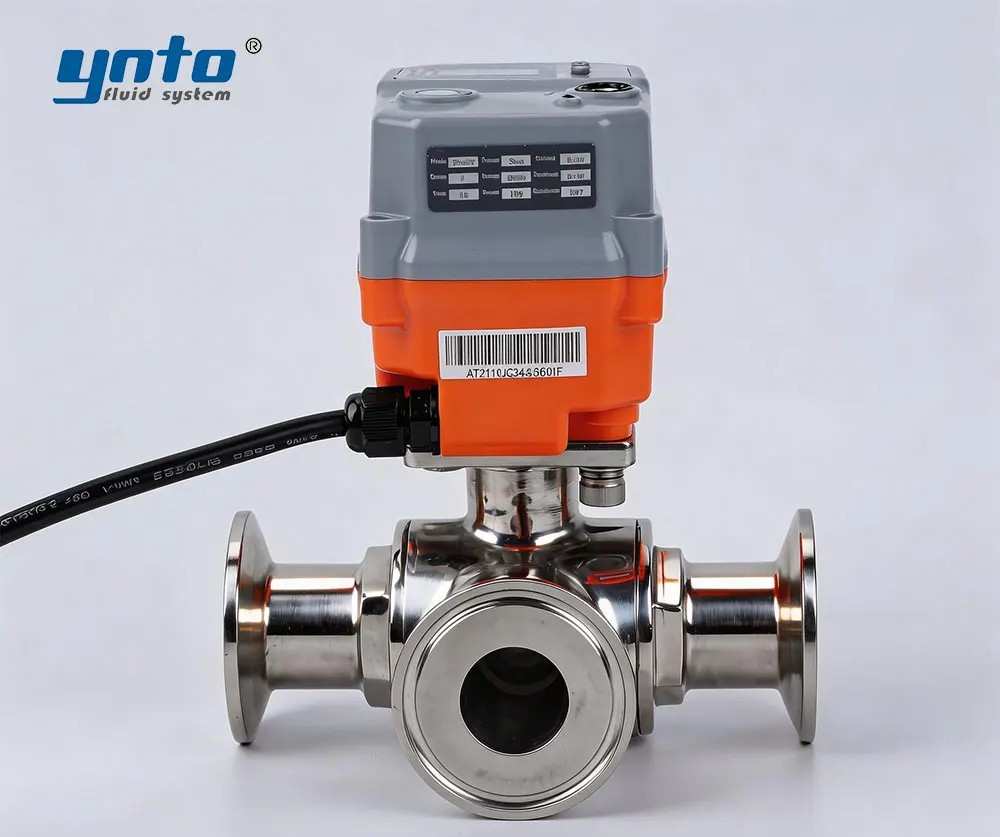
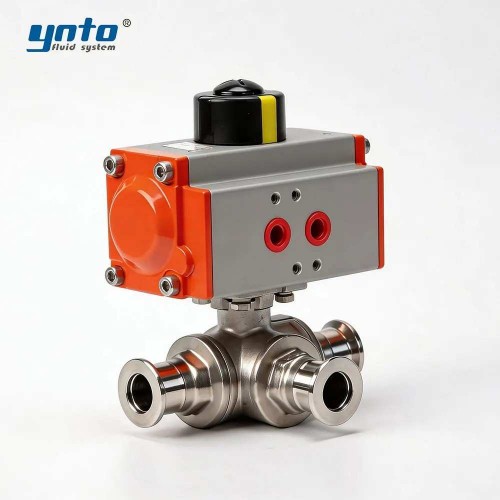
Electric ball valves use a 90° turn of a spherical plug to stop or allow flow, providing full-bore flow when open and metal/soft seats for tight shutoff. They excel in high-pressure lines because their bodies can be forged from robust stainless. For example, the Electric stainless steel 316 ball valve clamp type uses precision-cast AISI 316L steel construction and tri-clamp ends, ideal for sterile or corrosive services. In multi-path applications, a 3-way clamp ball (see Electric 316 Stainless Steel 3-Way Clamp Ball Valve) lets one actuator switch flows between tanks. We typically specify 316L or Duplex stainless for the body and trim (for corrosion and strength), and PTFE or FKM seats for chemical resistance. In critical lines we even apply protective coatings (like Halar/ECTFE on carbon-steel valves) to fend off corrosion. These material choices prevent the root cause of wear (corrosion or abrasion) and thus stop the chain of leaks and failures before they start.
Electric Butterfly Valves

Butterfly valves use a rotating disc and a wafer or lug-style body. They are lighter than ball valves and suit large flows or quick throttling. We use stainless discs and seat rings (soft or metal) to handle chemicals. One variant is a vacuum-rated butterfly: the YNTO stainless steel electric vacuum butterfly valve with a white stainless steel actuator is built for clean, low-pressure or vacuum lines. For sanitary lines, the YNTO stainless steel electric sanitary butterfly valve with a white stainless steel actuator has electropolished internals to avoid contamination; it “features standard electronic polishing, providing a smooth surface that ensures cleanliness with no medium accumulation areas”. (See image above – the brushed stainless bodies and orange actuator.) In extremely corrosive service, PVDF plastic bodies can be used (often with smooth white actuators), but those plastics have lower pressure/temperature limits.
In very aggressive environments, a fully plastic PVDF butterfly valve (shown above) can hold up to extreme chemicals. However, stainless steel valves are chosen when temperatures or pressures exceed plastic limits. In general, we match butterfly designs (wafer or lug, soft-seat or metal-seat) to the application: a soft-seat SS butterfly for water or pharma lines, or a metal-seat SS butterfly for higher-pressure steam or slurry.
Stainless Steel Control Valves
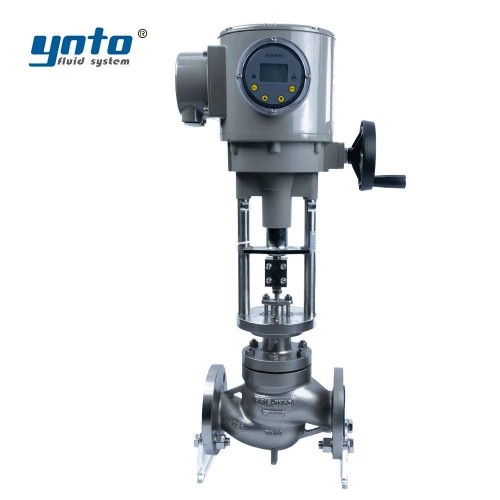
For precise flow regulation (beyond simple on/off), we use stainless-steel control valves (e.g. globe or throttling ball valves). These have linear or multi-turn actuators that can modulate the flow smoothly. For example, an SS globe valve might meet ANSI Class 600 for high-pressure steam regulation. In our process control loops, an electric flow-control valve (a control valve with an electric actuator) is integrated into the PLC/DCS for PID feedback. Positioners are often added so the actual valve position tracks the setpoint. Using the right stainless steel control valve prevents situation like an undersized valve causing pressure surges and response lag, or a mismatched alloy that corrodes in the line. In short, when we need fine flow tuning, we pick a valve and actuator combo that can handle the pressure drop and media, and that meets standards (ANSI/API/ISO/DIN) for high-pressure control.

Importance of Valve Position Indicators
Valve position indication is a simple concept but hugely important. Most electric actuators include a position indicator or limit-switch feedback so operators (and automation systems) always know if the valve is truly open or closed. This feedback might be a visual dial, a 4–20 mA position transmitter, or discrete limit switches. In practice it’s a key diagnostic tool: if the PLC commands OPEN but flow doesn’t start, the indicator will show whether the disc moved. It helps us quickly tell an electrical fault from a mechanical jam. Some systems use electronic positioners that constantly compare actual vs. set position and drive the valve to match. In designing valve automation solutions, we insist on clear position feedback. It prevents “ghost” faults and allows tight loop control, especially when sequencing high-pressure electric valves or safety shutdown valves. (For example, many mining and power systems even lock out valves or trigger alarms if the indicator disagrees with the command.)
Designing Valve Automation Solutions
A true automation solution combines the valve hardware, actuator, and control interface. First, we size the actuator: large pipelines may need thousands of newton-meters of torque. For instance, YNTO’s YT-100/200 series electric actuator delivers up to 2000 N·m, while the YT-20/40 series provides 200–400 N·m for smaller valves. Next, we ensure the control signals match plant standards. It’s common to add positioners and signal converters so the valve “speaks” the same language as the PLC. For example, an analog 4–20 mA signal or Modbus link can be provided by the actuator’s electronics, avoiding retrofit mismatch issues. We also account for safety and environment: explosion-proof housings, weatherproof (IP67) enclosures, and spring-return fail-safe mechanisms may be specified. All accessory components (limit-switch kits, solenoid valves for air-oil actuators, etc.) are chosen for reliability. In essence, we build a complete valve automation solution – the valve assembly becomes a smart control unit built to spec. This holistic design approach ensures precise control: the fluid sees exactly the flow profile commanded, and the system stays within ANSI/ISO accuracy standards.
Maintenance and Troubleshooting
Even the best SS electric valve needs careful maintenance. Troubleshooting always follows the symptoms. For example, a tiny drip from an aging seal often begins innocently, but then “that leak grows, contaminates fluid, and accelerates wear on pumps and other valves”. We know a worn PTFE seat drip can quickly worsen into a major outage. Likewise, if a valve starts acting slow or jerky, we trace it systematically: perhaps a clogged strainer (cause) has increased actuator friction (effect), causing slow or oscillating motion. The first step is to check the position indicator: if OPEN is signaled but the valve hasn’t moved, the issue is likely electrical (actuator power) or mechanical (stem jam). We then inspect filters, lubrication points, and electrical connections.

Routine checklists are key. Maintenance crews measure travel time, listen for unusual noises, and compare indicator feedback to commanded moves. They routinely pressure-test closed valves (ANSI/ISO seat test) and look for leaks. We also replace wear parts proactively: packing, O-rings and seats with materials suited to the service. For instance, we might replace degraded FKM seals with fresh PTFE if the fluid changed, avoiding the cycle “incompatible seal → hardening → leak → more wear”. If a valve body is badly corroded, we usually opt to replace it with a better-suited one (e.g. upgrading from a carbon-steel valve to a 316L or Duplex steel unit).
Good documentation and spares help too. Experienced teams log torque calibrations and hold spare actuator modules, so valves can be quickly serviced in place. They also heed the chain of consequences: fixing small issues (noisy bearings, sticky stems, or minor leaks) early avoids the “drip→contamination→breakdown” cascade. By observing cause → effect in the field, using the position indicator for diagnostics, and selecting the right materials (316L, FKM, PTFE, etc.), we keep SS electric valves running reliably. The payoff is clear: fewer leaks and failures, stable process control, and safer, more efficient operation under ANSI/API-regulated conditions.

- 2026-09-28 10:28:43
- 2026-09-21 15:23:44
- 2026-09-18 09:42:46