

Pneumatic 316L Three-Way Ball Valves for CIP Systems
- 2026-10-19 08:49:57
- admin
- NO COMMENTS
The rinse pump has stopped, but conductivity is slow to settle. At the changeover skid, a gauge wavers as the three-way valve turns, and liquid reappears beneath a clamp that was dry at the start of the shift. The actuator reaches its end stop. Less obvious is whether the ball connected the intended ports—and whether yesterday’s product sits behind a seat the rinse never touched.
That is the practical test for a three-way valve in a clean-in-place (CIP) system. It must route product and cleaning fluid predictably, withstand the process and cleaning cycles, and leave no unverified pocket where residues can linger. A 316L body and pneumatic actuator help only when the port geometry, seals, pipe layout, and control sequence are specified as one assembly.
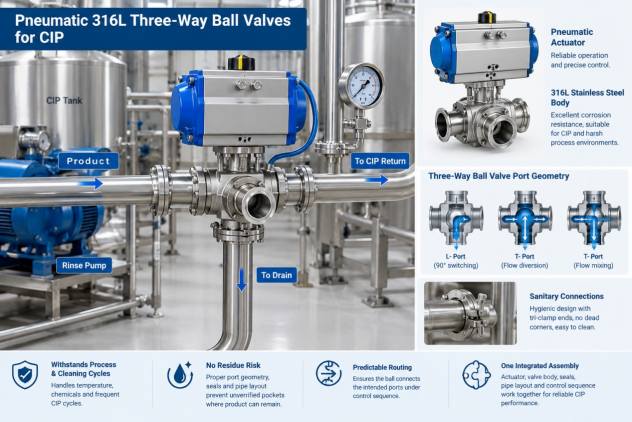
Pneumatic 316L Three-Way Ball Valves for CIP: Port Routing and Hygienic Changeovers
Understanding the Basics of a Stainless Steel Valve
What Are Pneumatic Ball Valves?
A pneumatic actuator turns the ball while a solenoid directs air. A controller can change routes without sending an operator to a hot line. It still needs precise commands: “open” and “closed” poorly describe a valve that connects A–B, A–C, or possibly all three ports.
Watch a commissioning stroke. If the actuator moves but upstream pressure spikes, the ball may cross a restrictive position or meet a blocked path. Rising breakaway torque after cleaning suggests swollen seals, deposits, or misalignment. Raising air pressure before inspection can damage the stem or seat.
For a small sanitary skid, I also check the pressure boundary at the clamp, not only at the forged or cast body. The weakest combination of ferrule, gasket, clamp, seat, and actuator setting governs the assembled valve’s usable range during both production and hot cleaning.
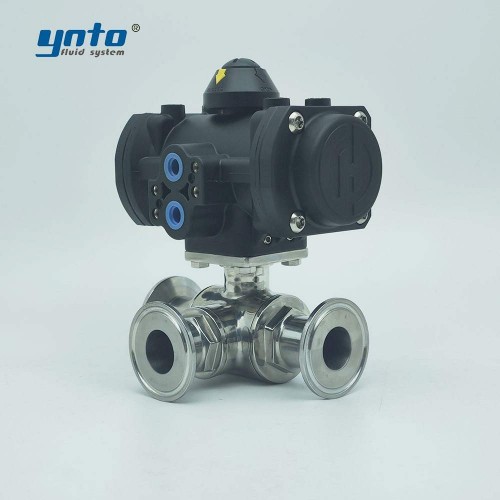
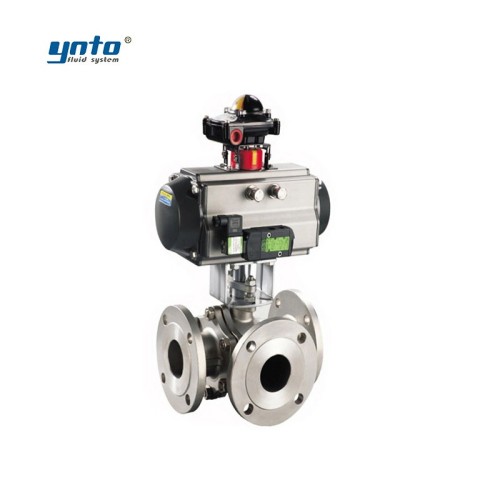
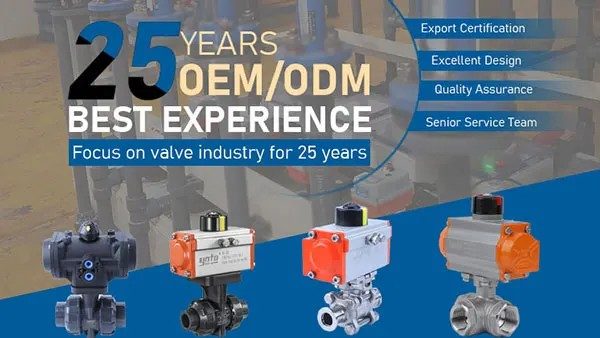
YNTO offers a pneumatic 316L three-way clamp ball valve for sanitary routing applications. For a purchase specification, request its exact L- or T-port drawing, ball-seat and cavity construction, actuator rotation, pressure rating at cleaning temperature, and test results for the chosen size. A product-family description cannot establish the flow path of the particular valve delivered to site.
Significance of 316L Stainless Steel
316L is practical in many food and bioprocess lines: it resists corrosion and can be finished to a smooth, inspectable surface. Its low carbon content also helps during welding. Hot chloride-bearing water and poorly rinsed deposits can still cause localized corrosion.
The surfaces that touch product are more informative than a material label on the actuator. Specify the body and ball grades, weld finish, surface-finish target where the process requires one, passivation or electropolishing if called for, and certificates for the actual wetted parts. PTFE seats, EPDM gaskets, and FKM seals behave differently in caustic wash, acid rinse, steam, and product. Check each material at its real concentration, temperature, and exposure time; include the alternate cleaning recipe, not just the normal product.
Port Routing Mechanisms for CIP Systems
Differences Between L- and T-Port Configurations
Mark the ports A, B, and C on the piping drawing before discussing the ball. If A is the common process inlet, an L-port arrangement can be specified to connect A–B in one indexed position and A–C in another, leaving the unused branch isolated. That makes sense for diverting product to one destination or another. It does not tell you what happens during travel, or whether the valve has an all-closed position.
A T-port may join all three ports in one position, or selected pairs elsewhere. Useful for circulation, it can also let cleaning liquid reach product if stopped in the wrong place. Patterns depend on drilling, seats, stops, and 90° or 180° travel. Demand the manufacturer’s position-by-position diagram.
Specify production as A–B with C isolated, then cleaning as A–C with B isolated. Ask the supplier to show every commanded state, mid-travel connection, and loss-of-air position. Spring return goes to a selected position; it does not automatically isolate all ports.
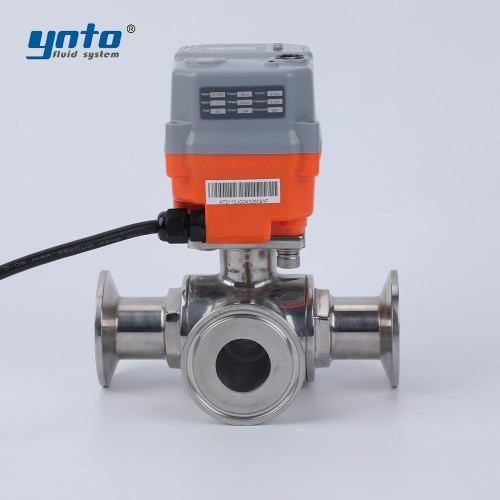
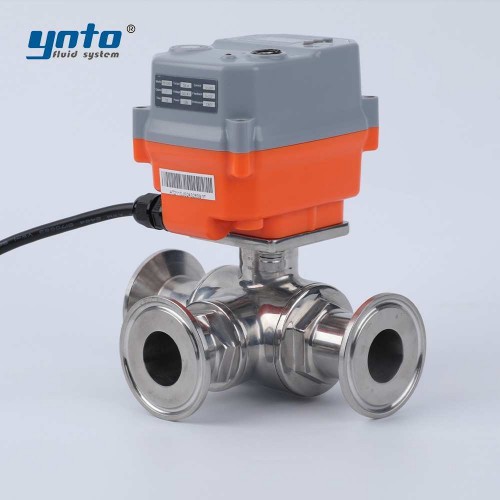
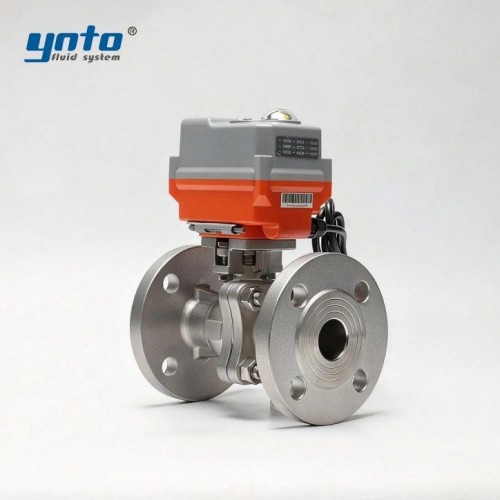
Where instrument air is unavailable or the control system already uses motorized valves, YNTO also lists an electric 316 stainless steel three-way clamp ball valve. It is an alternative actuation route, not evidence that a pneumatic valve has power-loss return. Check power-failure behavior and the same ball-port drawing before choosing between them.
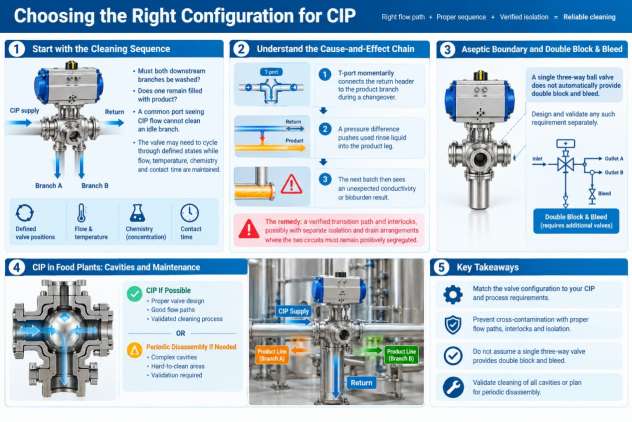
Choosing the Right Configuration for CIP
Start with the cleaning sequence. Must both downstream branches be washed? Does one remain filled with product? A common port seeing CIP flow cannot clean an idle branch. The valve may need to cycle through defined states while flow, temperature, chemistry, and contact time are maintained.
Consider a common cause-and-effect chain. A T-port momentarily connects the return header to the product branch during a changeover; a pressure difference pushes used rinse liquid into the product leg; the next batch then sees an unexpected conductivity or bioburden result. The remedy is a verified transition path and interlocks, possibly with separate isolation and drain arrangements where the two circuits must remain positively segregated.
For an aseptic boundary, a single three-way ball valve does not automatically provide double block and bleed. Design and validate any such requirement separately. Even in a food plant, establish whether body cavities clean in place or require periodic disassembly.
Hygiene Considerations in Aseptic Processing
Why Aseptic Processing Matters
In aseptic processing, product-contact surfaces, cavities, seals, and branches must fit a contamination-control strategy. CIP removes soil under validated conditions; it does not itself demonstrate sterilization. If the line also uses SIP, review seats and gaskets for steam temperature, cycling, and drainage.
Rinse may drain cleanly from the main bore while residue remains in the ball cavity. It dries between cycles, becomes harder to remove, and can transfer on the next stroke. “Full port” does not prove every space is washed. Verify the cavity-cleaning method with a section drawing and site acceptance test.
Features of a Sanitary Valve
A sanitary valve should have documented wetted geometry, suitable finish, compatible seals, cleanable joints, and access for inspection. A clamp connection can shorten disassembly, but its gasket can protrude into the bore or leave a crevice if the ferrules, gasket profile, and clamp loading are mismatched. The actual pressure and temperature capability of the whole joint also matters during hot cleaning and line testing.
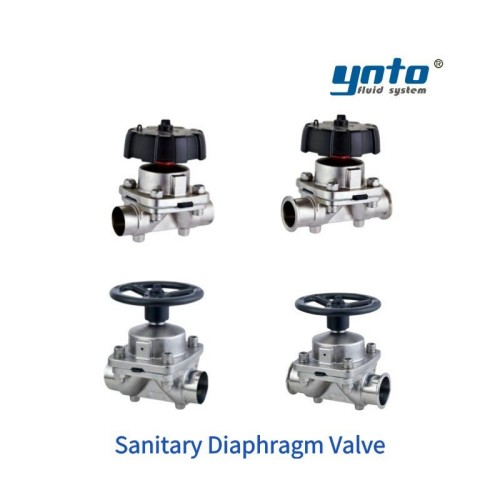
YNTO’s 316L sanitary diaphragm valve is a useful comparison when a branch needs positive on/off isolation and a design that keeps the operating mechanism away from the liquid. It does not perform three-way routing; it may serve as a separate isolation point where a diverted leg must be held apart during cleaning. Confirm the diaphragm grade, port geometry, installation orientation, and cleanability for that position.
Standards help turn “hygienic” into an inspectable requirement. ANSI/ASME BPE addresses bioprocessing equipment design and surface requirements. DIN 32676 addresses defined clamp connections; matching the flange diameter alone does not settle seal geometry. ISO 5211 describes part-turn actuator attachment dimensions, but matching a mounting interface does not establish adequate torque or a safe fail position. API 598 addresses valve inspection and pressure testing where specified; a shell or seat test is not a CIP-cleanability test. ANSI/ASME B16.34 may inform pressure ratings for applicable metallic valves, yet the actual sanitary assembly, clamps, and gaskets must be qualified together. Request evidence for any model-specific 3-A or EHEDG claim rather than reading a family-page badge as certification of every configuration.
Integration with Process Equipment
Connecting Valves to Other Components
The valve is one part of the process equipment train. Pumps, exchangers, spray devices, flowmeters, and sampling points determine whether each route sees its intended flow. Low return flow may indicate a closed seat, an air lock, or a fouled spray device. Position feedback alone cannot distinguish them.
Lay out process piping so every branch drains or flushes by a documented procedure. A dead-ended branch can hold product throughout the wash. Shorten it, add an accessible drain, or change the routing sequence. Leave room to remove clamps for inspection.
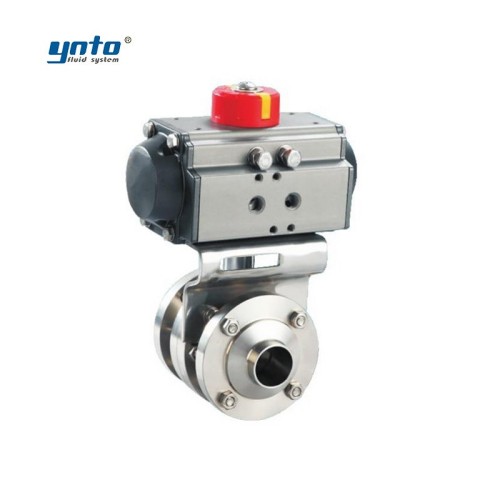
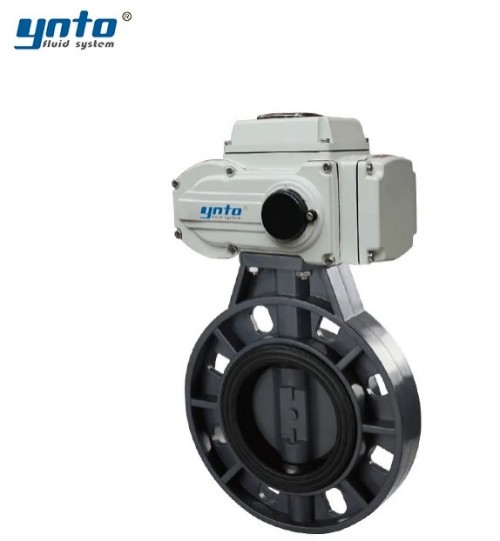
For nearby straight-through isolation, YNTO lists a stainless steel pneumatic sanitary butterfly valve. It may simplify isolation and maintenance in a compatible line, but it cannot replace the three-way diverter. Check its actual wetted materials, seal, pressure rating, finish, and cleaning position before adding it to the skid specification.
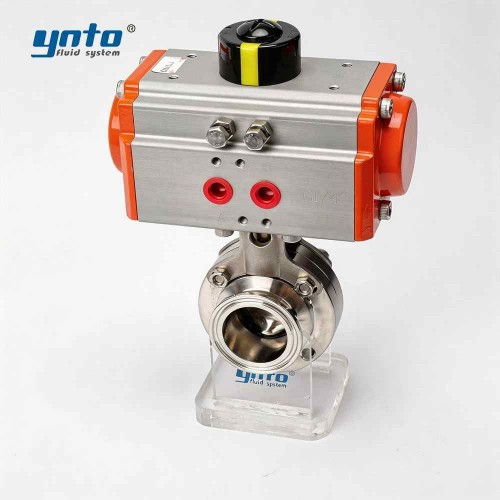
Ensuring Efficient Process Piping Layouts
If product and hot caustic can communicate during changeover, a wrong command can expose personnel or damage a batch. Check pressure differences in every state, provide trapped-liquid relief, and define safe drains. A trapped volume can pressurize as it heats, even with pumps stopped.
Material choice extends beyond 316L. EPDM may fit one hot aqueous cleaning cycle while FKM suits a different chemical exposure; PTFE brings another temperature and mechanical behavior. A coated carbon steel support frame can tolerate splashes when maintained, but it should never be counted as a wetted corrosion barrier. Where chlorides or a particularly aggressive wash defeat 316L, a higher alloy such as Duplex may deserve evaluation—but only after reviewing fabrication, surface finish, seal interfaces, and the full compatibility data.
Before maintenance, isolate the pumps and utilities, lock out pneumatic and electrical energy, cool the system, depressurize all three branches, and drain to the approved containment path. A clamp loosened on a hot or pressurized CIP line can discharge cleaning solution even when the actuator indicator shows a safe route. Plant procedures should define verification points, protective equipment, and the order of disassembly.
Automation and Performance
Enhancing Operational Efficiency
Reliable valve automation begins with a matrix of production, pre-rinse, detergent, final rinse, and SIP states. For each, record port connection, pump permissive, flow direction, pressure, and transition. Energizing a solenoid alone should not permit pump start; confirm the intended route is available.
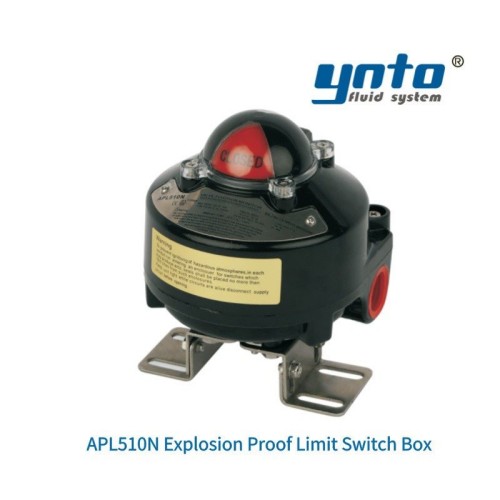
A limit switch box reports indexed positions to the controller. YNTO offers an APL510N rotary position-monitoring switch box for evaluation with a compatible pneumatic actuator. The switch arrangement must distinguish every route used; two end contacts cannot describe an uninstrumented middle T-port state. Confirm mounting and electrical suitability for the installation.
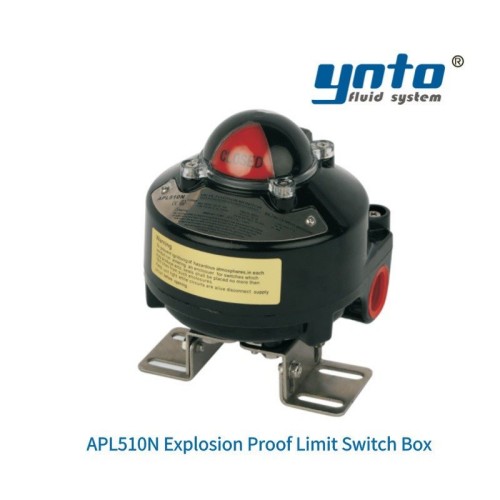
Pneumatic sizing needs the worst credible differential pressure and breakaway torque after cleaning, not only a dry-shop stroke. Repeated heat cycles can age an unsuitable gasket, increase friction at the ball, and delay movement until the controller times out. A larger actuator may hide the symptom for a while while loading the stem harder. Inspect the seat, shaft coupling, air supply, and chemistry before changing actuator size.
Where a three-position sequence is essential, verify that the actuator and its stops can achieve all three states repeatedly under load. A nominal quarter-turn package may provide only two end positions. The intermediate route needs its own command, indication, and acceptance test if the cleaning recipe depends on it.
During a factory acceptance test, ask the supplier to demonstrate each commanded connection and isolation state with labeled ports. Repeat at minimum instrument-air pressure and verify the selected loss-of-air behavior. At site, challenge wrong-route interlocks, position feedback, pump trips, and alarm handling. Measure cleaning return conditions in the branches that need washing; do not treat a successful actuator stroke as proof of a successful CIP cycle.
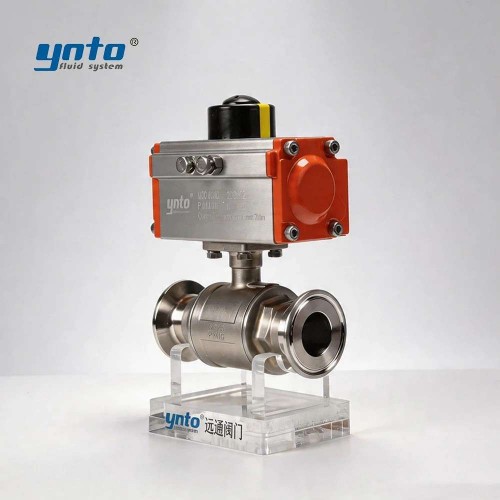
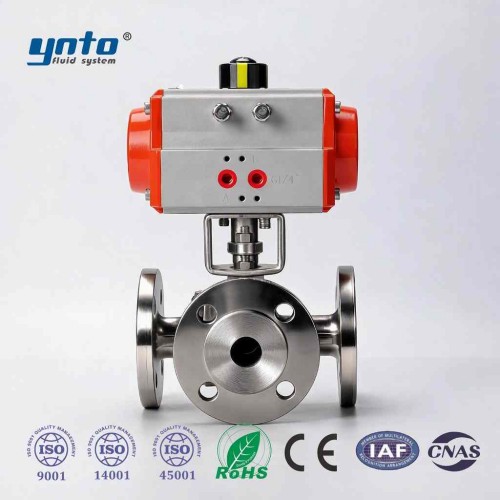
Real-Time Monitoring Solutions
Combine position data with flow, pressure, temperature, and conductivity trends. If the valve reports the cleaning route but the return flow drops, investigate the blocked path rather than declaring the cycle complete. If conductivity declines more slowly after each changeover, inspect the idle branch, gasket crevices, and ball cavity before extending rinse time indefinitely. A longer rinse may mask the problem while wasting water and heat.
For a useful quotation, send YNTO the labeled A/B/C routing matrix, drawings of existing clamps and spool lengths, product and cleaning-media composition, minimum and maximum temperatures, pressure and differential-pressure limits, surface-finish requirement, seat and gasket specification, cycle count, air supply, fail position, and control signals. Request a configuration-specific sectional drawing, material certificates, pressure and seat-test records, actuator sizing, and the cleaning and maintenance procedure. Those documents make a pneumatic 316L three-way ball valve a reviewable part of a CIP design rather than a hopeful shortcut through a complicated changeover.
If the existing valve is being replaced, include its installation dimensions and the reason it failed. A one-for-one mechanical fit saves piping work only if the new port sequence, cleanability, and pressure test also match the validated process.
- 2026-10-19 08:49:57
- 2026-10-16 10:48:59
- 2026-10-15 14:23:43