

Top 7 Features to Look for in a Pneumatic Valve for Water
- 2026-01-12 12:00:00
- admin
- NO COMMENTS
1. Corrosion-Resistant Materials and Coatings
Water systems can be harsh on valve materials. Over time, untreated metals will rust, especially in outdoor or potable water applications. A high-quality pneumatic water valve features corrosion-resistant construction. 316L stainless steel, for example, offers superior chemical resistance compared to standard 304 stainless, which means it withstands chlorinated water and environmental factors better. If the valve body is made of ductile iron or cast steel, it should be protected with durable coatings. One common protective layer is fusion bonded epoxy (FBE) coating, applied inside and out. This epoxy coating forms a hard, inert barrier that guards against rust and abrasion, significantly extending the valve’s service life. In fact, leading waterworks valves are FBE coated and even certified to NSF/ANSI 61 for drinking water safety. In practical terms, a valve with FBE coating or a 316L body resists corrosion from minerals in water, humid environments, and even seawater in coastal systems. This ensures your water control system remains leak-free and safe over decades of operation.


2. High-Quality Seals for Zero Leakage
One of the first things a seasoned engineer examines is the valve’s sealing mechanism. Water supply valves must shut off tightly to prevent any leaks or drips that could waste water or reduce system pressure. Look for features like a bidirectional sealing design, meaning the valve can hold pressure from either direction without leaking. Many smart water valves today use soft seals made of elastomers like EPDM (ethylene propylene diene monomer), which is especially suitable for water. EPDM rubber retains flexibility over a wide temperature range and resists swelling or degrading in chlorinated water. This material choice is important – an incompatible seal can harden or crack, leading to seepage. A well-designed pneumatic valve will advertise bubble-tight shutoff, often achieved with a soft seat (such as EPDM or NBR) pressing against a polished disc or ball. Additionally, the seal and seat should be designed for easy replacement during maintenance. In Chen’s experience, a leaking valve seat can start as a minor issue but then snowball into significant water loss and energy waste if pumps must work harder to maintain pressure. Thus, zero-leak sealing isn’t just a nice-to-have – it’s essential for sustainable water solutions that conserve every drop.

3. Smooth Operation to Handle Pressure Fluctuations
Water supply systems rarely have steady, laminar flow all the time. Pumps kicking on or off, hydrants opening, or rapid valve closures can create pressure surges and fluctuations. A top-tier pneumatic valve is engineered to handle these dynamics without excessive vibration or water hammer. Water hammer – the loud knocking or banging in pipes – often results from valves closing too quickly, causing a sudden change in flow velocity. Over years, these pressure spikes can strain pipes and wear out valve internals. That’s why an experienced engineer will choose a pneumatic valve with dampening features or speed controls on the actuator to prevent slamming. For instance, installing surge suppressors or configuring the actuator to close over a few extra seconds can mitigate sudden pressure fluctuations. The internal design matters too: valves with sturdy stem bearings and well-fitted components won’t rattle under variable flows. Cause-effect logic from the field shows why this matters: Uncontrolled pressure oscillations → micro-vibrations of the valve disc → gradual seat wear → eventual leakage and required retightening. By contrast, a valve designed for pressure control – sometimes called a pressure control valve when paired with the right positioner – will maintain stable flow and protect the system. Chen recalls upgrading an old valve to a modern pneumatic control valve with a positioner, which immediately reduced pressure swings in a district zone. The takeaway is clear: smooth, stable operation under changing pressures protects both the valve and the entire network.
4. Reliable Actuator and Fail-Safe Design

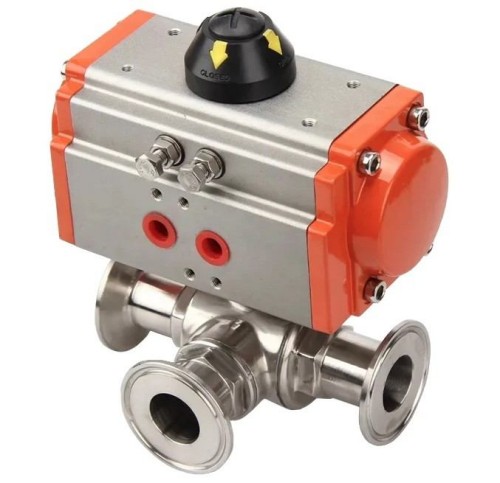
The “muscle” of a pneumatic valve is its actuator, so it’s critical that the actuator is robust and properly sized. In water applications, pneumatic actuators are popular for their fast response and intrinsic safety (they can be designed to fail-open or fail-closed for protection during power loss). When evaluating a valve, ensure the actuator provides sufficient torque with a comfortable margin. A common engineering practice is to have about a 25% torque margin beyond the valve’s maximum operating requirement, ensuring that even as seals age or pressures change, the actuator isn’t straining to do its job. There are two main pneumatic actuator styles – rack-and-pinion and scotch yoke – both can work well if engineered properly, but scotch yoke types often deliver higher torque at the start and end of travel, which can be useful for tight sealing of large valves. Another feature to look for is a spring-return (single acting) actuator versus double-acting. Spring-return actuators provide a fail-safe position: for example, if air pressure is lost, the spring can automatically drive the valve to a pre-set safe state (either open or closed, depending on need). Chen points out that in a water supply system, a fail-open design might be used on a critical feed line to ensure water keeps flowing during an air compressor failure, whereas a fail-closed might be used to isolate a segment if something goes wrong. Additionally, top-notch pneumatic valves will have manual override options (like a handwheel) to operate the valve during emergencies or maintenance. All these actuator considerations boil down to one thing: reliability. The valve should operate on command every time, and fail gracefully in the rare event of an air or power outage. A reliable pneumatic actuator paired with a quality valve body gives operators confidence that the valve will respond correctly in both normal and unexpected scenarios.
5. Compliance with Industry Standards
When selecting any equipment for critical infrastructure, compliance with well-known standards is a non-negotiable feature. Quality pneumatic valves for water service should adhere to ANSI, API, ISO, or DIN standards as applicable. These standards ensure the valve’s design, performance, and dimensions meet rigorous criteria. For example, ANSI/ASME standards define pressure classes (150, 300, etc.) and flange dimensions, ensuring that a valve can handle the rated pressure-temperature combinations safely. DIN standards (prevalent in Europe) similarly define pressure ratings like PN16 or PN25 and metric face-to-face dimensions. API standards from the American Petroleum Institute are often referenced even in water systems for their strict testing protocols – API 598 covers valve leak testing, ensuring a new valve has zero allowable leakage in a soft-seated valve under test conditions. Additionally, ISO certifications can speak to the manufacturing quality (for instance, ISO 9001 for quality management) and interoperability (ISO 5211 for standardized actuator mounting flange dimensions, useful when you need to swap or service actuators). Compliance with these standards matters not just for paperwork – it is evidence that the valve design has been proven against international benchmarks for safety and performance. Engineer Chen always checks for certificates or markings on a valve: a CE mark or a tag indicating ANSI class and API test compliance gives peace of mind that the valve won’t be the weak link in a fluid handling solution. In short, standards compliance is the mark of a serious, professional-grade valve meant for long-term service in critical water infrastructure.

6. Ease of Maintenance and Longevity
Even the best valves require maintenance over their lifetime. A feature that often gets overlooked is serviceability – how easily can technicians access, repair, or replace parts of the valve? In water utilities, minimizing downtime is crucial. Therefore, a pneumatic valve should be designed for convenient maintenance. Features like a split-body or top-entry design allow internal components (seats, diaphragms, O-rings) to be replaced without removing the entire valve from the pipeline. For example, high-end diaphragm valves in water treatment have top-entry designs so the diaphragm can be swapped in minutes. Look for valves that offer modular components; for instance, an actuator that can be removed by loosening a few bolts, or a stem seal that can be tightened or replaced live if it ever starts to drip. Another maintenance-friendly feature is having a clear position indicator and accessible air connections on the actuator, which makes troubleshooting easier. Chen recalls a case where a poorly positioned pneumatic control valve had its solenoid and air tubing tucked away in a hard-to-reach spot – every minor fix became a long ordeal. A good design avoids such hassles, placing accessories in accessible positions.

Beyond physical design, consider the availability of spare parts and support. Does the manufacturer or supplier stock replacement seals, springs, or diaphragms? Is there a manual with a detailed exploded diagram? Knowing these parts are readily available means the valve can truly last decades with proper care, rather than being replaced entirely at the first sign of trouble. Preventive maintenance practices also come into play: experienced engineers like Chen implement routine check-ups – e.g., cycling the valve and checking that the actuator responds correctly, listening for any abnormal vibration, and inspecting the condition of positioner or limit switch feedback devices. A valve that is well-designed for maintenance will support these practices by making all critical points easy to inspect. In summary, the best pneumatic valves are those that marry longevity (robust build, wear-resistant components) with maintainability (quick servicing features and good documentation). This combination ensures a valve remains a reliable part of the water control system throughout its lifespan.
7. Smart Automation and Remote Control Capability
The water industry is increasingly embracing digitalization and smart infrastructure. Modern pneumatic valves should be ready for integration into remote monitoring and control systems. This means having the option for automation accessories: think of solenoid valves for on/off control, positioners for modulating control, and feedback sensors or limit switches that report the valve’s status. A valve configured as part of a SCADA system (Supervisory Control and Data Acquisition) allows engineers to adjust flows and pressures from a central control room – or even remotely – which is invaluable for large water networks or geographically distributed sites. When evaluating a pneumatic valve, Chen checks if it can be fitted with a smart positioner (often an electro-pneumatic positioner for control valves) that accepts a 4-20 mA or digital signal to move the valve to any desired position. This effectively turns a basic valve into a pneumatic control valve that can throttle flow precisely. Additionally, smart water valves today often come with advanced features like connectivity to IoT platforms, enabling data on valve position, flow rate, or even diagnostic information to be transmitted in real time. For example, some remote valve control setups might use wireless pressure sensors and automated valves to regulate district pressure and reduce leakage. Incorporating such water management solutions leads to more efficient operation – if a leak is detected or a fire hydrant is opened, the system could automatically adjust other valves to compensate, all without needing a person on site.

When looking at the valve’s specifications, see if it follows standards like ISO 5211 (which ensures the actuator mounting is standardized) or if the vendor offers actuator packages with integrated controls. A truly future-proof pneumatic valve will have the flexibility to add on these modules either initially or down the line as the facility upgrades to a smarter control system. In practical terms, a valve that’s “automation-ready” may have extra ports for feedback devices, or a mounting pad for a limit switch box or position transmitter. Embracing such technology is key to sustainable water solutions – by optimizing water distribution and quickly responding to system changes, smart valves help minimize water loss and energy use. Engineer Chen, for one, has seen the difference: after upgrading to remotely controlled pneumatic valves with feedback, his team reduced response times to incidents and improved overall system stability. Therefore, a feature to look for in 2026 and beyond is definitely smart integration capability – ensuring your new pneumatic valve isn’t a dumb piece of metal, but a node in a smart network of fluid handling solutions.
Conclusion: Choosing a Valve that Stands the Test of Time
Selecting the right pneumatic valve for water applications comes down to balancing all the above features. In a field setting, each of these aspects – from sturdy materials and tight seals to smooth operation, reliable actuation, standards compliance, maintainability, and smart connectivity – plays a role in the valve’s performance and lifespan. A seasoned engineer like Chen Wei views a valve not just as an isolated component but as part of a larger mission to deliver safe and reliable water. The best valves contribute to lower leakage rates, fewer disruptive repairs, and more efficient network control – all critical for utilities aiming for resiliency and sustainability.


When evaluating options, don’t hesitate to ask for documentation or case studies from the manufacturer. A reputable valve supplier will gladly provide test results (e.g., hydrostatic test reports), material certifications, and client references that attest to the product’s real-world success. Whether it’s a pneumatic butterfly valve for a treatment plant or a diaphragm valve for a filtration system, the valve you choose should instill confidence. It’s worth investing the time to check off all these features. In the long run, a high-quality pneumatic valve built for water service is not just a purchase – it’s a commitment to operational excellence and a cornerstone of a reliable, sustainable water management strategy for years to come.
Sources: Supporting information has been adapted from industry standards and publications for accuracy, including material compatibility data, coating specifications, valve standards references, and best practices in surge control and maintenance.

- 2026-10-12 15:56:29
- 2026-10-09 14:26:55
.png?imageMogr2/format/webp)
- 2026-09-30 08:25:23