

Transform Sewage Waste Management with UPVC Electric Valves
- 2026-01-28 12:00:00
- admin
- NO COMMENTS
Introduction
On site at a municipal sewage pumping station, an engineer might notice a UPVC-lined valve on a force main behaving oddly. During pump cycles, the pressure gauge swings widely and the plastic actuator hums with slight vibration. At low flow, the valve’s disc chatter and small leaks around the seal become apparent. Such symptoms – erratic pressure differentials, increased operating torque, or intermittent drips – are common in pipelines carrying wastewater sludge. They typically point to issues like seal wear or sludge build-up in the valve. For example, if a valve downstream is partially blocked (say 80% closed by debris), it forces head pressure to climb and slows flow. Left unaddressed, these causes cascade: pressure spikes can shake the valve internals (plug or ball) repeatedly, abrading the EPDM or PTFE seats until tiny leaks emerge (pressure surges → micro-vibration → seal wear). Similarly, rapid temperature or chemical swings in effluent can fatigue seals over time, causing micro-cracks and leakage. Engineers in routine checks will note “sticky” operation or minor seepage as red flags. In one case, a corroded carbon-steel valve in an acidic line was pitted so badly that the leak rate spiked. This cause–effect chain (corrosive fluid → mismatched valve material → pitting → unexpected leak) underscores why material and design choices are critical.

The Role of Valves in Waste Management
Valves are the workhorses of any fluid control system. In wastewater plants they isolate tanks, regulate pump flows, or throttle chemicals. A ball or butterfly valve with an actuator can start/stop flows quickly, while a diaphragm valve can meter sludge or slurry precisely. Check valves prevent backflow on discharge lines, and strainers or Y-type filters ahead of valves catch grit. When a valve fails to seal or stick, the whole lift station’s efficiency suffers: pumps overwork against false head pressure, causing potential overflows or energy waste. Routine observations like unusual noises, leaks, or oscillating flow often trace back to these valve faults. Indeed, monitoring flow spikes can reveal malfunctioning valves: sudden flow drops or oscillations often mean a clogged pipe or valve issue. By design, valves in waste systems must be rugged: they see abrasive solids, variable pH, and sometimes pressure shocks from pump startups. Traditional metal valves in such environments would quickly corrode or seize, so engineers turn to materials that resist the harsh conditions.


Brief Overview of UPVC
Unplasticized PVC (UPVC) is a rigid polymer prized for corrosion resistance. It won’t rust or scale when exposed to acids, alkalis, chlorine or salt – common in sewage. One industry resource notes PVC valves withstand aggressive substances like chlorine or acids without deteriorating. In practice, a UPVC valve body combined with PTFE/EPDM seals forms a leak-tight barrier that endures long-term contact with sewage liquor. Manufacturers of UPVC electric ball valves highlight their “lightweight” plastic bodies and “highly corrosion-resistant” construction. For example, a flange-type electric UPVC ball valve is praised as light and conforming to standards (EN588), finding application in water and wastewater treatment, chlor-alkali plants and chemical processing. In contrast to carbon steel, UPVC stays inert in these fluids. While UPVC has a lower temperature rating (typically up to 50–60 °C for PVC-U), in most sewage applications this is sufficient. Importantly, UPVC’s inherent chemical durability makes it ideal for flow control where metals would require expensive alloys or coatings to survive.
Understanding UPVC Electric Valves
Definition and Function
A UPVC electric valve is essentially a plastic valve (often a two-way ball or butterfly) fitted with an electric actuator. Instead of a hand wheel, a geared motor drives the valve disk or ball (usually a 90° quarter-turn). In a ball valve, the actuator turns a spherical UPVC ball inside the body; in a butterfly valve, it rotates a plastic-coated disc. The seals (typically PTFE or EPDM) press against the plastic seating surfaces to shut off flow. Because UPVC doesn’t corrode, a plastic valve “won’t rust or scale in water, acids, or brines,” yielding a longer service life. The electric actuator often includes limit switches or visual indicators so operators always know whether the valve is open or closed. Typical actuators are IP-rated (e.g. IP67), meaning they can withstand washdowns or dusty conditions in a plant. Under power, the actuator’s gear train is sized to exceed any valve friction so that even at full pressure the motor can still rotate the valve to position. In practice, engineers find that a good electric UPVC valve will complete its stroke in a few seconds (usually 4–6 s), smoothing out pressure changes (unlike a fast solenoid) and enabling integration with control systems.
Types of UPVC Valves Available

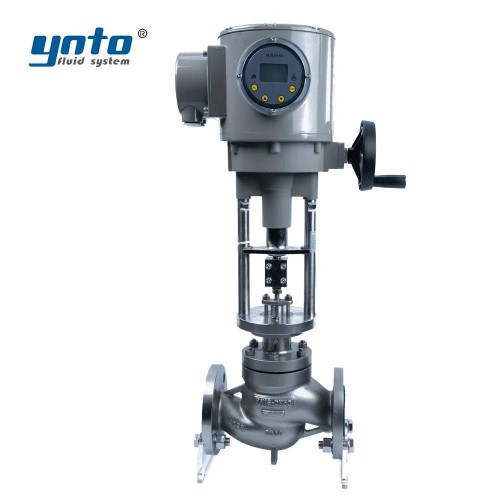
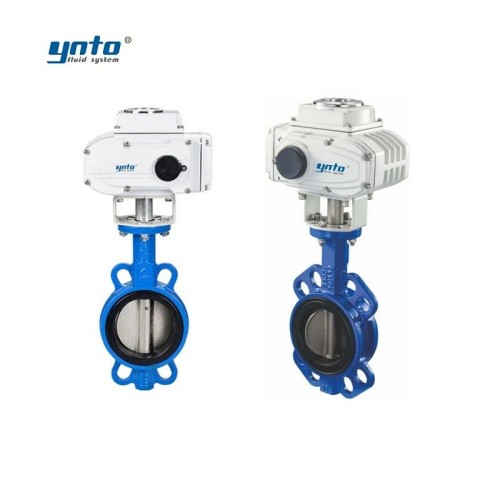
UPVC electric valves come in several varieties. The most common are Electric Ball Valves and Electric Butterfly Valves for on/off flow control. These offer full-bore flow (ball valves) or large passageways (butterfly valves) with very low pressure drop when open. Electric control valves (globe or diaphragm) provide throttling and feedback on continuous processes. For example, a pneumatic or electric Diaphragm Valve is often used for dosing chemicals or slurries since the diaphragm seal keeps fluid away from the actuator. In a plumbing train, Y-Type Filters and Check Valves complement motorized valves: the filter (strainer) removes debris before fluid enters a valve, preventing scratches on seats, and the check valve stops reverse flow when pumps cycle. In modern systems, an integrated solution might use an [Electric Ball Valve], [Electric Butterfly Valve], [Electric Actuator], [Electric Control Valve], or even hybrid assemblies in PVC or other plastics. Each product is chosen for the job: a UPVC Electric Ball Valve might isolate a process line, while an Electric Butterfly Valve throttles a main flow, all automated by the actuator.
Benefits of UPVC Electric Valves
High Pressure Resistance
Within their rating, UPVC valves handle surprisingly high pressures. A typical UPVC ball valve might be rated PN10 or PN16 (i.e. 10–16 bar). Engineers design the plastic body with ribbing and use strong actuators so the valve can resist pipeline pressure and dynamic forces. In fact, manufacturers specify fluid control valves that “handle extreme temperatures, high pressures, and are resistant to abrasion and corrosion”. For example, some UPVC valve models use full copper gear motors to deliver high output torque, letting the valve seat withstand pressure without leakage. In practice, a well-designed UPVC electric valve will not balloon or burst under its pressure rating. It simply maintains flow integrity, whereas a cheap plastic or mismatched material might fail. In sewage pumping stations, keeping valves in spec ensures reliable shutoff; if a valve ever does start to deform under overpressure, safety standards (ANSI/ASME, API, ISO, etc.) require it to be flagged by a pressure relief or replaced.

Reliability and Efficiency in Sewage Systems
UPVC electric valves bring reliability to waste systems. Their plastic bodies mean no rust or scaling on the inside surfaces, so the valve mechanism stays smooth. Unlike cast steel valves that corrode on the seats and jam, UPVC valves remain dimensionally stable when the chemistry is compatible. Because they’re lightweight, they also put less stress on pipe supports. When open, a quarter-turn ball or butterfly valve provides almost “full-bore” flow, minimizing pressure loss – a fact especially appreciated in long force mains. Quick actuation (a few seconds) and tight shutoff mean the system responds promptly to control signals, avoiding slow drift of flow or pressure. Lower maintenance is another benefit: PVC valves don’t require anti-corrosion coating, and with routine cleaning they outlast many metal valves in corrosive service. Indeed, engineers find that replacing an expensive stainless valve with UPVC can cut operating costs while boosting uptime.
Electric Control Advantages
Using an electric actuator adds a big advantage: automation. Electric valves can tie into PLC or SCADA systems for remote operation. They often include limit-switch feedback and auxiliary contacts, so the control room always “knows” valve position. When a process alarm triggers (e.g. high liquid level), the actuator can instantly close off lines without manual intervention. Compared to pneumatic valves, electric actuators are simpler to wire (just power and a control signal) and do not need an instrument air supply. They also often feature manual override handles for safety. In the field, this means faster commissioning: one technician in a control center can command several valves without walking around, improving safety. It also avoids water-hammer: an electric actuator’s slower stroke (4–5s) gently ramps flow without pressure spikes.
Key Applications
In Sewage Pumping Stations
UPVC electric valves shine in lift stations. Here, they isolate backup pumps and control flows into force mains. The corrosion resistance is crucial: sewage often contains chloride and bio-organics that would eat metal. For instance, a PVC ball valve placed on the pump discharge can reliably hold back water even under continuous flow and occasional acid cleaning cycles. If a valve ever jams, an electric actuator can be overridden. In one reported instance, a partially-closed valve downstream trapped the system with pressure; using high-performance UPVC valves with reliable actuators prevents such scenarios by ensuring the valve opens and closes fully when signaled. Redundancy is key in sewage systems, and these valves pair well with fail-safe actuators to meet municipal safety standards.
Role in Sewage Treatment Systems
Throughout wastewater treatment – in clarifiers, aeration tanks, or chemical dosing lines – UPVC electric valves control the flow of water and additives. For example, acids or chlorine used for pH adjustment are easily handled by UPVC. The valves’ leak-tight PTFE seats mean doses are precise, preventing under- or over-treatment. Their resistance to hydrogen sulfide or other gasses in digesters also keeps them functioning where mild steel valves would pit. Industries like chlor-alkali or food processing similarly rely on UPVC valves for safe chemical handling. In an integrated fluid control system, these valves are often networked: a remote terminal unit might sweep through the plant, checking each valve’s open/closed status and adjusting flows as needed.
Importance in Fluid Control Systems
Beyond sewage plants, any fluid control loop dealing with corrosives benefits from UPVC valves. In chemical plants or cooling circuits, they serve as reliable flow control solutions. When engineers design a fluid control system, they calculate required Cv (flow coefficient) and select a valve accordingly – often finding UPVC valves meet the spec at a fraction of the cost of exotic alloys. For example, in a recirculating cooling tower with slightly acidic blowdown, a UPVC control valve provides the required flow curve while resisting the acidic makeup water. Because these valves comply with pressure-temperature standards (e.g. ANSI B16.34 for class ratings), a designer can count on predictable performance. Furthermore, using standardized enclosures (ANSI/ISO/DIN), these valves fit into existing piping easily.

Maintenance and Care
Best Practices for UPVC Electric Valves
Proper upkeep keeps UPVC valves trouble-free. Install a Y-Type Filter or strainer upstream to catch grit and prevent seat scratches. Ensure the operating temperature stays within material limits (typically below ~60 °C for PVC-U) – hot flushes above spec can deform plastic. Engineers should cycle each valve occasionally: this moves the seals and prevents them from sticking in one position. Periodic flushing of the pipeline helps clear deposits. For cleaning, use mild soap or vinegar solutions – avoid harsh chemicals or abrasives, which can damage UPVC and EPDM. Check for seal swelling or cracks in EPDM after chemical exposure. Actuators should be lubricated per manufacturer instructions, and their limit switches tested to confirm the valve reaches full open/close. Always verify wiring integrity, as a loose control cable can mimic a valve failure.
Troubleshooting Common Issues
When issues arise, an engineer’s first step is observation. If the actuator draws high current or won’t turn the valve, suspect friction – maybe debris in the valve or a warped body. Is the flow lower than expected? Check if the valve is falsely reporting “closed” due to a broken feedback gear or misaligned switch. A tiny continuous leak often means the seats are worn or a foreign particle is lodged in the seal. In that case, isolating and manually cycling the valve (or replacing the seals) usually fixes it. If pressure drops unexpectedly during tight shut-off, look for cracks or splits in the plastic body – these might require valve replacement. Keeping spare seals (PTFE/EPDM) and even extra electric actuators on hand is common practice. Overall, UPVC electric valves are forgiving: most faults trace to contamination or out-of-spec operation, both addressed by cleaning and correct system design.

Conclusion
UPVC electric valves are transforming waste management by tackling the very issues engineers see on site. Their corrosion-resistant plastic bodies and high-torque actuators solve the leak and stick problems that plague metal valves. When installed and maintained properly, these valves provide precise, automated flow control with minimal downtime – a true flow control solution for modern sewage systems. As environmental regulations tighten, the demand for reliable, low-maintenance valves only grows. In the future, expect even smarter integration: sensors inside electric valves reporting seal health, predictive diagnostics before failures, and new polymer blends (for example PVDF or CPVC for higher temperatures) widening the application scope. For now, UPVC electric control valves (ball, butterfly, diaphragm and more) offer a proven way to optimize sewage pumping stations and treatment systems, improving safety and efficiency in every fluid control network.


- 2026-09-11 16:48:37
- 2026-09-09 09:50:27
- 2026-09-07 09:14:41